

Northern France
15 Days in Northern France & Belgium: A Springtime Itinerary
Embarking on a journey through Paris, the Loire Valley, Normandy, and Bruges promises an enchanting exploration of history, culture, and picturesque landscapes. We simply didn’t want to leave after 15 days. This travel plan emphasizes wandering and discovery, rather than rushing through museums or sticking strictly to typical tourist queues.
Let’s dive into the highlights of this captivating springtime itinerary.
Paris: The City of Light
Begin your adventure in Paris. Explore the local neighborhoods, stroll along the banks of the Seine, marvel at iconic landmarks like the Eiffel Tower and the Arc de Triomphe, and savor fresh croissants at charming sidewalk cafés. There is so much to see in Paris, and the absolute best way to experience it is by foot, leaving room to discover hidden gems entirely on your own.
The Loire Valley: Fairy-Tale Châteaux
The Castles: Immerse yourself in the Loire Valley’s architectural wonders. Explore the sprawling, intricate design of the Château de Chambord, and walk the halls of the Château de Chenonceau, which gracefully spans the River Cher.
Amboise: Discover the town of Amboise, where Leonardo da Vinci spent his final years. A visit to the Clos Lucé, his former residence, is an absolute must.
Brittany: The Walled City
St. Malo: Discover the captivating coastline town of St. Malo. The heart of the city is a stunning medieval walled fortress. During World War II, the Allies heavily bombed the city to liberate it from German occupation, leaving it 80% destroyed. Remarkably, after the war, it was painstakingly restored to its original medieval glory. It is truly incredible to behold.
Normandy: Echoes of History
D-Day Landing Beaches: History echoes loudly along the stretches of Omaha, Utah, Juno, Sword, and Gold beaches. Stand on the hallowed ground where pivotal World War II events unfolded.
Bayeux: Visit Bayeux, one of the first towns to be liberated by the Allies. You will be humbled by the many "Thanks to our Liberators" signs, alongside American, Canadian, and British flags displayed throughout the town as a symbol of deep gratitude.
Mont Saint-Michel: Discover the "Jewel of Normandy," an awe-inspiring abbey perched atop a tidal island.
Honfleur: Wander through this charming harbor town, famous for its tall, colorful buildings, rich maritime heritage, and its history as a birthplace of Impressionist art.
Bruges, Belgium: Medieval Magic
The City Frozen in Time: Cross into Belgium and arrive in Bruges. Its winding medieval streets, quiet canals, and perfectly preserved historic buildings create an enchanting, storybook atmosphere.
Indulge: Treat yourself to Belgian chocolates and fresh waffles—you won’t regret it!
World War I Memorials: A Moment of Reflection
Scattered across Belgium and the Hauts-de-France region, you’ll encounter poignant memorials and cemeteries dedicated to World War I. These sites serve as powerful, quiet reminders of the immense sacrifices made during that tumultuous period, grounding your trip in historical perspective.
| Day | Highlights | Overnight |
|---|---|---|
| Day 1 | This is the travel day. Getting to the airport and overnight flight to Paris. | In flight |
| Day 2 | Arrive in Paris. Walk to the Louvre and along the Seine up to Arc de Triomphe. | Paris |
| Day 3 | Exploring Paris. Notre Dame, St. Germain, Eiffel Tower. | Paris |
| Day 4 | Exploring Paris. Opera House, Le Marais. | Paris |
| Day 5 | Leave Paris and arrive in Amboise. | Amboise |
| Day 6 | Chateau Chenonceau and Chateau de Chambord. | Amboise |
| Day 7 | Château du Clos Lucé. Town of Montresor. | Amboise |
| Day 8 | Drive to Saint-Malo and explore the Intra-Muros. | Saint-Malo |
| Day 9 | Mont Saint Michel. | Saint-Malo |
| Day 10 | Drive to Bayeux. Explore American WWII sites. | Bayeux |
| Day 11 | Explore Canadian and British WWII sites. | Bayeux |
| Day 12 | Drive to Honfleur, and explore town. | Honfleur |
| Day 13 | Hike in Etretat. | Honfleur |
| Day 14 | Drive to Bruges. | Bruges |
| Day 15 | Explore Bruges and do a canal boat tour. | Bruges |
| Day 16 | Leave Bruges. Explore WWI sites. | Chevrières |
| Day 17 | Fly home. | Home |
Day 1 - Departure
We traveled to Paris on a direct Air Canada flight, bracing ourselves for the adventure ahead.
Day 2 – Arrival & Exploring Paris
After landing at Charles de Gaulle Airport, we took the express train into the city to Gare du Nord. A quick tip for anyone passing through this high-traffic hub (or any major European station): keep a close eye on your bags and guard your valuables against pickpockets. From the station, we walked a few blocks south to our base for the trip, Hôtel Provinces Opéra - Vacances Bleues—a central, highly-rated, and reasonably priced choice.
Once unpacked, we headed out to explore the neighborhood streets, grabbing fresh street-vendor crêpes on our way toward the Louvre. Despite battling intense jet lag and a total lack of sleep, we pushed onward through the peaceful Jardin des Tuileries, admired the stunning Pont Alexandre III, and made it all the way to the Arc de Triomphe.
Unbelievably, we managed to walk all the way back to the hotel afterward. We capped off a massive first day with a late dinner at a fantastic spot right nearby: IT - Italian Trattoria Bonne Nouvelle.
Day 3 – Paris Iconic Sights & Nostalgia
Our morning began on Rue Montorgueil, a charming pedestrian street where we tracked down Paris’s oldest bakery, Stohrer. We energized for the day with coffee, pain au chocolat, and almond croissants. From there, a leisurely stroll brought us to the magnificent Notre-Dame Cathedral.
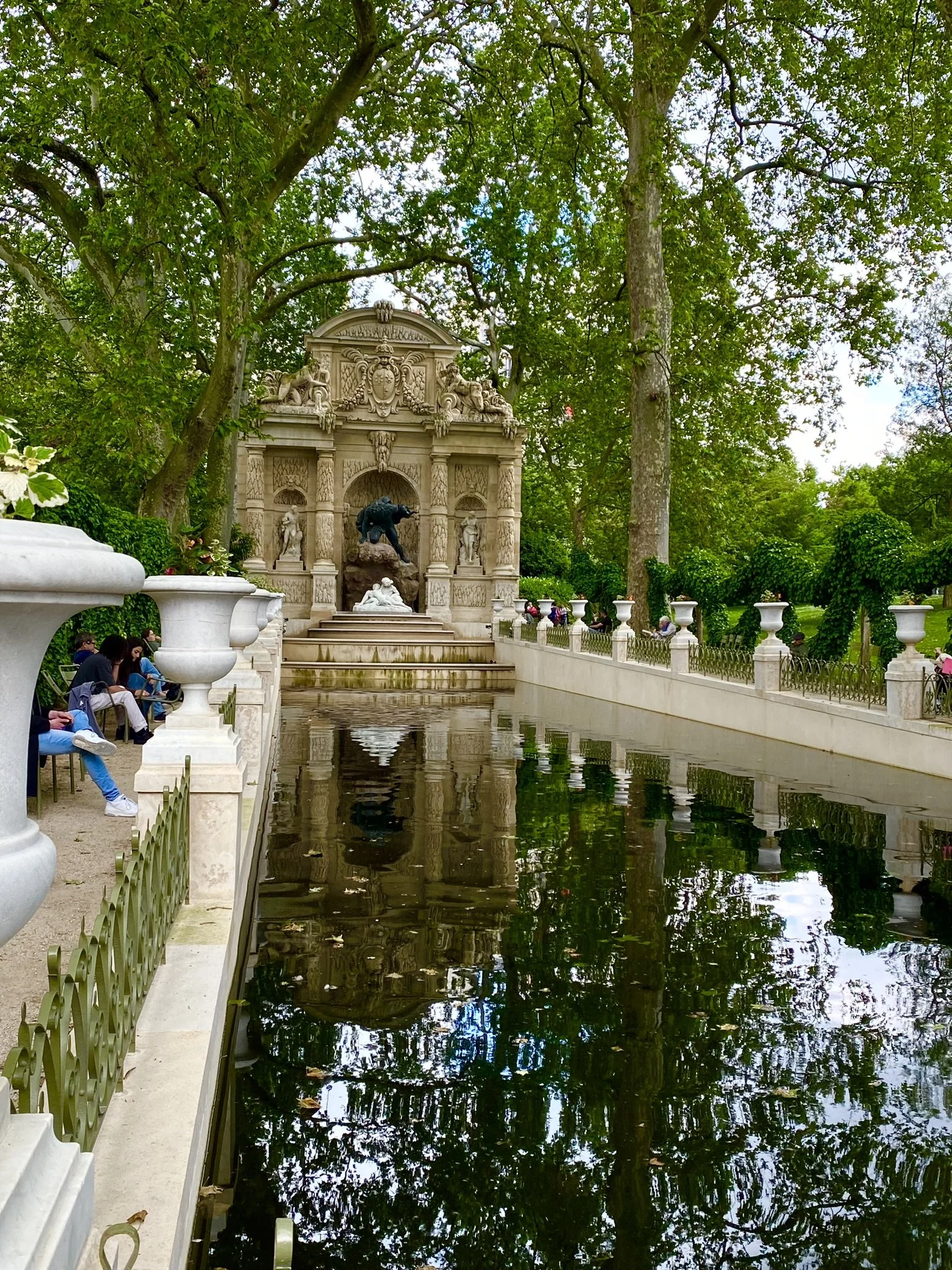
Walking along the Seine, nostalgia caught up with us, and we couldn't resist buying some Paris art prints—just as we had on a previous visit years ago. Next, we headed to the Panthéon, before picking up baguettes and drinks for a perfect midday picnic near the Medici Fountain in the Luxembourg Gardens.
Refueled, we tracked down the charming square on Rue des Fossés Saint-Jacques where Emily in Paris is filmed. After treating ourselves to a delicate meringue pastry, we spent the afternoon diving into the style and vibrant energy of Saint-Germain-des-Prés. With shopping bags in hand, we slowly meandered back to our hotel through the historic streets of Le Marais.
For dinner, we stayed close to home at Brasserie Rosie Lou on Boulevard de Bonne Nouvelle, which delivered incredible ambiance and absolutely delicious food.
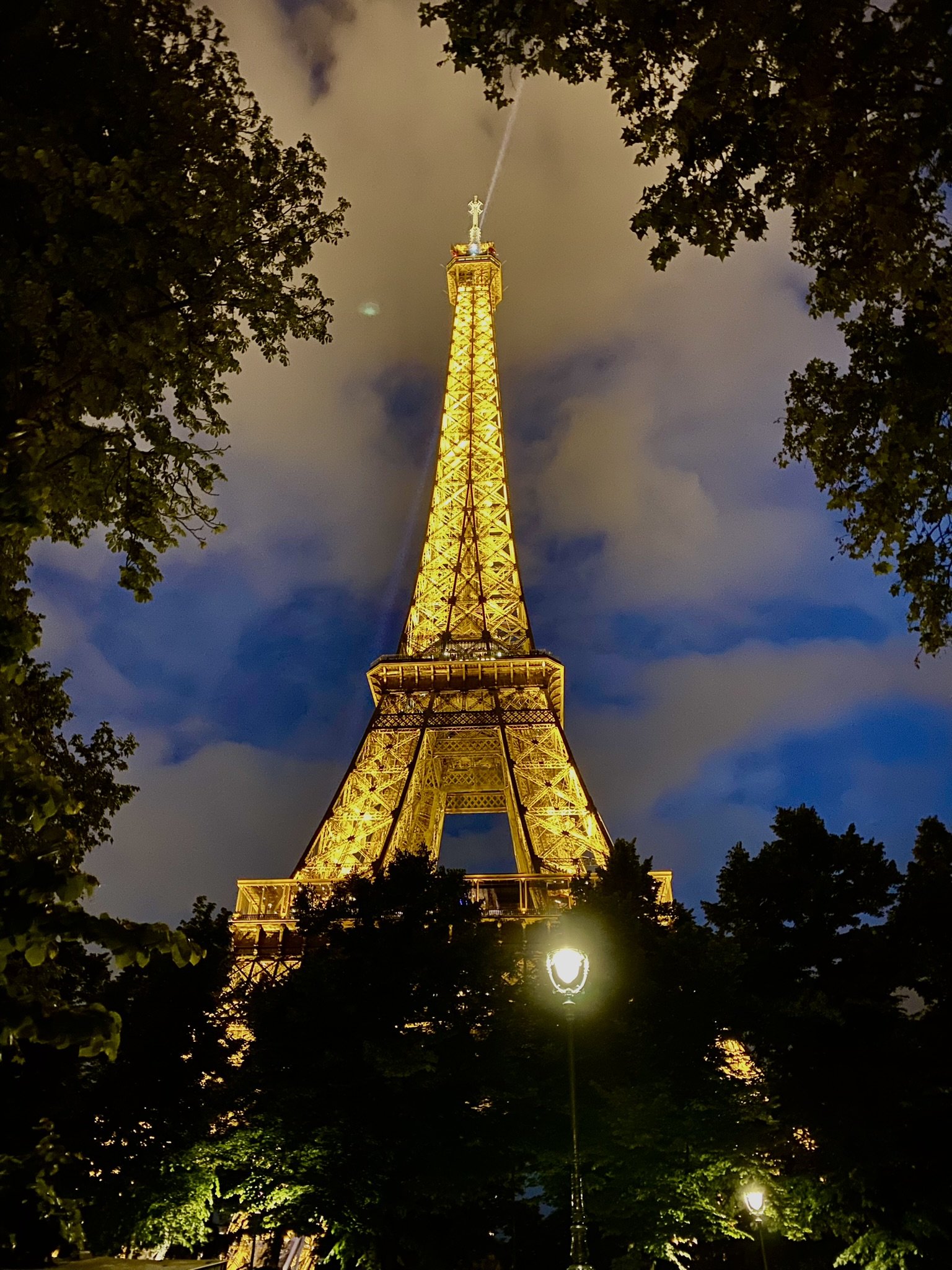
We capped off the night at Place du Trocadéro to catch the Eiffel Tower light show. It sparkles for five minutes on the hour from sundown until 1:00 AM, and it’s the perfect view.
💡 Travel Tip: If you want to go up the Eiffel Tower, you need to book exactly 60 days in advance to secure your preferred timeslot. A new day of tickets opens online at midnight Paris time, and they sell out fast! Book at the Eiffel Tower official website.
Day 4 – Opulent Interiors & Panoramic Views
We kicked off the morning at the Palais Garnier (Paris Opera House). The entry line took some patience, but it was entirely worth the wait—the grand, gilded interior is absolutely magnificent.
With incredible local cafés on every corner, you rarely need a Starbucks in Paris. However, the location near the opera house on Boulevard des Capucines is an exception. Housed in a former 19th-century courtyard, its soaring, frescoed ceilings make it look more like a royal palace than a coffee shop.
Next, we headed to Galeries Lafayette Paris Haussmann. While the luxury boutiques inside cater to deep pockets, the real treasure is completely free: the rooftop terrace. Up on the roof, you get a stunning 360-degree panoramic view of the entire Paris skyline.
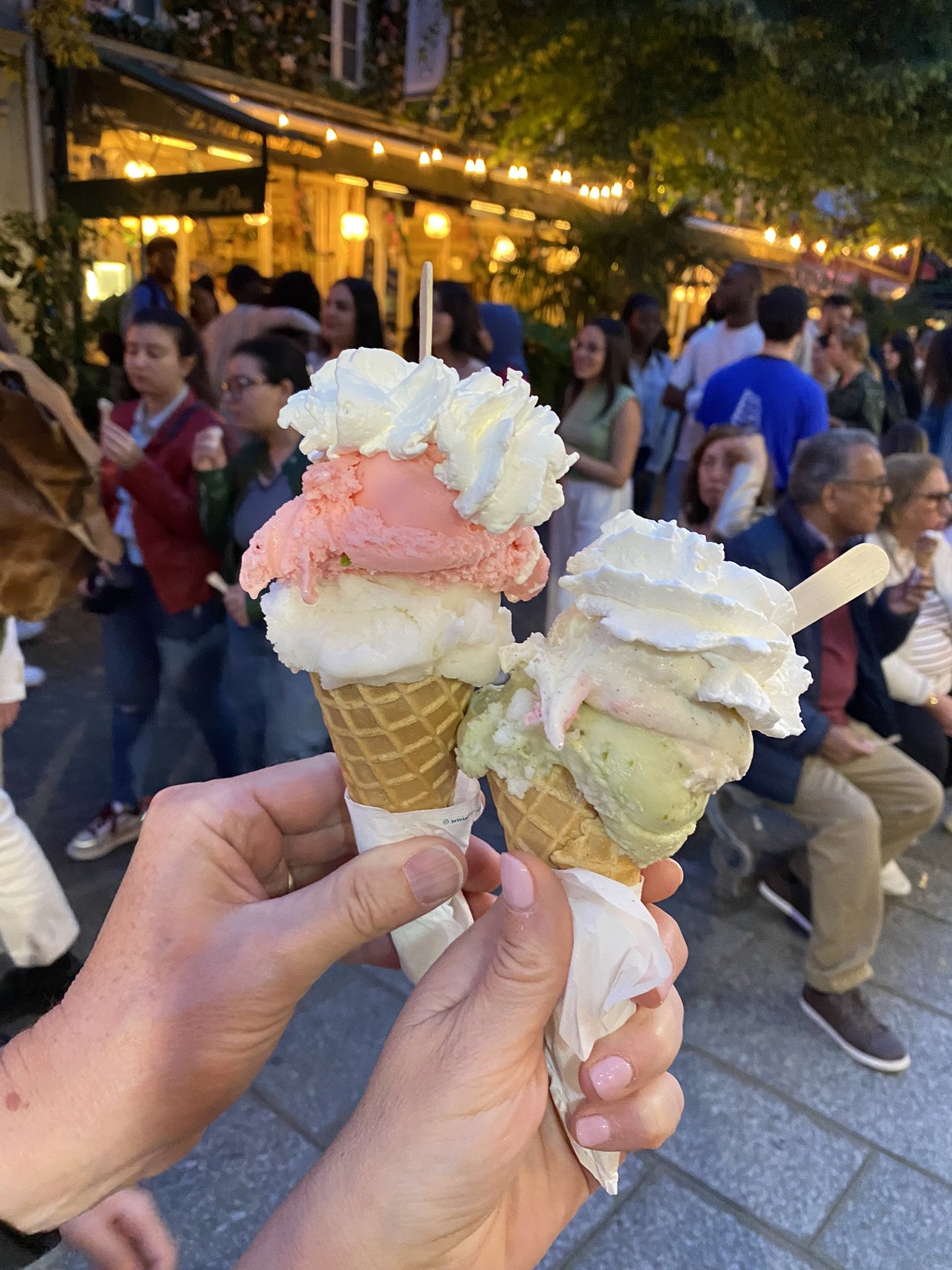
For dinner, we migrated back to Le Marais and discovered Rue Rambuteau. The street is incredibly lively and packed with dining options. To cap off the night, we joined the fast-moving queue at Bachir for their famous organic, Lebanese-style ice cream—the perfect sweet ending to an amazing day.

Day 5 – Welcome to the Loire Valley
It was time to leave Paris. While a car is a liability in the city, it’s an absolute must for exploring the French countryside. Early in our planning, we booked a rental with pick-up and drop-off at Charles de Gaulle Airport. Rather than risking a taxi sitting in traffic, we walked 15 minutes from our hotel to Gare du Nord—grabbing a final Parisian pain au chocolat along the way—and took the express train straight to the airport terminal.
Leaving the hustle and bustle of Paris behind, we drove into the quiet, scenic Loire Valley. We arrived in the town of Amboise and checked into a stunning castle hotel, Château des Arpentis. We stayed in the Blue Room, which offered a beautiful view of the manicured gardens, horses roaming freely in the distance, and the swimming pool.
After photographing the grounds, we made the quick five-minute drive into the heart of Amboise to visit the Château d’Amboise. A favorite royal residence for French nobility, it features beautifully restored interiors and panoramic views over the water. Before dinner, we strolled along the Loire River and crossed the main bridge for a magical, postcard-perfect view of the town and its illuminated chateau. We wrapped up the evening with a delicious dinner at L’Ambacia.
💡 Travel Tip: Deciding where to base yourself in the Loire Valley can be overwhelming with so many towns recommended, but Amboise was the perfect choice. It is large enough to offer a great variety of restaurants, shops, and grocery stores, yet small enough to maintain its incredible historic charm. Plus, it's centrally located near many of the valley's most famous châteaux.
Day 6: Ditching the Schedule for Château de Chenonceau
We originally planned to visit both Château de Chenonceau and Château de Chambord today, but Chenonceau completely mesmerized us. We spent nearly the entire day there and ended up skipping Chambord altogether—one of the greatest benefits of self-planned travel is the freedom to stay in the moment rather than rushing to keep a strict schedule.
Our fascination with Chenonceau actually started at home after watching two shows: Medici, which highlighted the famous Italian dynasty's roots, and The Serpent Queen, which focused heavily on Catherine de' Medici’s life here in France.
Seeing the onscreen history come to life was incredible, but the château had even deeper stories to tell. Knowing we were heading to World War I and II historic sites later in our trip, we were fascinated to learn about Chenonceau's own wartime past—especially how its famous gallery over the Cher River was used as an escape route into the Free Zone during WWII.
Instead of rushing off, we chose to slow down. We spent hours wandering through the grand rooms, manicured gardens, quiet forest trails, and along the river. After a relaxing lunch in the garden, we ended our perfect day by getting lost in the green maze. Sometimes, the best travel days are the ones where your plans completely change.
Day 7: Da Vinci's Genius and One of France’s Prettiest Towns
Today, we visited the nearby Château du Clos Lucé, gifted by King Francis I to Leonardo da Vinci in 1516. Da Vinci spent the final years of his life here, and touring the rooms offered an incredible window into his daily existence.
The highlight was stepping outside into the grounds. The gardens are beautifully designed to showcase full-scale, interactive models of his revolutionary inventions. At the far end of the property, we also explored a new building featuring a fantastic, immersive Da Vinci exhibit.
In the afternoon, we drove to Montrésor, officially listed as one of the Plus Beaux Villages de France (the prettiest villages in France), and it completely lived up to the title.
We wrapped up our evening back in Amboise with a fantastic dinner at Via Roma, enjoying delicious pizza paired with local Loire Valley wine. Afterward, we returned to our castle hotel to capture photos during the twilight hour, winding down a perfect day with a bottle of wine as the sun dipped below the horizon.


Day 8: Exploring Saint-Malo
Today, we left the Loire Valley and headed to Brittany, arriving at the historic seaside town of Saint-Malo shortly after lunch.
Saint-Malo was eighty percent destroyed by Allied bombing during WWII, but it was amazingly rebuilt to its original medieval architecture using salvaged stone from the rubble. This is the very setting of the Pulitzer Prize-winning novel and Netflix series All the Light We Cannot See—a highly recommended story about a blind French girl sending secret radio broadcasts during the battle for the city.
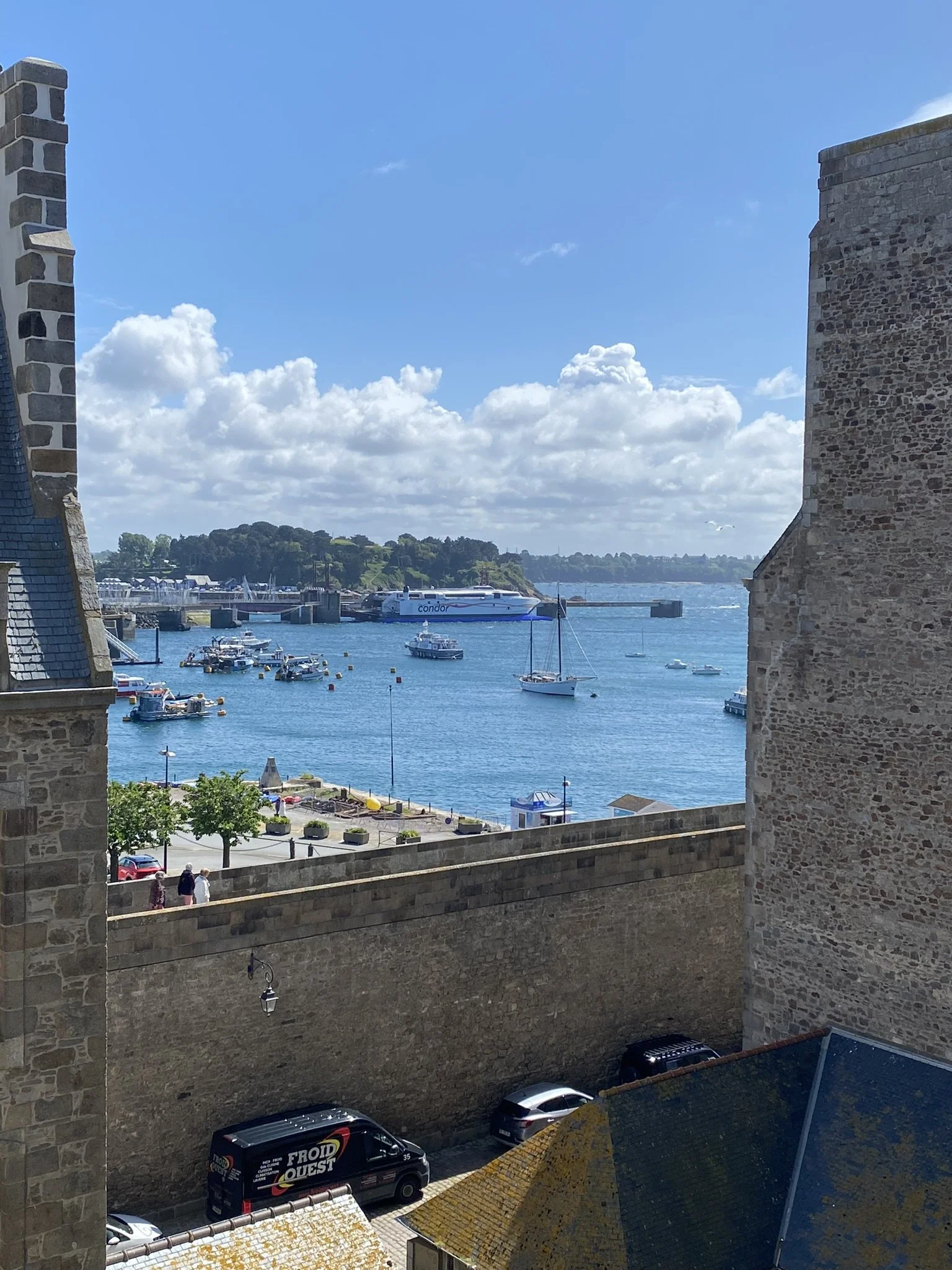
The old town is known as the Intra-Muros (within the walls) and is completely surrounded by massive granite ramparts. We checked into our Airbnb right inside the walls, which offered lovely views of the harbor and the ramparts. Since car access is highly restricted here, we parked in one of the large lots just outside the walls.
Anxious to explore, we immediately headed up to walk the ramparts, taking in the spectacular views of the town and the sea. Along the way, we came across the statue of Jacques Cartier, the famous explorer who set sail from Saint-Malo and went on to name Canada.
Looking out toward the ocean, we spotted an island fortress. Fortunately, the tide was low, allowing us to walk right across Bon-Secours beach to access Fort National (and the nearby Petit Bé). Afterward, we wandered inside the old town itself. It is incredibly quaint and beautiful, packed with an abundance of boulangeries, shops, and restaurants. While it is definitely touristy, it is absolutely worth seeing.



DaDay 9: The Magic of Mont Saint-Michel and a Sweet Return to Saint-Malo
Our day began with a scenic 50-minute drive from Brittany into Normandy to visit the enchanting Mont Saint-Michel. Just 30 minutes into the journey, the majestic sanctuary appeared on the horizon like a mirage.
Parking is located over two kilometers from the island itself, leaving visitors with a choice: take the free shuttle buses or enjoy a leisurely walk. We opted for the footbridge walk to soak in the views. Word to the wise: pack layers and be prepared for wind, as the weather here plays its own symphony of rain, clouds, and sudden bursts of warm sunshine all in a single afternoon.
Stepping through the main gates felt like wandering into a real-life Diagon Alley from Harry Potter. The cobblestone streets are a maze of charming shops and hidden alleys. We wound our way upward through the village, catching spectacular viewpoints of the bay before reaching the summit to explore the magnificent Abbey of Mont Saint-Michel.
The abbey's architecture stands as an incredible testament to centuries past. We bought our entrance tickets in advance—a must to skip the lines—and spent hours marveling at the intricate stonework and the play of light through ancient windows. After our abbey adventure, we headed back down into the village for a traditional Norman lunch of savory galettes and sweet crepes.
For the return trip to the parking lot, we chose to walk the footbridge a second time, savoring the salty breeze and the changing views of the mount.
Back in Saint-Malo, we made a delicious detour to a local butter boutique to learn about Brittany's famous salted butter. Yielding to our sweet cravings, we stopped at the bakery Kouign Amman, a spot famous for its Kouign-amann—Brittany's legendary caramelized butter pastry—where we indulged in some truly divine apple varieties before dinner. It was a day etched in wonder, straight out of a fairy tale.


Day 10: Honoring History at Omaha Beach and Arriving in Bayeux
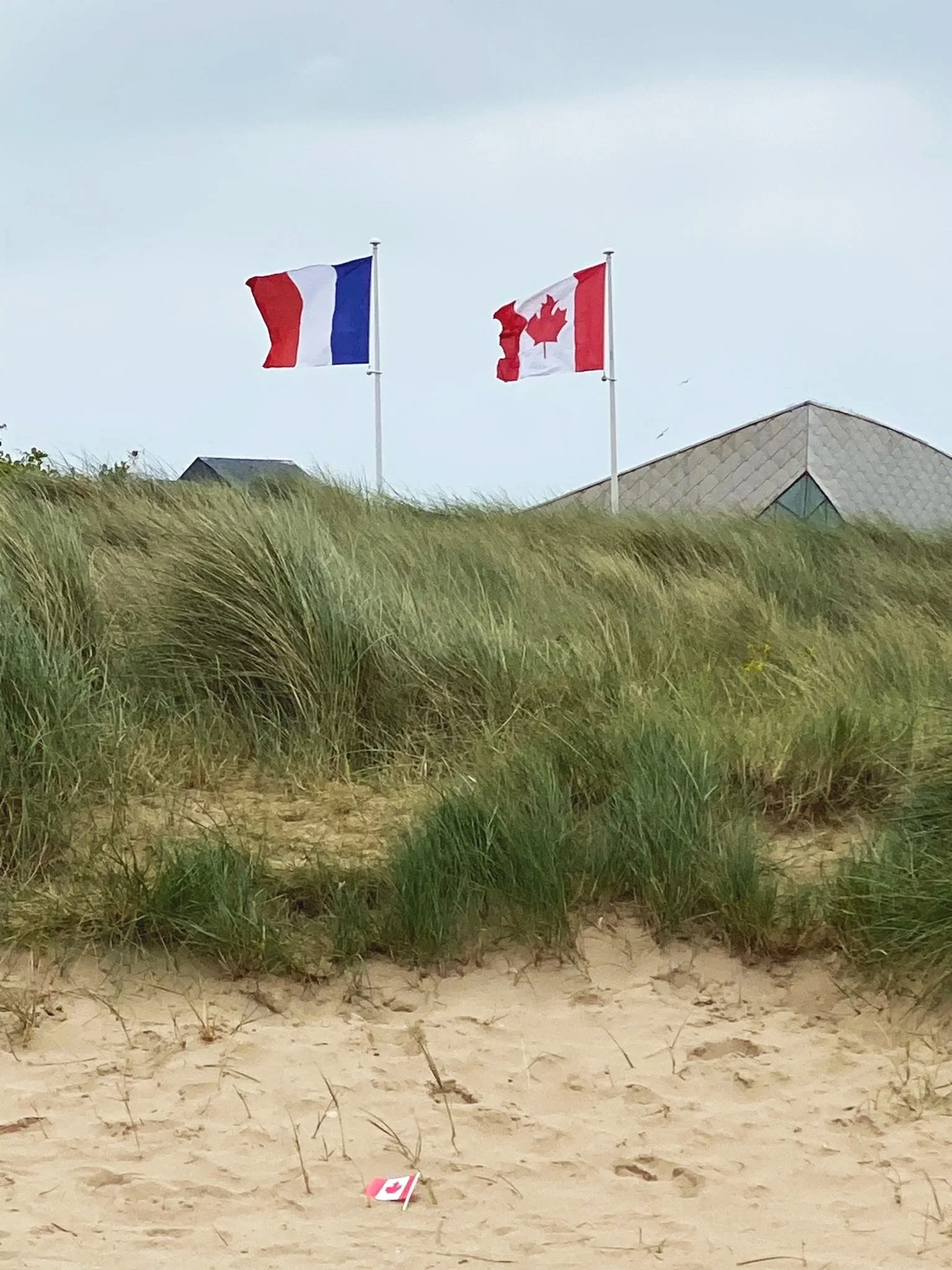
Our day unfolded like a chapter from a poignant novel as we drove from Saint-Malo to Bayeux, routing via Omaha Beach. The scenery along the way was deeply touching; little French towns were adorned with Canadian, American, and British flags fluttering proudly in the breeze. As Canadians, seeing our own flag flying so widely gave us a surreal, proud feeling—as if we were celebrating Canada Day on foreign soil.
We arrived in Normandy during the historic 80th D-Day Anniversary celebrations, a time of both vibrant celebration and solemn reflection. June 6, 1944, marked the beginning of the end of World War II, when Canada, the United States, and Great Britain converged to assemble 130,000 troops for the largest seaborne invasion in history.
Our first stop was Omaha Beach, where American soldiers landed on that fateful morning. The town was buzzing with energy: active-duty American soldiers marched in full uniform, vintage green army jeeps and medical vehicles crisscrossed the streets, and flags lined every alley. Before heading into the museum, we had lunch inside a massive army tent set up with picnic tables. Being there in the middle of it all made us feel like we were part of something incredibly special.
We then visited the Overlord Museum, wandering through powerful exhibits that chronicled the geopolitical climate before, during, and after the war. Inside, the massive displays of tanks, rifles, uniforms, and audio recordings whispered stories of immense sacrifice and courage.
Next, we visited the Normandy American Cemetery, a deeply solemn sanctuary perched on a cliff overlooking Omaha Beach. Endless, immaculate rows of white crosses and Stars of David stood in silent tribute. Inside the visitor center, the hour-by-hour chronicle of the landings left us completely spellbound.
By late afternoon, we arrived in Bayeux, a gorgeous medieval town that was remarkably spared from destruction and became the first major town liberated by the Allies. The streets were alive with gratitude; our charming Airbnb welcomed us, and as we strolled through the historic center, we admired shopfronts decorated with hand-painted cartoon characters, each whispering a heartfelt “Thank you to our liberators.” It is a town where history and profound gratitude are beautifully intertwined.


Day 11: A True Canadian Tribute at Juno Beach and the Midnight Skies of Normandy
Our second day of reflection began at Bény-sur-Mer Canadian War Cemetery. After wandering through the peaceful grounds and paying our respects, we continued to Juno Beach, where Canadian soldiers landed on D-Day.
While walking along the boardwalk, we discovered Canada House, a home instantly recognizable by its display of Canadian flags. As we paused to read the plaque out front, the lovely lady who owns the home actually waved us over and welcomed us inside. Known historically as the first house liberated by Canadian troops on D-Day, its living room is a living museum filled with wartime artifacts, souvenirs, and an authentic uniform donated by a veteran.
The owner guided us through, sharing stories of returning veterans who would look out her living room window and ask what had happened to the massive concrete seawall that once stood between them and the beach. Her answer? The seawall is still right there, entirely buried underneath the sand. It was an unexpected, deeply moving tour we will never forget.
Next, we visited the Juno Beach Centre, a permanent memorial to Canada’s military contributions. The exhibit ended with a powerful film titled They Walk With You, which left absolutely no dry eyes in the theater.
From there, we drove to the British Normandy Memorial in Ver-sur-Mer, overlooking Gold Beach. This impressive outdoor tribute lists the names of more than 22,000 soldiers under British command who lost their lives in Normandy. Walking toward the shore, we encountered the breathtaking Standing with Giants art installation—a sweeping field of life-sized silhouettes representing the soldiers who fell on D-Day.
By the end of the afternoon, our minds and hearts were overflowing with gratitude. But the day wasn't over.
At midnight, we drove from our apartment in Bayeux to the coast. To mark the 80th anniversary, a coordinated fireworks display was launched simultaneously across all five landing beaches. The atmosphere was a beautiful mix of somber and celebratory. What stuck with us the most, however, was seeing so many French families out late into the night with their young children, ensuring the next generation remembers exactly what happened on these shores eighty years ago.



Day 12: Storybook Charm and Fresh Mussels in Honfleur
Before leaving Bayeux, we stopped at Pâtisserie À La Reine Mathilde for coffee and pain au chocolat. With its grand chandelier and classic French charm, this is the exact type of bakery I could have happily sat in all day.
The drive to Honfleur took about an hour and a half, and as we arrived, I couldn’t believe how incredible our Airbnb location was. We were just around the corner from the heart of the historic port, surrounded by shops and restaurants. Conveniently, a large car park was located right outside our building, right beside Le Jardin Retrouvé—a beautiful public garden that serves as the perfect peaceful escape from the harbor crowds.
Honfleur is a quaint medieval town with a true storybook feel; you almost expect Belle and Gaston from Beauty and the Beast to pop out around the next corner. It is also famously known as a birthplace of the Impressionist art movement, where Claude Monet studied under his mentor, Eugène Boudin.
We spent the day fully exploring the village, wandering through the narrow cobblestone streets, dipping into boutiques, and indulging in pastries along the way. Right beside Église Sainte-Catherine—the largest wooden church in France built by shipwrights—we caught the local outdoor market.
After some shopping, we took a break to enjoy a few drinks at one of the lively outdoor patios lining the harbor. For dinner, the undisputed specialty here is fresh, daily-caught mussels. They are an absolute must-try, served in steaming pots with an array of delicious sauces to choose from.


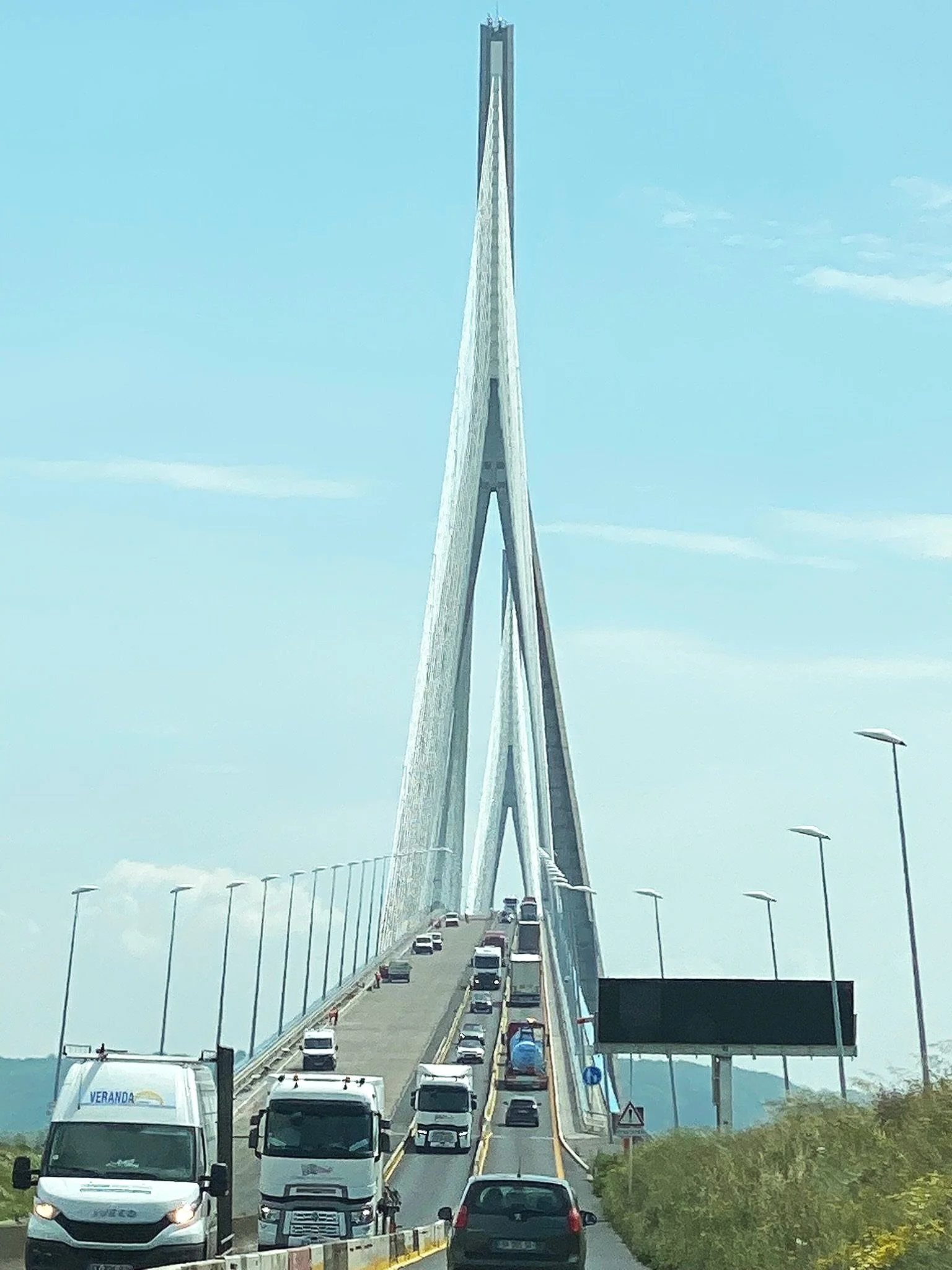
Day 13 - Etretat: After enjoying a coffee and pain au chocolat for breakfast, we embarked on a 1 hour drive to Étretat. En route, we crossed the Pont de Normandie, a remarkable toll cable-stayed bridge spanning the mouth of the Seine River, connecting Honfleur to Le Havre. Upon arrival in Étretat, we found a large parking lot near the town center and began our hike. Étretat, a town in northern France, is famed for its white, picturesque cliffs, extraordinary rock formations, and pristine white sand beach. A trail runs along the cliff's edge, accessible via several staircases. We explored various cliffs, savoring the shifting views throughout the day. Carrying snacks or a small picnic is advisable to enjoy the majestic scenery from the summit, though the hike becomes more strenuous the further you venture. After roughly three hours of hiking, we dined at one of the local restaurants before visiting Les Jardins d'Étretat, a breathtaking garden with splendid views of the cliffs. It was a beautiful and unforgettable day. We then returned to Honfleur for dinner and some last-minute shopping in this charming storybook town.
***
Day 13: The Dramatic White Cliffs of Étretat
After enjoying a quick coffee and pain au chocolat for breakfast, we embarked on a one-hour drive to Étretat. En route, we crossed the Pont de Normandie, a spectacular cable-stayed toll bridge that spans the mouth of the Seine River, beautifully connecting Honfleur to Le Havre.
Upon arriving in Étretat, we secured a spot in one of the large parking lots near the town center and headed straight for the trail. This northern French coastal town is world-famous for its dramatic chalk-white cliffs, extraordinary natural arches, and pristine white pebble beach.
A spectacular trail snakes right along the cliff’s edge, accessible from the beach via a few steep staircases. We spent about three hours hiking to various vantage points, savoring how the coastal light shifted across the landscape throughout the day. If you plan to tackle this, carrying water and a small picnic is highly advisable so you can relax and enjoy the majestic scenery from the summit—just keep in mind that the hike becomes significantly more strenuous the further you venture from the main town center.
After building up quite an appetite, we headed back down into the village for a wonderful lunch at a local restaurant. Afterward, we visited Les Jardins d'Étretat, a breathtaking cliffside garden filled with whimsical, living green sculptures that frame splendid, artistic views of the famous needle rock formation below.
It was a truly beautiful and unforgettable day. By evening, we returned to Honfleur for a relaxing dinner and some last-minute shopping in our favorite storybook town.


Day 14: Crossing into Belgium and the Storybook Streets of Bruges
Today, we said a fond goodbye to the charming town of Honfleur and set our sights on Bruges, Belgium. Despite looking relatively close on the map, it was one of our longer travel stretches, taking about four hours to drive. While we were incredibly eager to explore Bruges itself, we were also drawn by the region's World War I memorial sites. Many of these historic battlefields and cemeteries are located just a short distance away in Belgium, and we planned to dedicate time to them right after our stay in the city.
By mid-afternoon, we reached our quaint boutique hotel, Dukes’ Arches, located in a wonderfully quiet neighborhood within Bruges' historic old town.
Parking inside the old town can be tricky and expensive, with central lots costing around €30 per day and street meters restricted to short-term stays. Fortunately, our hotel hosts gave us a fantastic local insider tip: a public parking lot along Coiseaukaai just outside the historic center. It was completely free, provided we didn't mind a 25-minute walk. As avid enthusiasts of walking and exploring new places on foot, we gladly chose the complimentary option and enjoyed the scenic stroll back into town.
We spent the rest of our day getting lost in the winding, medieval streets of the old town. Eventually, we made our way to the bustling main square, known as The Markt. We wrapped up our travel day perfectly by relaxing at one of the vibrant outdoor restaurants lining the square, sipping authentic Belgian beer while facing the city's most iconic landmark: the magnificent, 12th-century Belfry of Bruges.


Day 15: Sunny Canals, Fresh Strawberries, and Brewery Views in Bruges
Like most mornings on this trip, we set off to find a great local bakery for our usual coffee and pain au chocolat. We ended up at Patisserie Schaeverbeke, which was fantastic. Equally nice was 't Stealyzer right across the street, where I was actually able to get a large coffee to-go. After fifteen days of wonderful but small European coffees, I was seriously craving a large travel cup to fuel our morning!
With the sun shining beautifully, we set out to explore more of the city. Our first great discovery was the picturesque St. Bonifacius Bridge, which we completely stumbled upon while weaving our way back toward the center.
When we reached The Markt, we were surprised to find a massive open-air market in full swing (which we learned runs from Wednesday to Saturday). The stalls offered an incredible array of temptations, from roasted chickens and fresh waffles to vibrant produce. We bought a pint of locally grown strawberries, and they were hands-down the best we have ever tasted.
Next, we strolled over to the nearby docks for a guided canal boat tour—an absolute must-do experience to see Bruges from the water. Afterward, we headed back to the main square for lunch, naturally followed by a stop at a local waffle house for dessert.
Bruges is incredibly walkable. As we continued exploring on foot, our route took us past several iconic landmarks, including Burg Square and the Bruges City Hall, the Church of Our Lady, the Groeninge Museum, and even the Torture Museum.
Later in the afternoon, we stopped at Bourgogne des Flandres for a self-guided brewery tour. It is a gorgeous spot that pairs excellent local beer with an amazing, relaxing view right over the canal. We finally wrapped up a busy, exhausting day with fantastic burgers at Bohemian Burgers—the perfect laid-back environment to unwind and recharge.


Day 16: An Emotional Journey Through Canada’s WWI History
On the final day of our unforgettable journey, we dedicated our time to visiting Canadian World War I memorials scattered between Belgium and Northern France (Hauts-de-France). Driving through the countryside, we frequently spotted wild red poppies blooming along the roadsides and fields—a natural, moving reminder of the history beneath our feet.
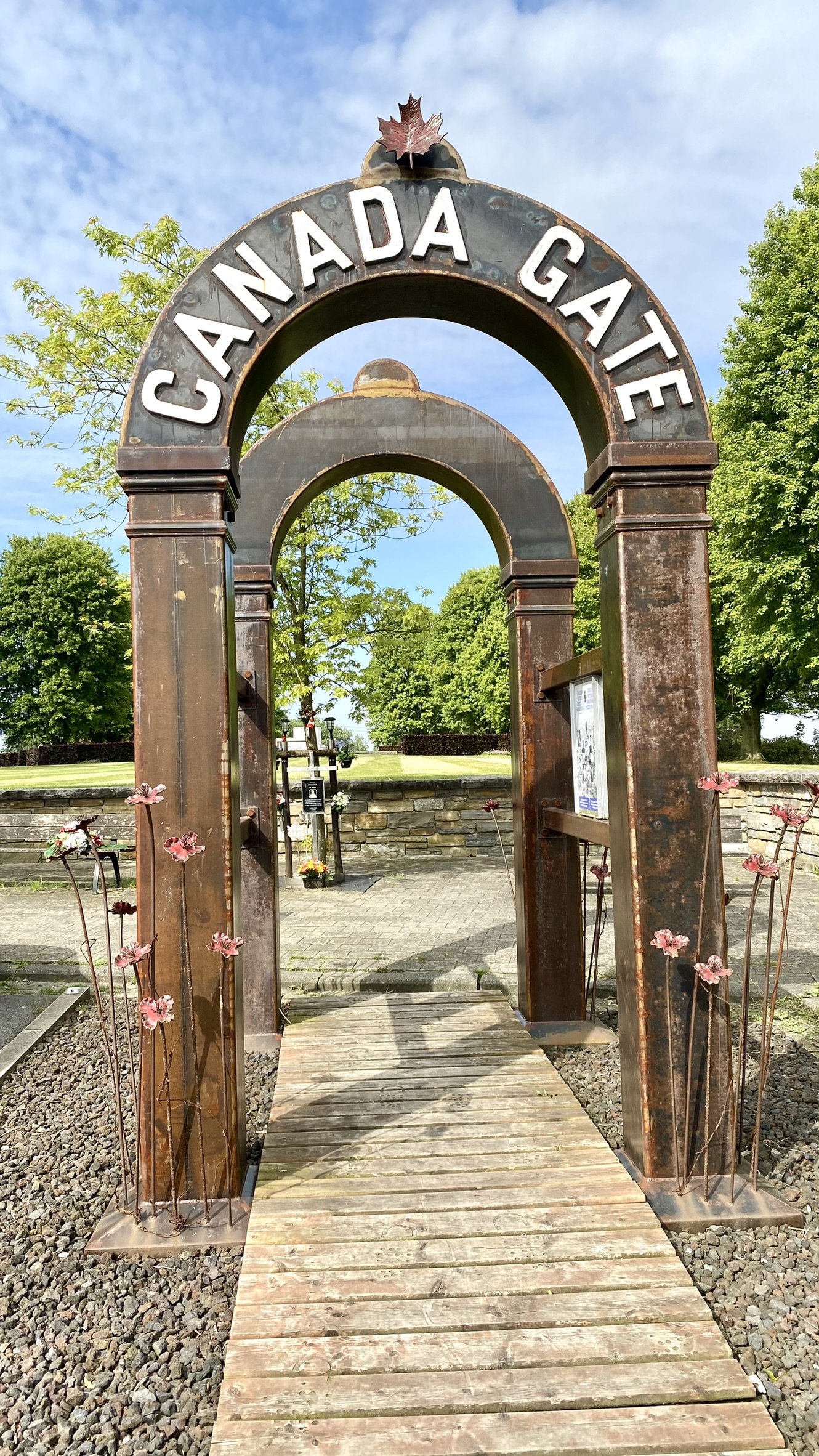
Our first stop was Passchendaele, where Canadian soldiers endured some of the most horrific, mud-soaked conditions of the war. Standing at the memorial is the Canada Gate. This iron gate has a twin in Halifax, Nova Scotia, called The Last Steps Memorial Arch. Together, they symbolize a powerful portal connecting Passchendaele to the very port where these soldiers left Canadian soil—and for many, their final glimpse of home.
Next, we visited Tyne Cot Cemetery, the largest Commonwealth war cemetery in the world and the deeply humbling final resting place of nearly 12,000 soldiers.
Continuing through Belgium, we stopped at The Brooding Soldier in Saint-Julien. This breathtaking, towering granite sculpture depicts a Canadian soldier with his head bowed, standing in tribute to the troops who bravely withstood the war's first-ever chemical gas attacks.
Our final Belgian stop was the iconic Menin Gate in Ypres, a monumental memorial dedicated to the missing Commonwealth soldiers who marched through this city on their way to the front lines. Every single evening at 8:00 p.m., a moving daily tribute—the playing of The Last Post—honors those who never returned.
With our hearts full of remembrance, we crossed back into France for our final destination: Vimy Ridge.
The Canadian National Vimy Memorial is a magnificent, soaring tribute to every Canadian who served in the First World War. Located on the actual battlefield, the site preserves the original trenches, tunnels, and cratered terrain. The sculptures on the white monument are incredibly powerful—particularly the figures of the grieving father, mother, and the cloaked woman representing Canada Bereft (a young nation mourning her dead). Standing there, you feel the true weight of the courage and sacrifice that shaped Canadian history.
We concluded this emotional pilgrimage by spending our last night at La Fontaine Racin, a lovely chateau hotel near Charles de Gaulle Airport, ahead of our flight home the next day.


Final Reflections
Looking back, this trip captured an incredible spectrum of human emotion. From the iconic streets of Paris and the grandeur of the Loire Valley to the fairy-tale wonder of Mont Saint-Michel, the storybook charm of Honfleur, the dramatic cliffs of Étretat, and finally, the tears of gratitude at the war memorials—it was a journey etched into our hearts.
As we drove toward the airport, we realized we didn’t want it to end; we simply wanted to keep driving, exploring, and learning. It is an itinerary we highly recommend to anyone.