Sicily Travel Itinerary
Discover why Sicily is one of Italy's best-kept secrets. This sun-drenched Mediterranean island offers dramatic coastlines, ancient Greek and Roman ruins, charming hilltop towns, and some of Italy's finest cuisine. From the fiery slopes of Mount Etna to the vibrant markets of Palermo, Sicily is a destination where history, culture, and unforgettable flavours come together.
This Sicily travel itinerary follows the route we took across the island, highlighting the places we loved most, practical travel tips, and must-see attractions. Whether you're planning your first visit or looking for new ideas for a return trip, I hope our experience helps you make the most of your time in Sicily.
See my personal take on Sicily at my blog page here.
Quick Sicily Itinerary at a Glance
| Day | Highlights | Overnight |
|---|---|---|
| Day 1 | This is the travel day. Getting to the airport and taking an overnight flight to Rome. | In flight |
| Day 2 | Arriving in Rome and take an hour flight to Palermo, Sicily. | Palermo |
| Day 3 | Exploring Palermo by foot. | Palermo |
| Day 4 | Leave Palermo by train to Cefalu. Wander the old town of Cefalu. | Cefalu |
| Day 5 | Visit the Cathedral and enjoy the town and beach in Cefalu. | Cefalu |
| Day 6 | Leave Cefalu by train and arrive in Milazzo. Embark on a hydrofoil ferry to the island of Lipari. | Lipari |
| Day 7 | Rent mopeds and explore the island of Lipari. Sunset at winery at Tunita de Castrello | Lipari |
| Day 8 | Swim on the volcanic beaches of Lipari and take a boat tour to the planet's most active volcano, Stromboli. | Lipari |
| Day 9 | Head back to the mainland via hydrofoil and take the train to Taormina. Wander through the Villa Communale. | Taormina |
| Day 10 | Visit the Teatro Greco. In the afternoon take the cable car down to the beach and explore the tiny island of Isola Bella. | Taormina |
| Day 11 | Visit the towns of Savoca and Castelmola. | Taormina |
| Day 12 | Leave Taormina by train and arrive in Catania. Explore Catania. | Catania |
| Day 13 | Tour of Mount Etna, Europe's tallest volcano. | Catania |
| Day 14 | Rent a car in Catania and drive to Ortigia. | Ortigia |
| Day 15 | Enjoy a day at Fontane Bianche Beach. Dinner back in Ortigia. | Ortigia |
| Day 16 | Visit the Castello Maniace in Ortigia. Drive to the town of Noto in the afternoon. Dinner in Ortigia. | Ortigia |
| Day 17 | Drive to Ragusa on the way stop at beach club for lunch (Carizza Maganuco Beach Club). Exploring Ragusa. | Ragusa |
| Day 18 | Day to relax in Ragusa. | Ragusa |
| Day 19 | Drive to Scalia dei Turchi in the morning. Lunch near the beach. Afternoon at Valley for the Temples in Agrigento | Agrigento |
| Day 20 | Drive from Agrigento to Catania airport. Return car. Fly to Rome. Train to Rome Central. | Rome |
| Day 21 | Explore your favourite sites in Rome by foot. | Rome |
| Day 22 | Taxi to train station in Rome Central. Train to Rome Airport. Flight to home. |
Day 1 - Travel Day
We flew overnight on a transatlantic flight to Rome, Italy.
Day 2 - Arriving in Palermo and First Impressions
We caught a quick Ryanair flight over to Palermo. Upon landing, we opted for a shared ride into the city centre—a decision that turned out to be easy, quick, and incredibly budget-friendly. We’d seen countless travel posts and YouTube videos warning that local taxi pricing can fluctuate wildly mid-trip, so the shared ride gave us total peace of mind.
💡 Travel Tip: If you prefer a private transfer instead, Welcome Pickups is a fantastic, reliable service that allows you to book and pay a fixed rate completely in advance.
For your stay, I highly recommend finding a spot close to Via Maqueda, Palermo’s vibrant, main pedestrian street. Staying here means you’re within easy walking distance of almost all the major historic sites.
Spend your first afternoon easing into the Sicilian pace of life. Take it easy, rest up, and then head out for your very first aperitivo of the trip. You'll find endless lively bars and restaurants spilling out along Via Maqueda, or you can head over to Hotel Ambasciatori to grab a drink at their rooftop bar for a spectacular, sweeping view of the city's historic rooftops.
Recommended hotels are:
Hotel Ambasciatori - A beautiful 4-star hotel located right on Via Maqueda. It is incredibly central—just a 7-minute walk to the iconic Quattro Canti intersection. Its absolute highlight is the fantastic rooftop restaurant and bar (Seven Restaurant), which offers sweeping views over the city's historic dome-filled skyline.
Hotel Plaza Opéra - Another gorgeous 4-star option, located about an 8-minute walk to the magnificent Teatro Massimo. This hotel sits in a slightly sleeker, cosmopolitan neighborhood just off the main historic drag. It also features a stunning 8th-floor rooftop restaurant (OVER Rooftop), which serves incredible creative cuisine and cocktails with views facing Monte Pellegrino.
🍰Food Tip: Start your Sicilian food indulgence and have your first cannoli - Sicilian pastries consisting of tube-shaped shells of fried pastry dough, filled with a sweet, creamy filling usually made from ricotta cheese.
💡Travel Tip: Parking in Sicilian towns can be challenging, so taking the commuter train is often the easiest and most stress-free way to explore the coastal areas. Tickets can be purchased at the station using self-service kiosks or conveniently booked online. The Trenitalia website makes the process simple and efficient, allowing you to plan your journeys in advance with ease.
💡Travel Tip: A great couple to follow on YouTube is Matteo and Micha’s Sicily, Global Expats channel. They provide wonderful tips and create stunning videos of their adventure in Sicily.
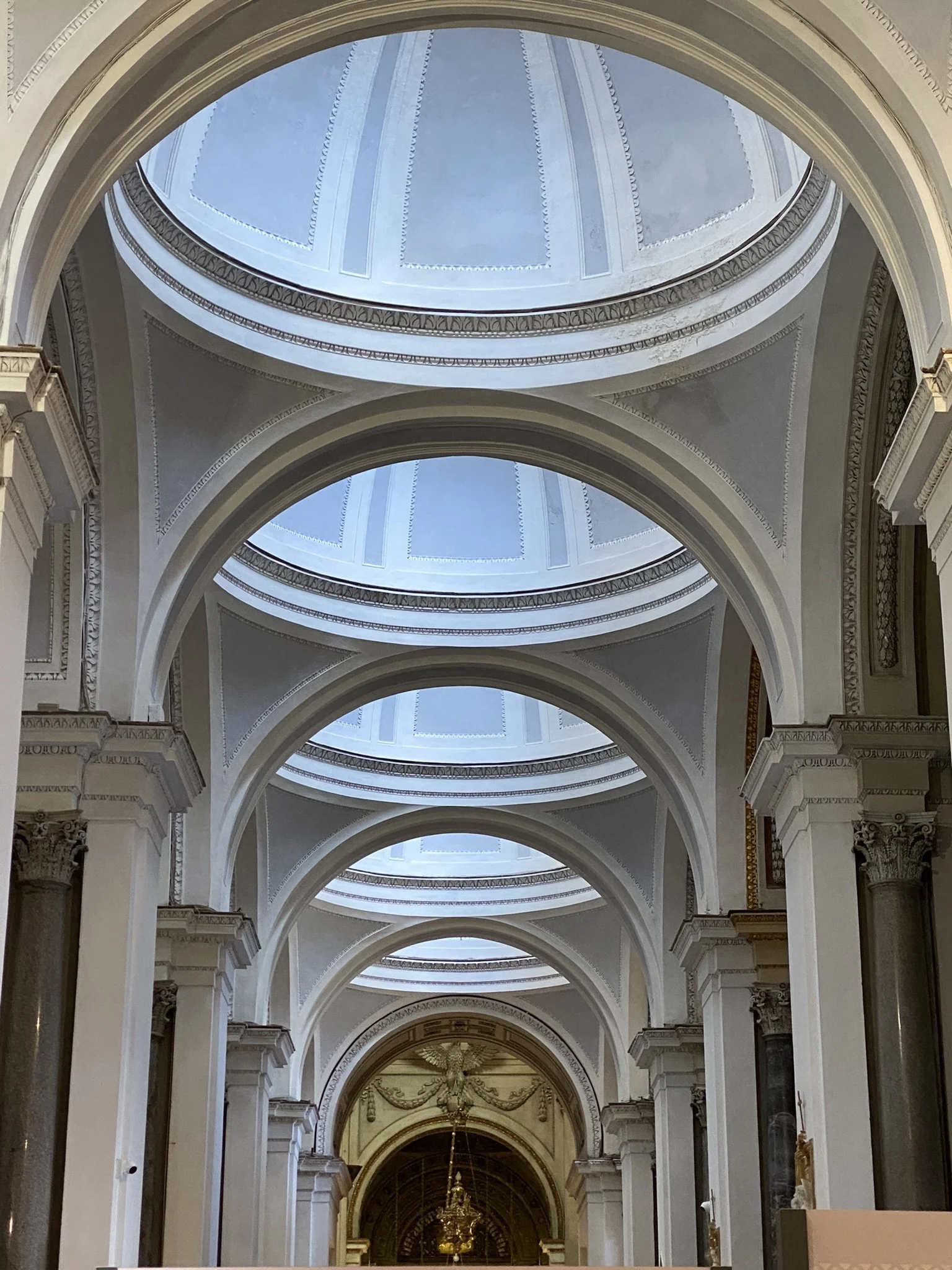
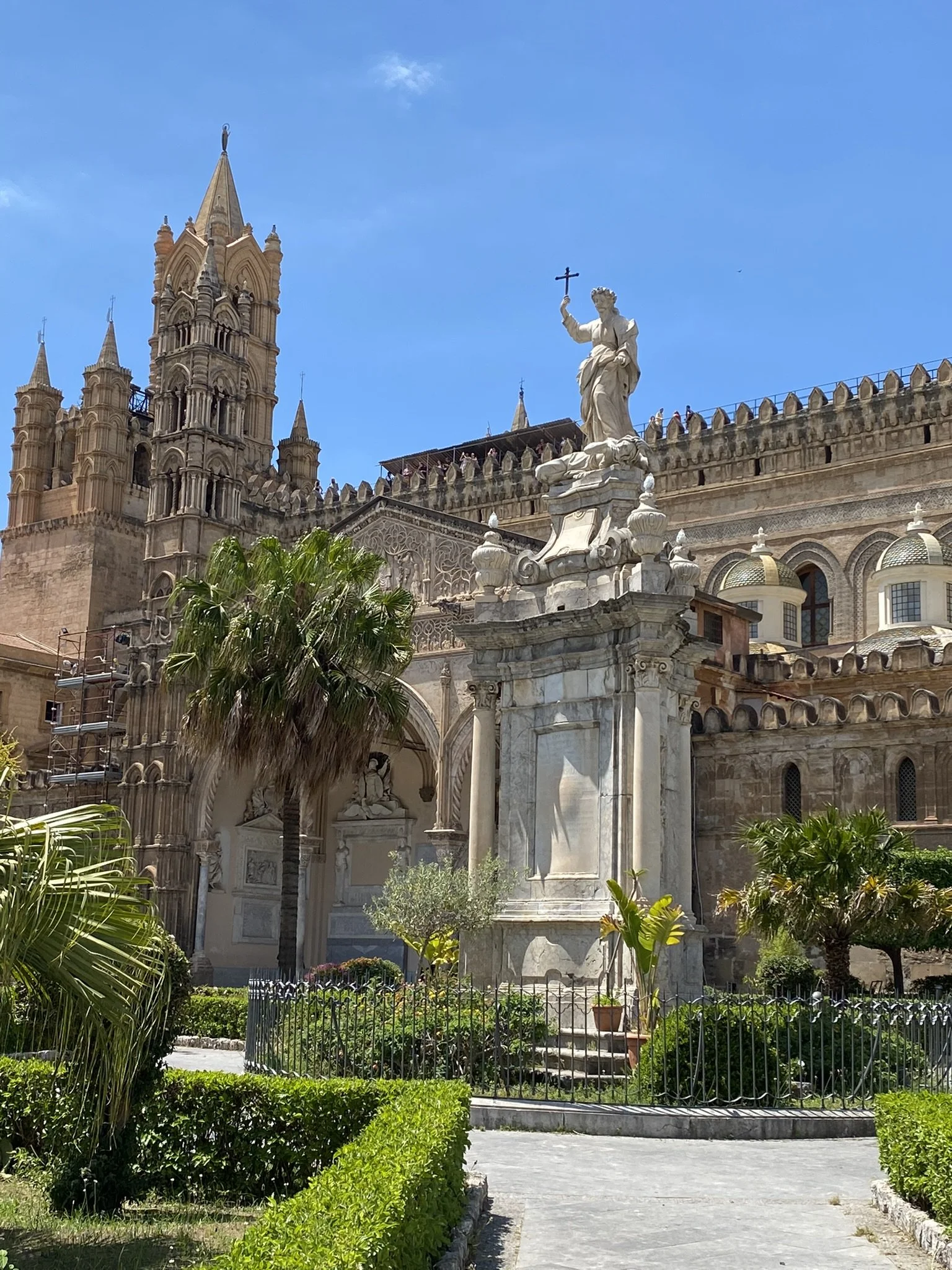
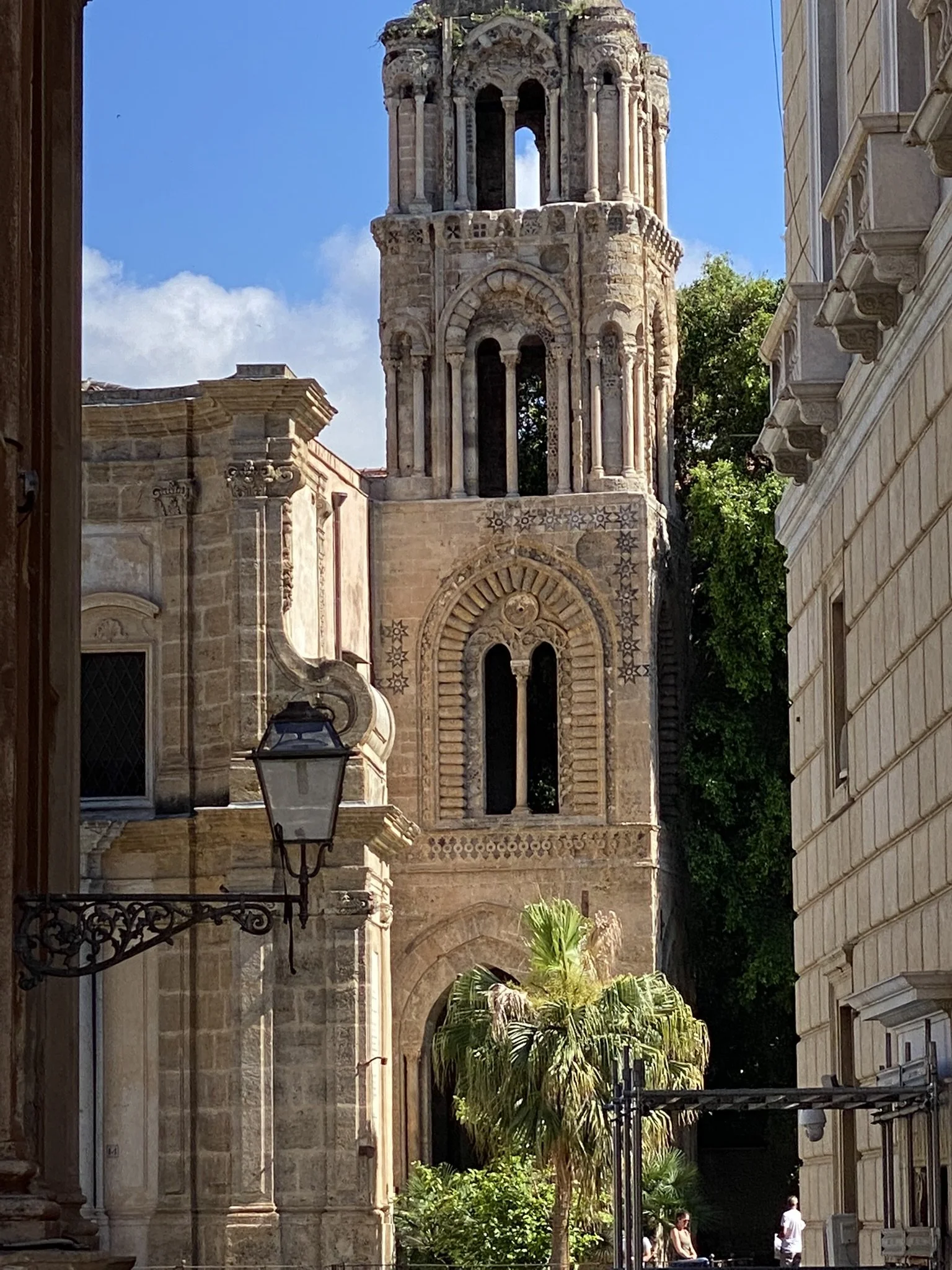
Day 3: The Best of Palermo Walking Tour
Palermo, Sicily’s vibrant capital on the northern coast, layers of Arab, Norman, and Italian history come alive in a rich tapestry of architecture, cuisine, and culture. Golden mosaics shimmer inside the Palatine Chapel, while the hum of daily life spills through lively street markets and along sunlit seaside boulevards. There’s an energy here that feels both ancient and unmistakably modern.
Spend the day wandering its atmospheric streets, pausing for an espresso or aperitivo, and discovering the city’s most iconic sights at your own pace—each turn revealing a new story, a new flavor, and a new reason to fall in love with Palermo.
Here is the perfect self-guided walking route to hit all the highlights:
Morning: Royal History & Cathedral Views
Palazzo dei Normanni & Cappella Palatina: Explore the grand royal palace and step inside the dazzling golden Byzantine mosaics of the Palatine Chapel—Palermo’s crown jewel.
Villa Bonanno: A peaceful, palm-fringed park right outside the royal palace, perfect for a quick, quiet stroll.
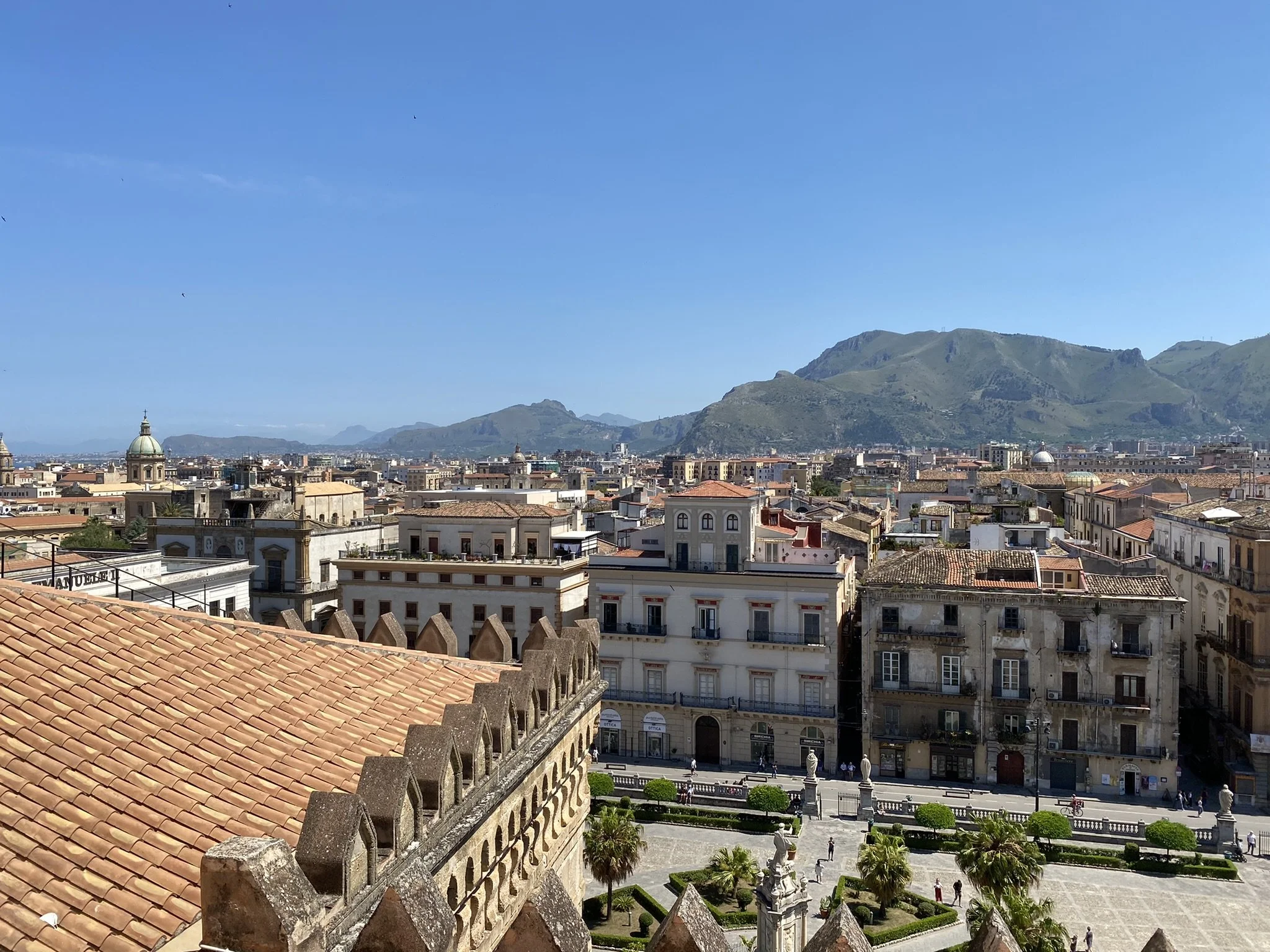
Palermo Cathedral: A spectacular architectural marvel. Be sure to climb up to the rooftop for sweeping, panoramic views of the city and surrounding mountains.
Midday: Market Street Food
Ballarò Market: Dive into Palermo's famous, vibrant food market. Wander the lively stalls to sample iconic street food like arancine (rice balls), panelle (chickpea fritters), and fresh cannoli.
Afternoon: The Historic Heart & Harbor
Quattro Canti: The grand Baroque crossroads and historic heart of old Palermo, featuring four beautifully symmetrical curved facades and fountains.
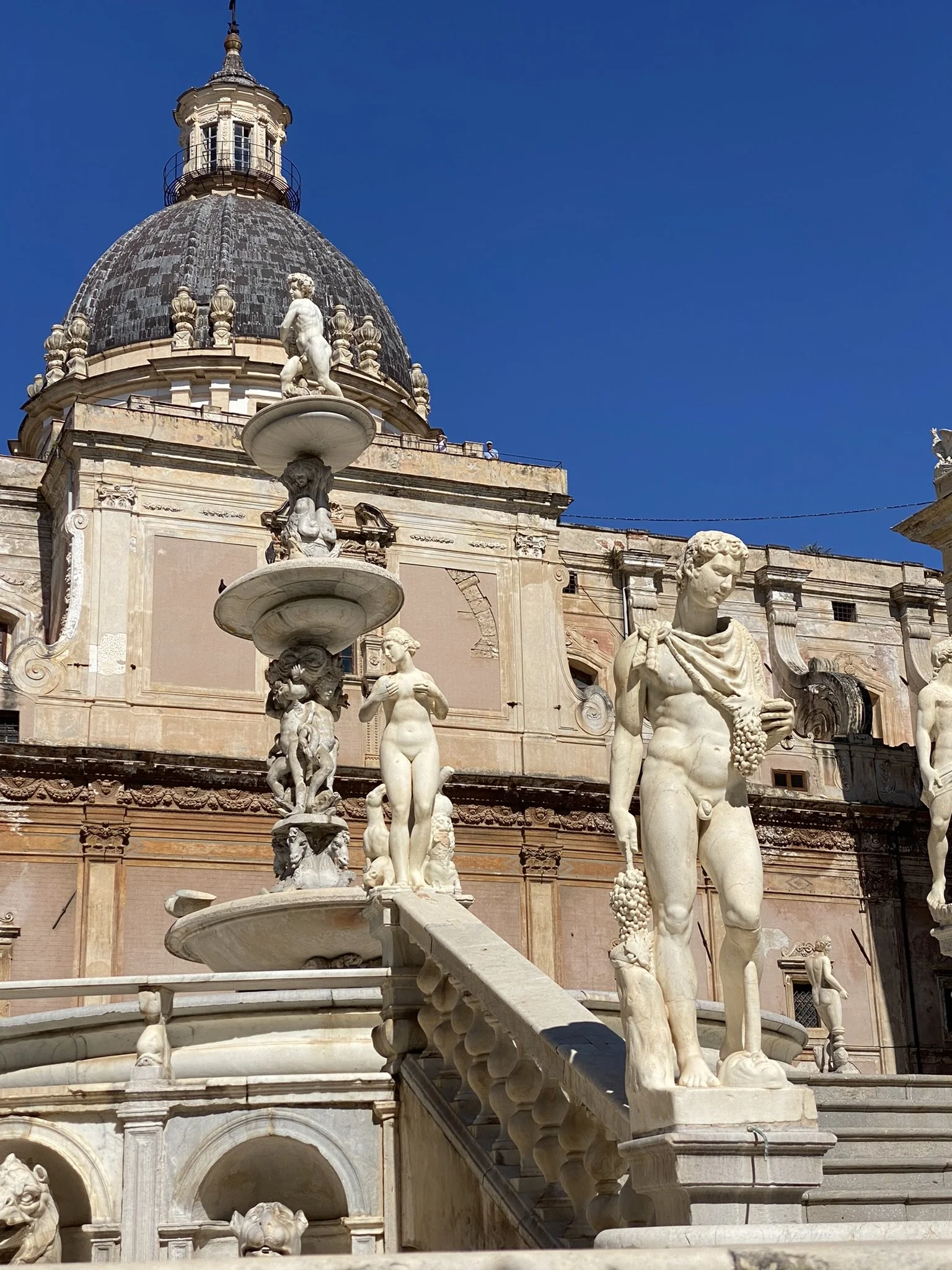
Piazza Pretoria: Located right next to Quattro Canti, this features the famous "Fountain of Shame"—so named because historic homes were demolished to make room for its nude statues, sparking local outrage.
Teatro Massimo: One of Europe's largest opera houses. Film buffs will instantly recognize its grand steps from the dramatic final scene of The Godfather Part III.
Palermo Harbour (La Cala): A bit further out but walkable. Head to the water's edge to see the powerful, famous street mural of the heroic anti-mafia prosecutors Falcone and Borsellino.
Day 4: Cefalù – Seaside Charm & Medieval Streets
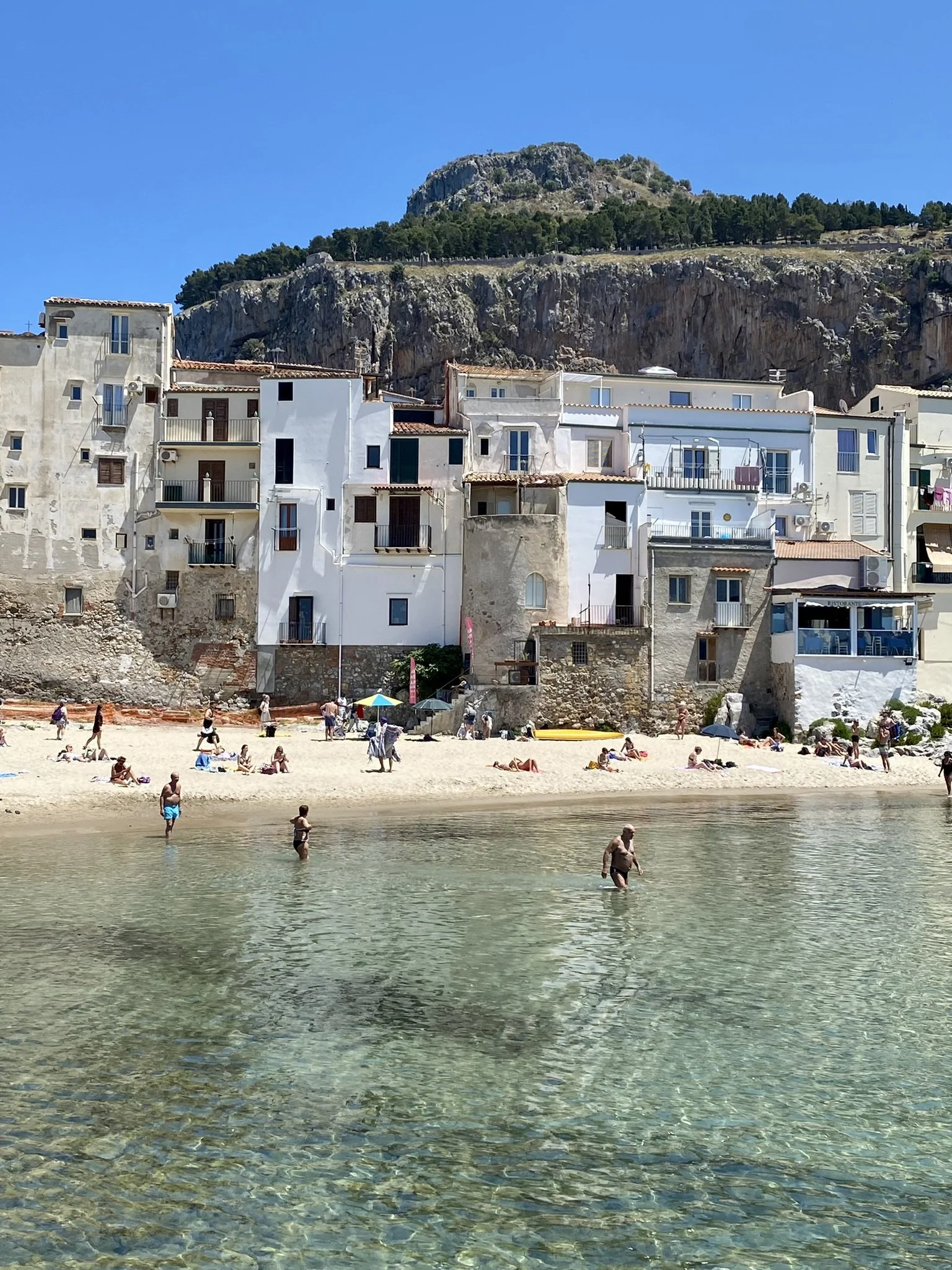
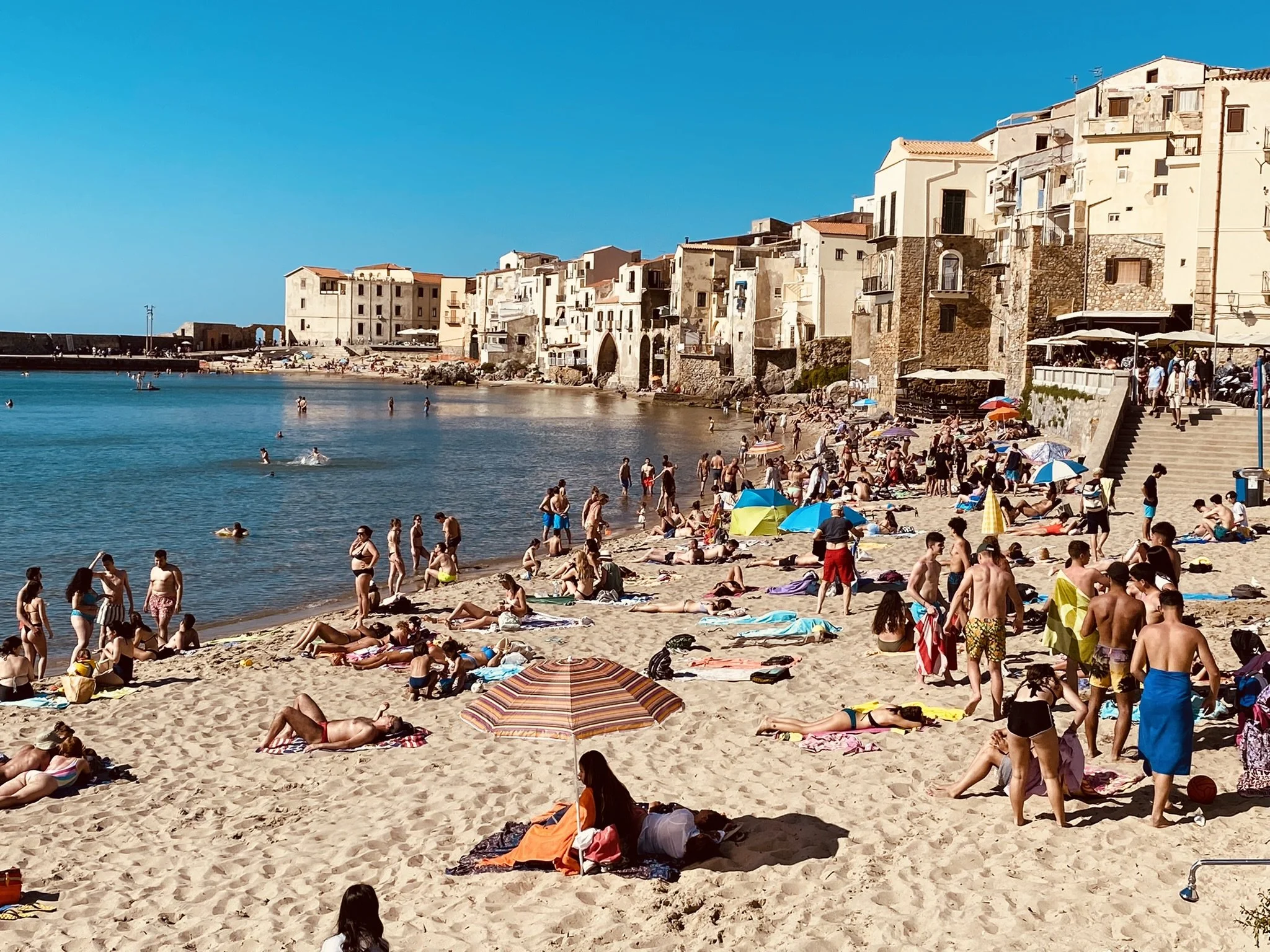
Less than an hour from Palermo by train lies the enchanting seaside town of Cefalù—a place where golden beaches, medieval streets, and timeless Sicilian charm come together effortlessly. Dominated by a magnificent Norman cathedral, the town feels both intimate and grand, with history woven into every stone.
Where to Stay
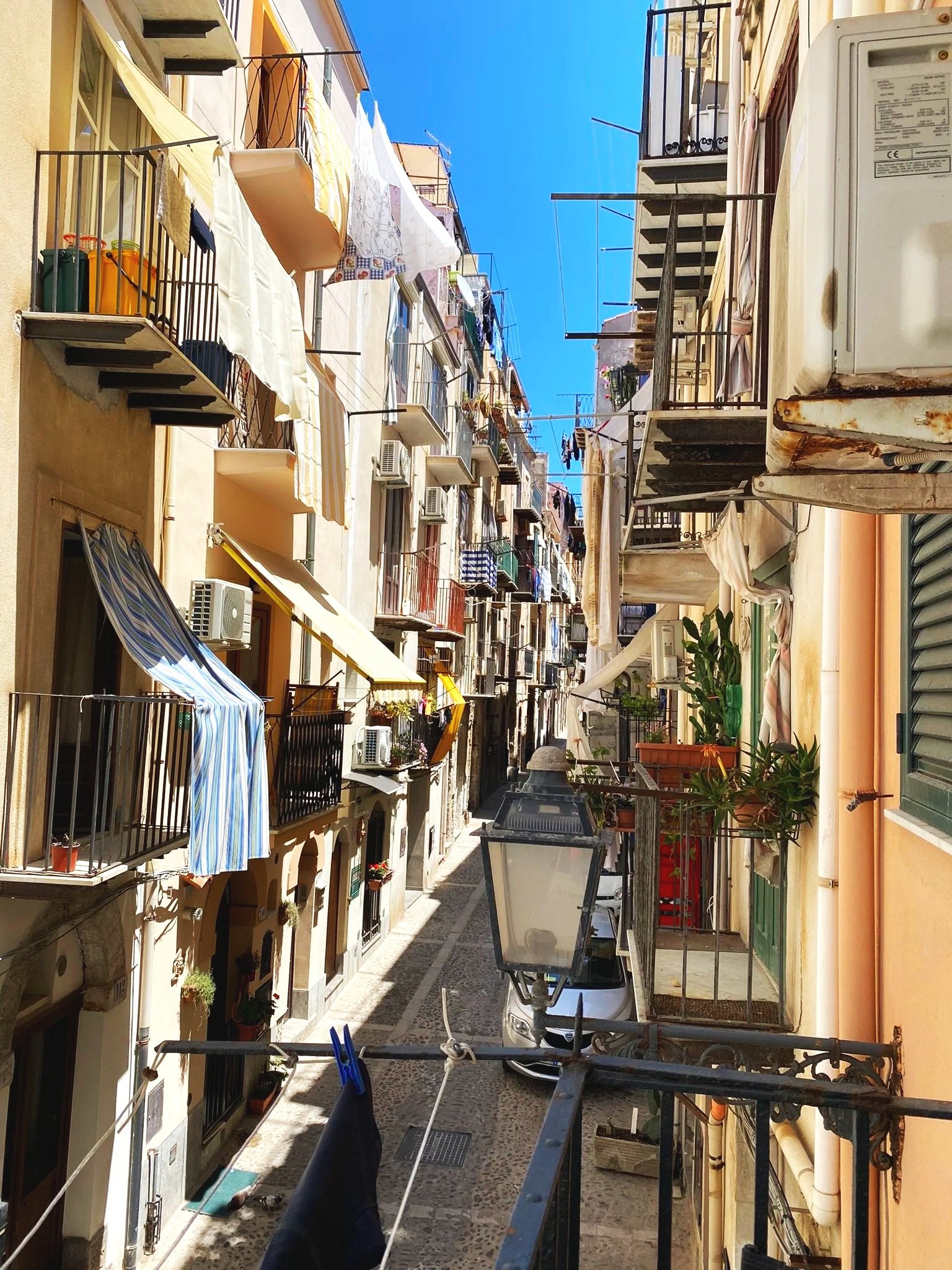
For a truly immersive experience, stay within the old town where life unfolds among a labyrinth of narrow cobblestone streets, sun-warmed buildings, and wrought-iron balconies. Aim for an apartment or boutique hotel near Via Viterani—close enough to the heart of it all, yet just removed from the livelier stretches.
Hotel La Giara: A wonderful choice in the historic center, offering a great rooftop terrace and a perfect base for exploring the narrow lanes and nearby beach.
Afternoon: Settle in & Wander
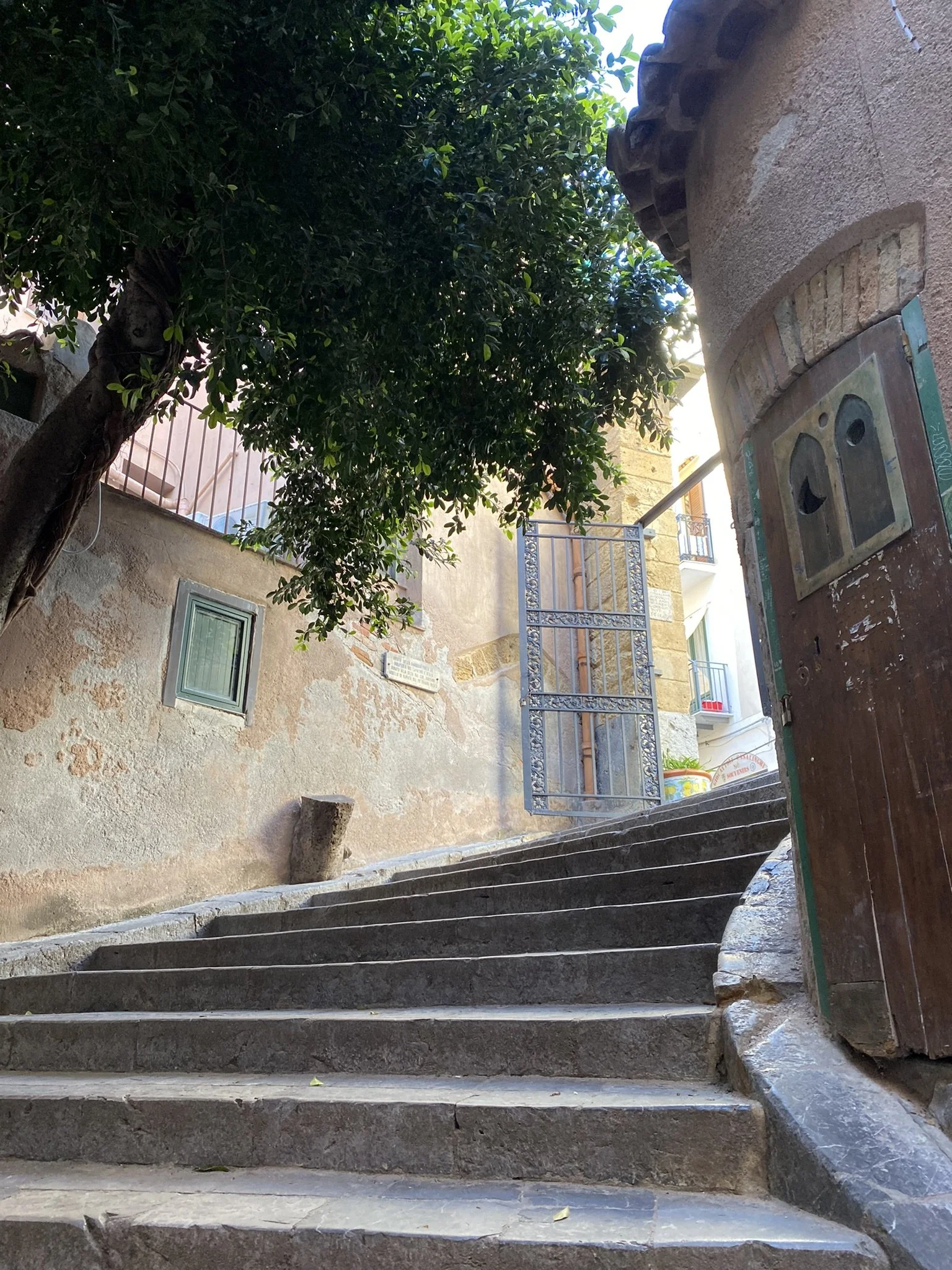
Arrive, settle into your accommodation, and let the rhythm of Cefalù guide you. Wander without a plan, discovering tucked-away shops, quiet corners, and stunning glimpses of the sea between ancient walls.
If your room includes a balcony, take a moment for a simple pleasure: open a bottle of local Sicilian wine, breathe in the warm evening air, and enjoy the atmosphere before heading out to dinner as the town begins to glow.
Day 5: Exploring Cefalù
Spend a full day immersing yourself in the sights, history, and tastes of this captivating coastal gem. Here is how to make the most of your day:
A Traditional Sicilian Breakfast
Before diving into the historic sights, kick off your morning like a local at Bar Duomo (Duomo Serio 1952), a wonderful bakery and gelateria located right in the main piazza. Order a traditional Sicilian breakfast: a warm, fluffy brioche bun served alongside a refreshing, icy fruit granita.
🍦Fun Note: If you return in the evening for a scoop of gelato, let me know if they still have a flavour named "Greta" on the menu!
Morning: Historic Sights & Heights
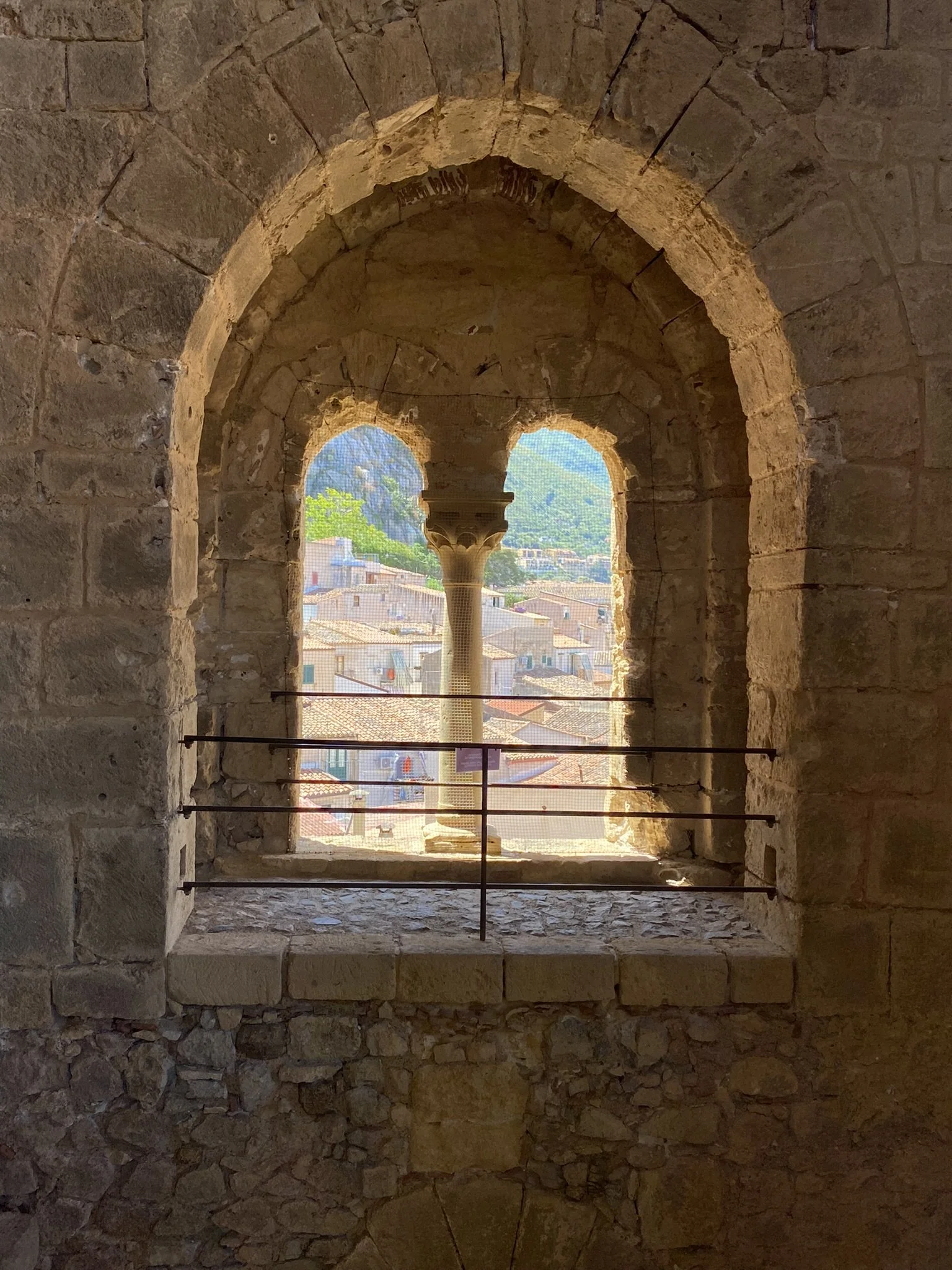
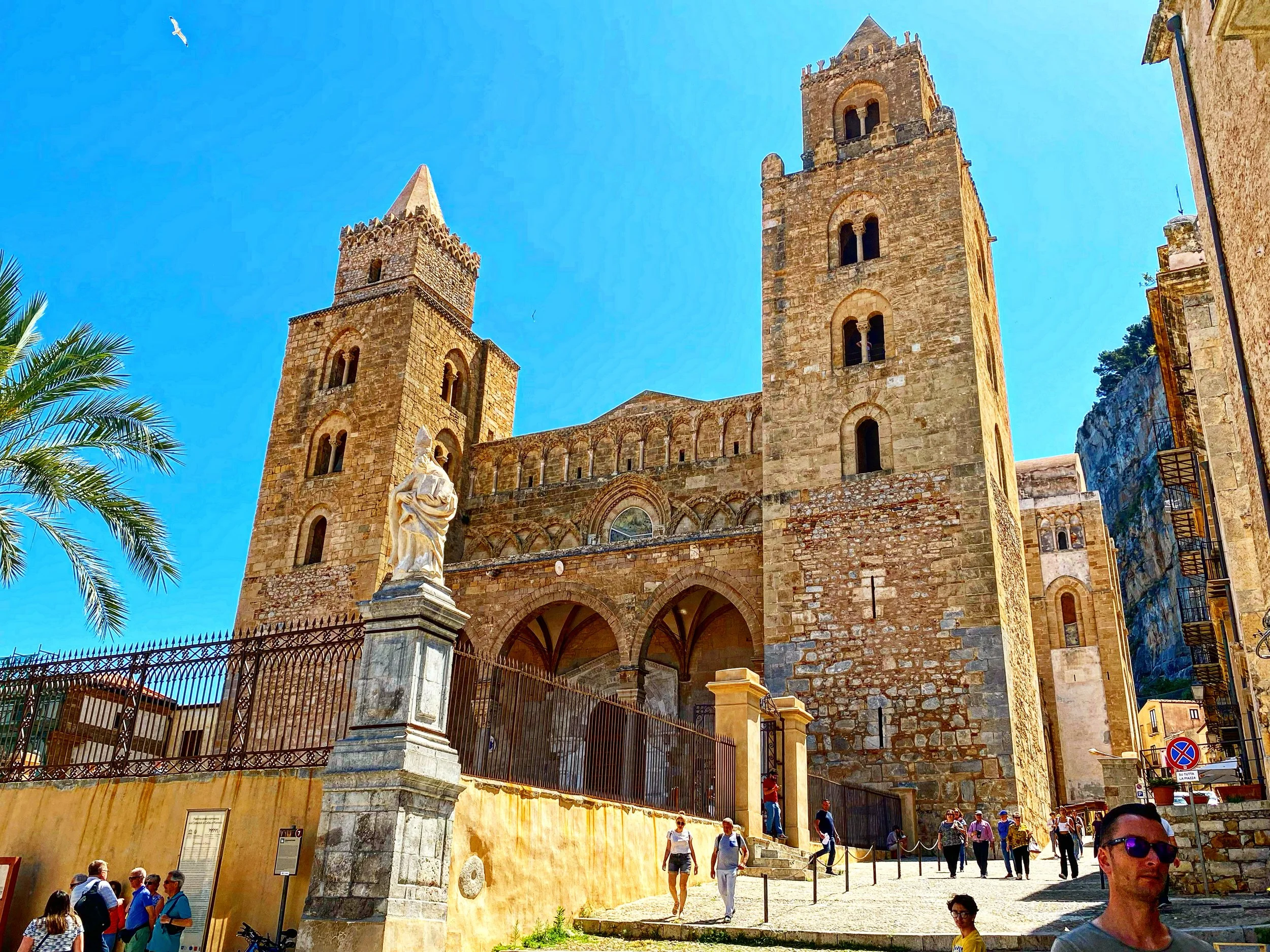
Cefalù Cathedral (Duomo di Cefalù): This magnificent Norman cathedral dominates the main square, featuring towering twin fortresses and spectacular Byzantine interior mosaics. Be sure to buy a ticket to scale the rooftop for breathtaking views over the historic center and the sea.
La Rocca: If you are up for a challenge, embark on the steep hike up the iconic craggy mountain looming over the town. The reward is unmatched panoramic views and ancient ruins, including the archeological remnants of the Temple of Diana.
Old Town (Centro Storico): Dedicate some time to simply wandering Cefalù's maze of medieval cobblestone lanes, charming hidden piazzas, and markets bursting with local color.
Afternoon: Art, Culture & Hollywood Fame
Lavatoio Medievale: Slip down the stone steps to see a beautifully preserved, historic washhouse carved directly into the rock and fed by rushing natural springs.
Museo Mandralisca: A small but captivating museum housing a rich archeological collection alongside Antonello da Messina’s famous masterpiece, Portrait of an Unknown Man.
Lungomare Beach: Spend your afternoon on this golden stretch of sand. Pop culture fans will recognize this shoreline instantly—it served as "the beach" in Season 2 of The White Lotus (standing in for Taormina, which lacks a sandy beach right next to its luxury hotels).
Evening: Cinematic Sunsets
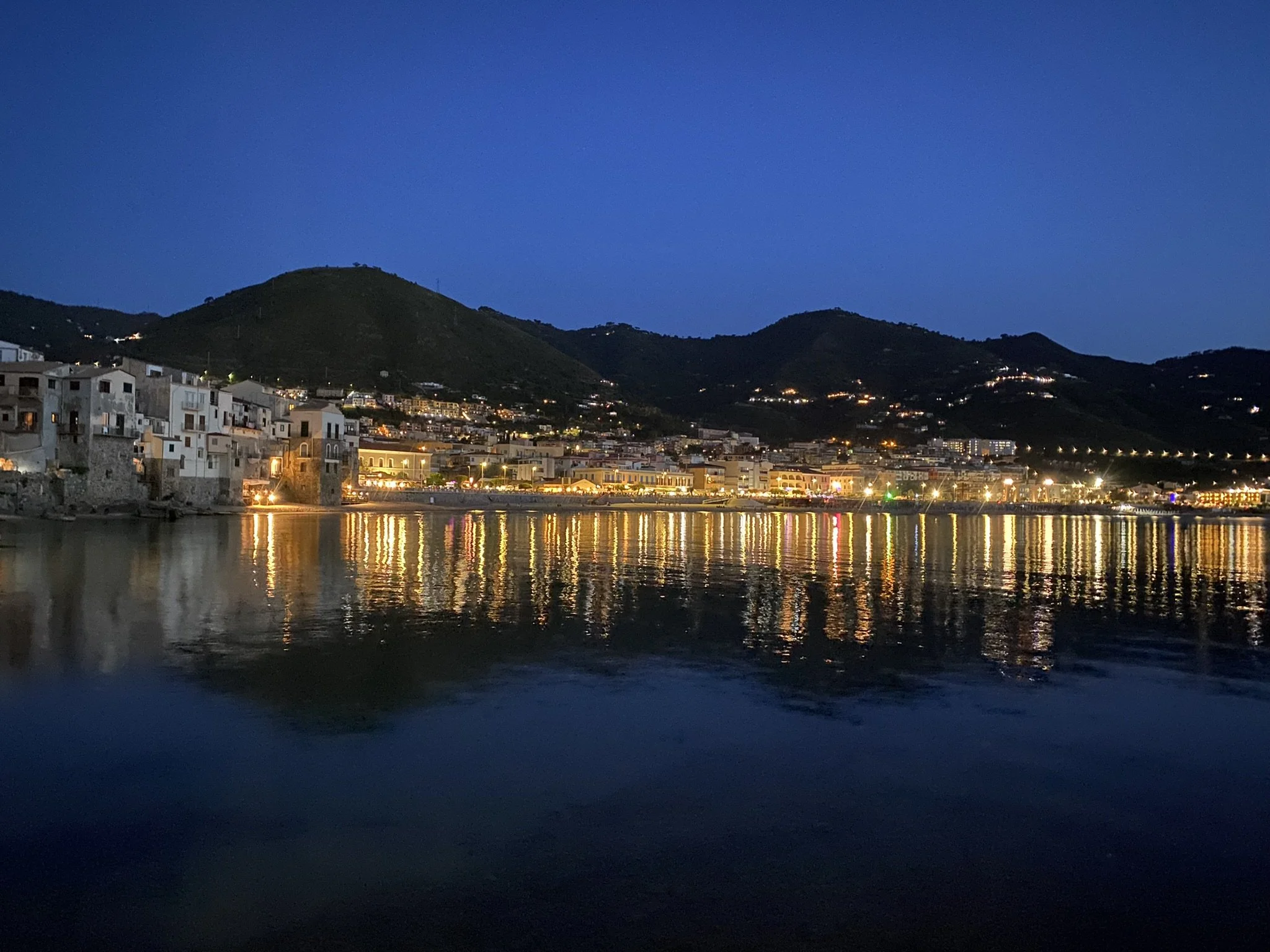
Bastione di Capo Marchiafava: Walk along the edge of the old town’s defensive stone walls to this historic coastal bastion. Perched dramatically above the waves, it offers a stunning vantage point over the rugged Tyrrhenian cliffs.
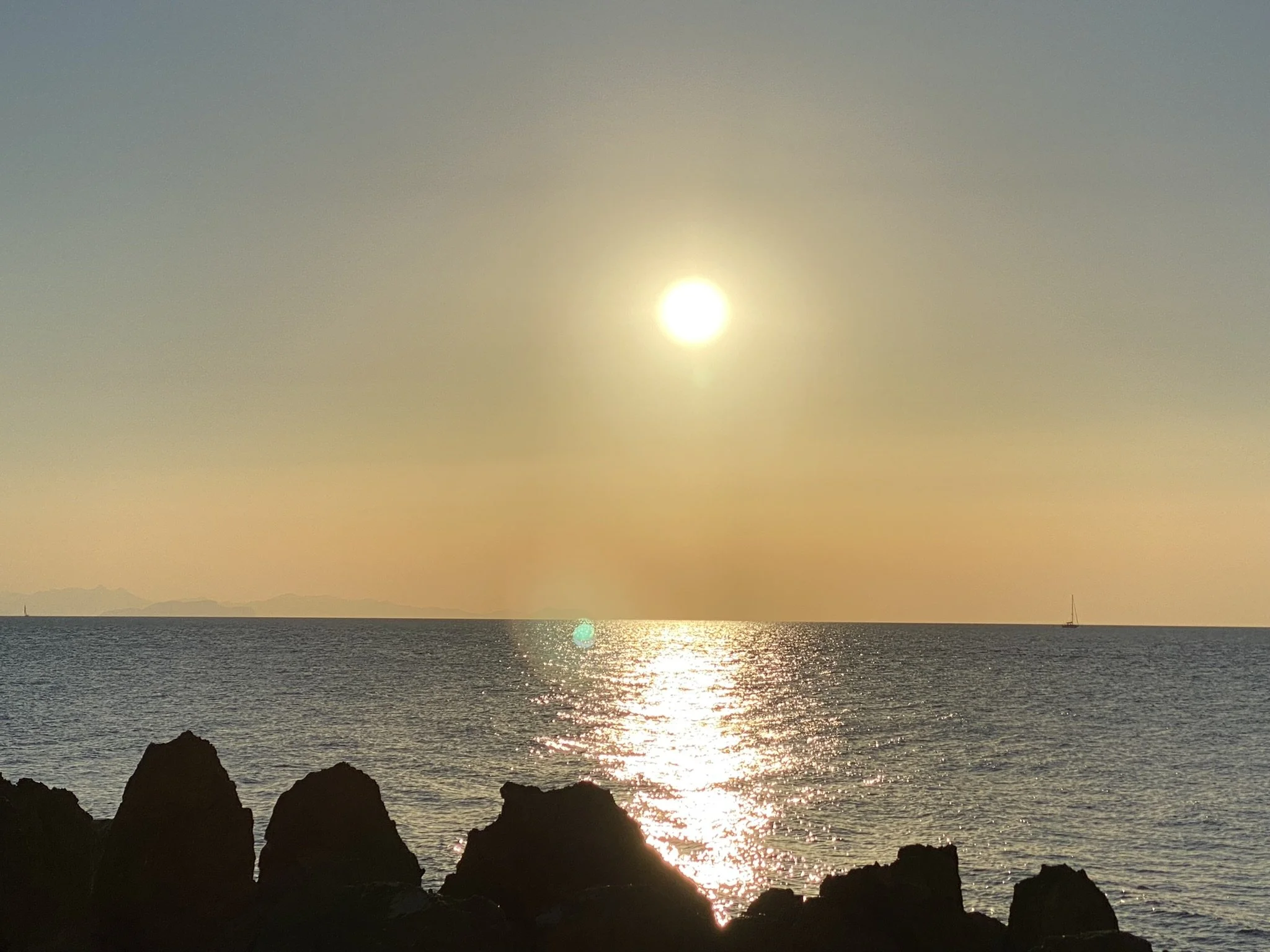
Largo Eroi del Mare: Cap off your day at the old town pier. This is the absolute premier spot in town to grab a seat, watch a spectacular Sicilian sunset drop over the water, and see the historic buildings begin to glow.
Day 6: Journey to the Aeolian Islands – Lipari
Today marks your transition from the mainland to the volcanic archipelago of the Aeolian Islands. It is a travel-heavy day, but the destination is well worth the effort.
The Transit Route
Train to Milazzo: Check out of your accommodation in Cefalù and head to the train station. Depending on your exact location in town, you can either walk or take a quick local taxi.
Bus to the Port: Upon arriving at the Milazzo train station, look for the public shuttle bus that connects the station to the port.
Hydrofoil to Lipari: Board the hydrofoil (aliscafo) bound for Lipari. This fast ferry cuts across the Tyrrhenian Sea, dropping you off at the main port of the island.
Arrival & Where to Stay
Hotel Villa Enrica - Aeolian Charme: This beautiful property boasts stunning, panoramic views overlooking Lipari town and the sea. The Uphill Reality: While the hotel looks close to the town center on a map, be prepared for a steep, lengthy walk uphill to reach it. Better still, take a taxi when getting off the ferry.
💡Travel Tip: Do as we did and rent scooters shortly after arriving. Having a scooter makes navigating the island effortless and gives you the freedom to explore hidden corners over the next few days without tackling the steep terrain on foot.
Evening: Discovering Lipari Town
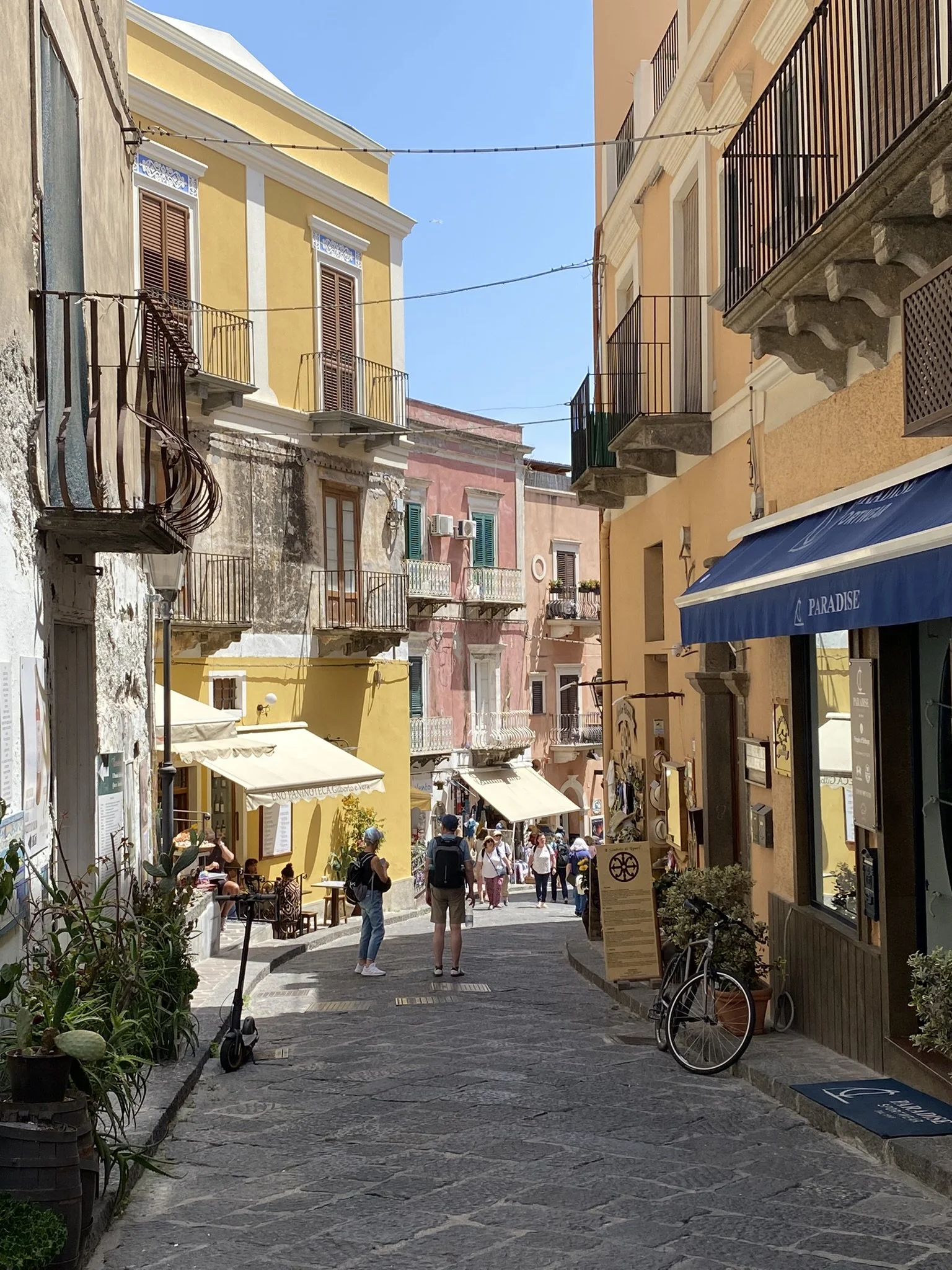
Spend your first evening exploring Lipari town, the lively, sun-washed heart of the archipelago. It rises directly from the water with a charming collection of pastel-colored houses and a bustling harbor. Looming above it all is the Castello di Lipari, a dramatic hilltop fortress that watches over the town like an ancient guardian.
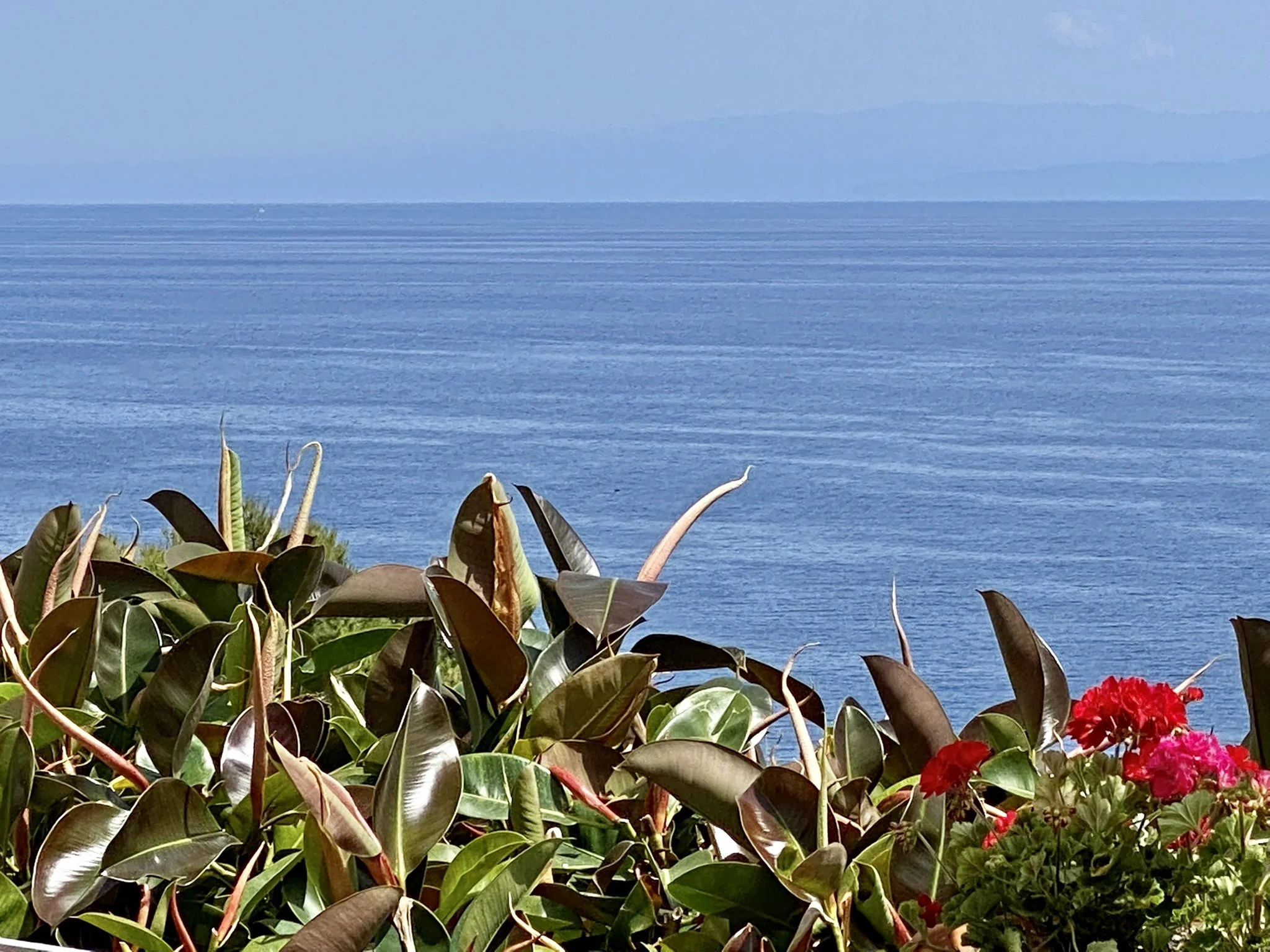
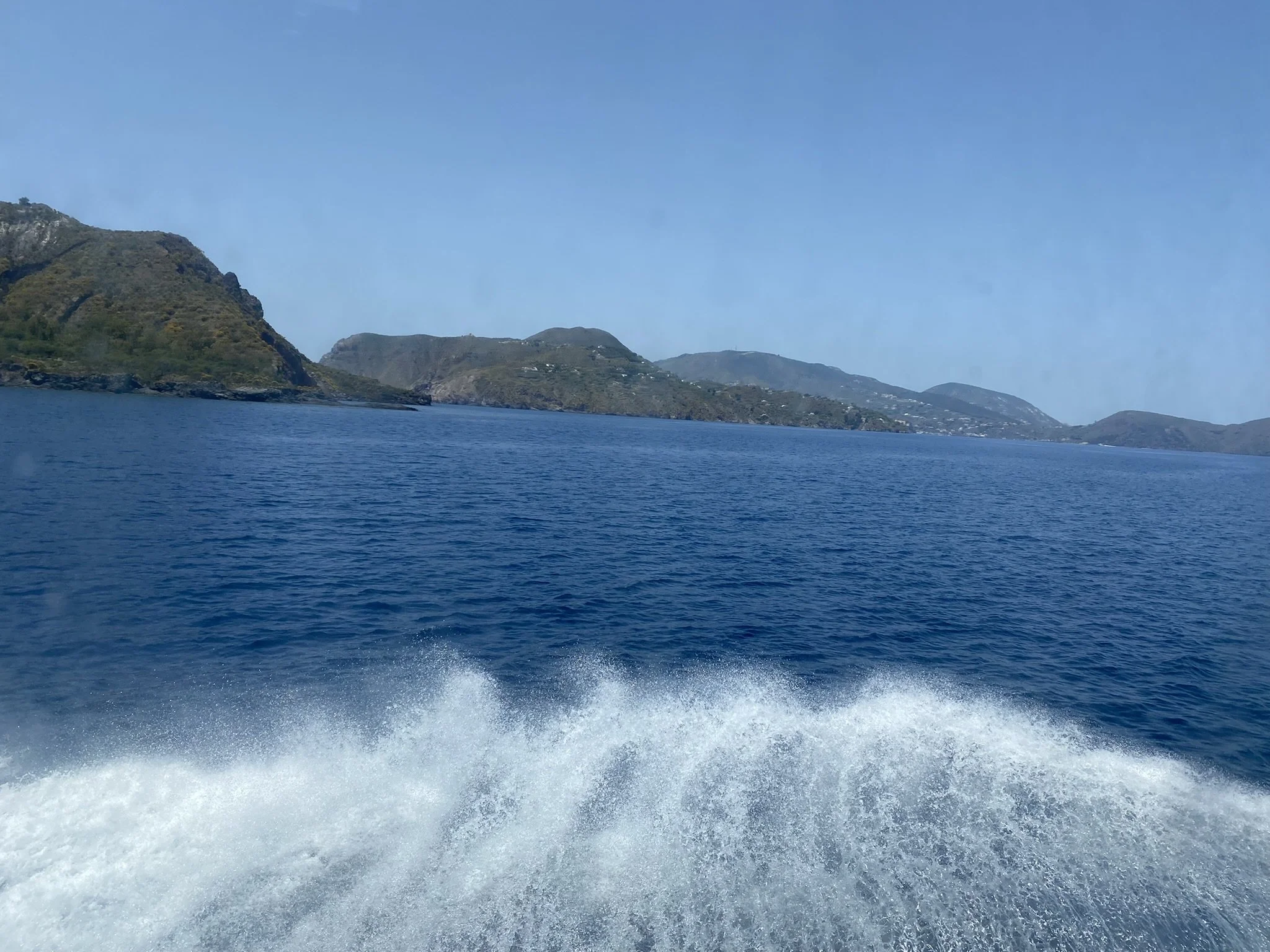
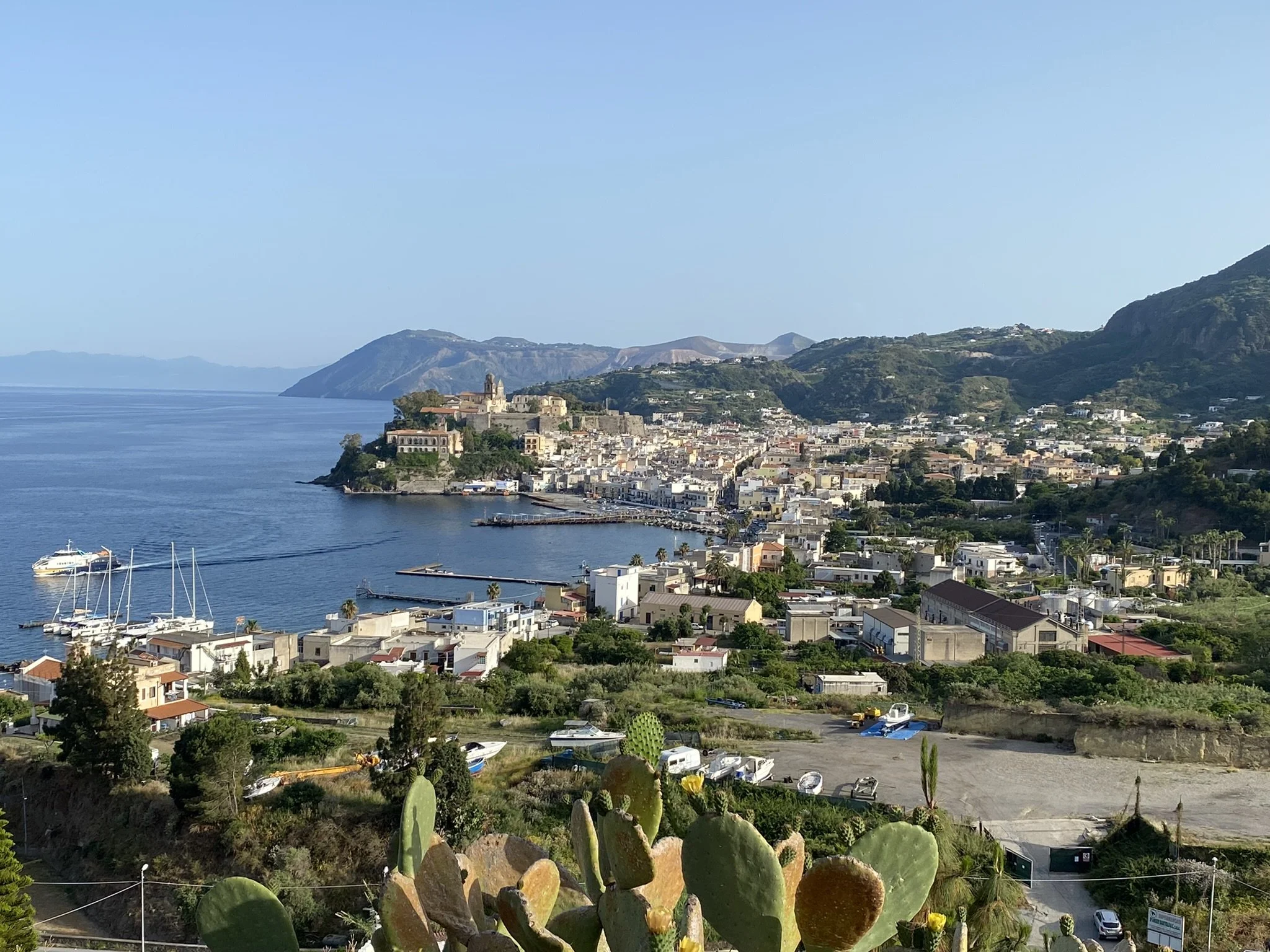
Day 7: Beach Scouting on Scooters & Wine Tasting at Sunset
Today was the ultimate freedom day on Lipari. With our rental scooters ready to go, we spent the day exploring the island’s rugged volcanic coastline before wrapping up the evening at one of the most spectacular winery settings in Italy.
Cruising the Volcanic Coastline
Having scooters turned out to be the absolute best decision we made. Lipari is the largest of the Aeolian Islands, and its winding, hilly roads offer breathtaking panoramic views around every single bend.
We spent our morning and afternoon beach-hopping. Because the island is volcanic, the beaches here are incredibly unique—ranging from dramatic pebble bays tucked beneath towering cliffs to shores with incredibly clear, deep-blue waters. Riding our scooters right up to the coastline, feeling the warm Tyrrhenian breeze, and skipping all the parking hassles made the day completely effortless.
Sunset & Wine Tasting at Tenuta di Castellaro
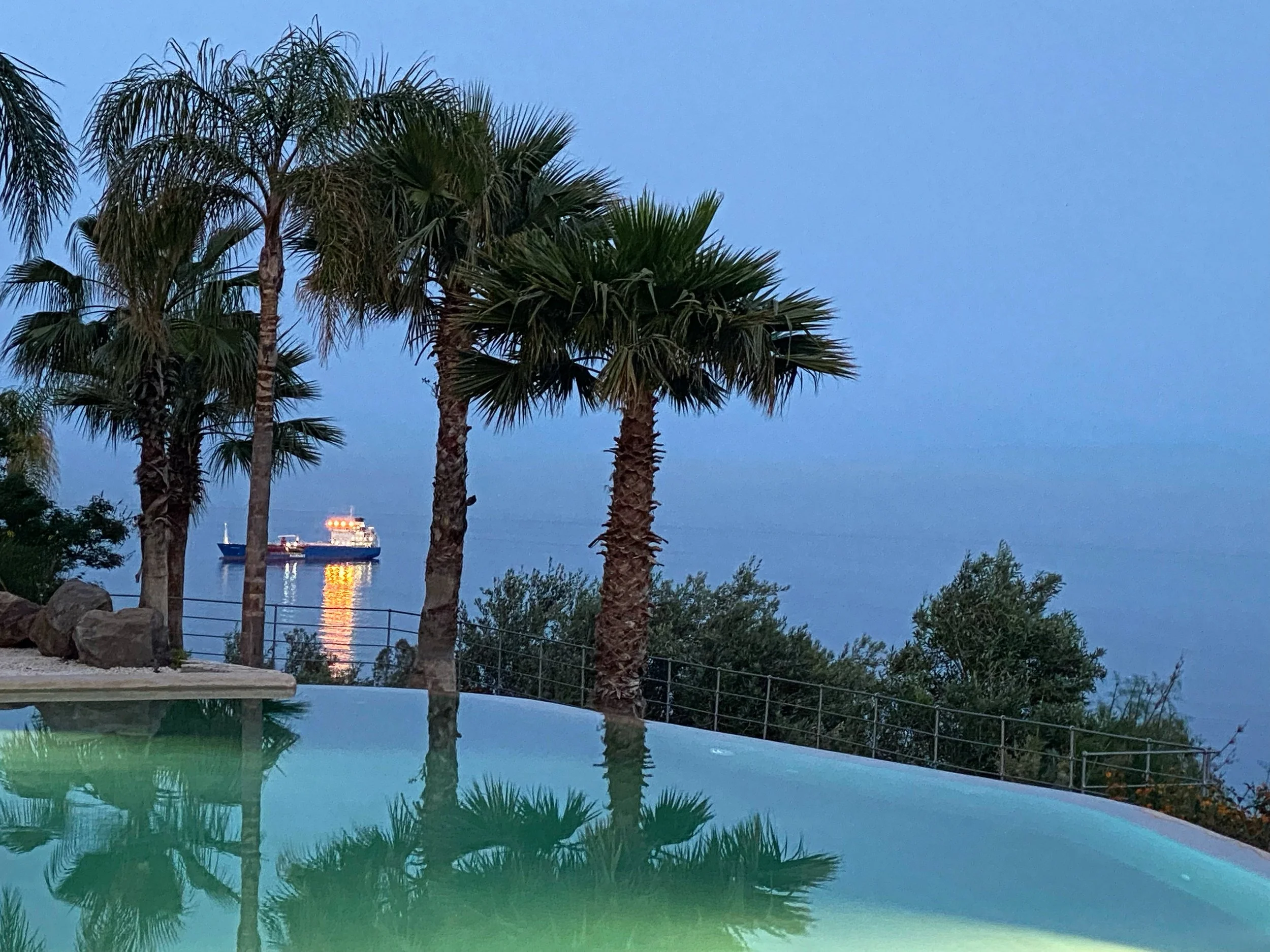
For the evening, we took a scenic ride up into the hills of northwest Lipari to visit Tenuta di Castellaro.
This is not just a winery; it is an architectural and ecological masterpiece. The estate is completely off-grid, utilizing wind chimneys and solar energy, and the vines are cultivated using the ancient alberello (head-trained) method in nutrient-rich volcanic soil.
We arrived just in time for their famous sunset experience:
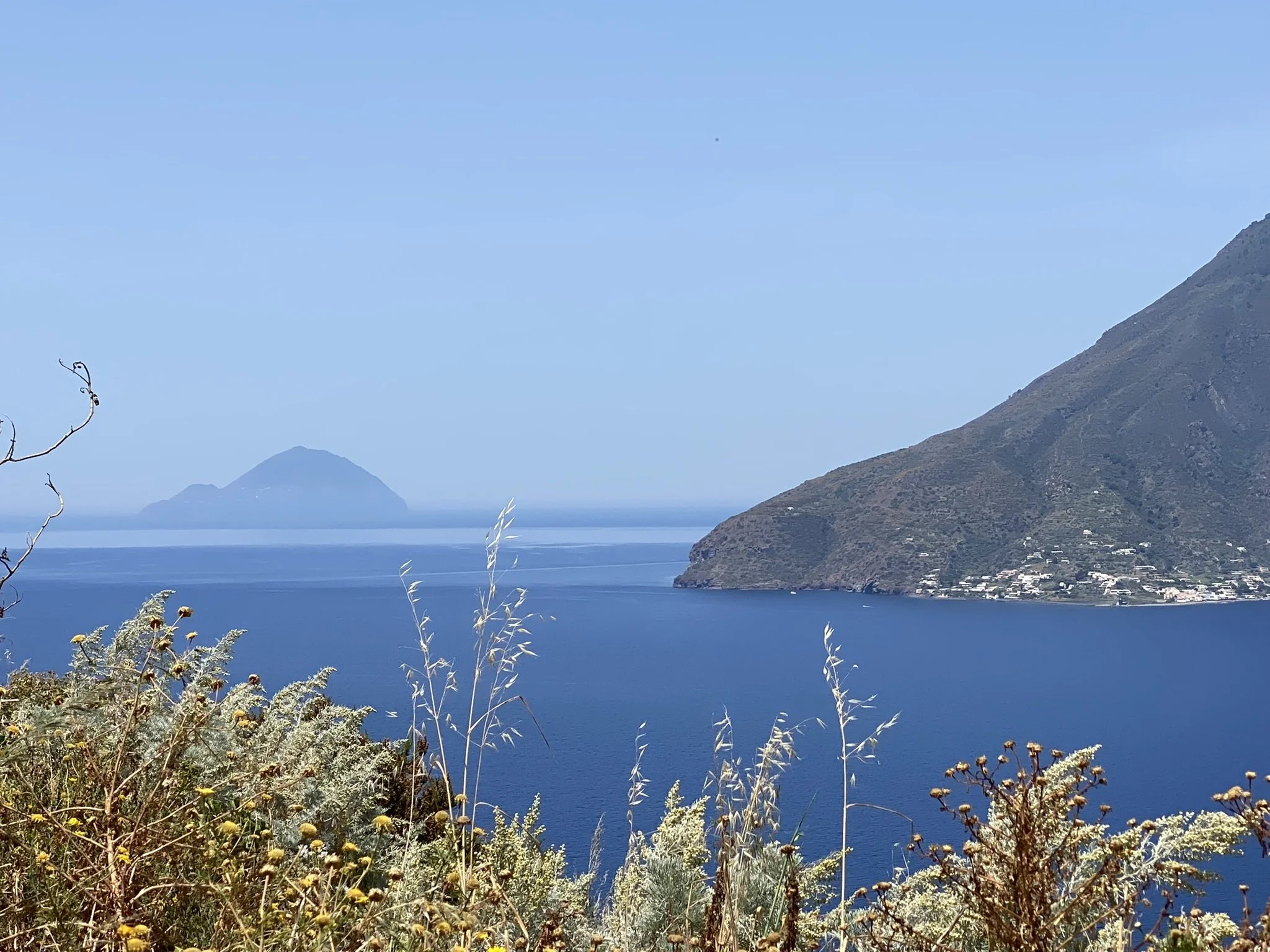
The Setting: The vineyards sit on a high plateau overlooking the sea, offering a direct, unobstructed view of the sun sinking into the Tyrrhenian Sea, with the neighboring volcanic islands of Alicudi and Filicudi painting a dramatic silhouette on the horizon.
The Wine: We tasted some of their incredible organic wines—including their mineral-rich white Bianco Porticello and the deep, volcanic red Nero Ossidiana (named after the island's famous black obsidian glass).
The Vibe: Sipping world-class wine on a quiet volcanic ridge while the sky turns brilliant shades of fiery orange and pink is a memory we will hold onto for a very long time.
💡 Pro Tip: This sunset tasting is arguably the most coveted evening experience on the island. Space is highly limited to keep the atmosphere quiet and intimate, so reservations are strictly required well in advance!
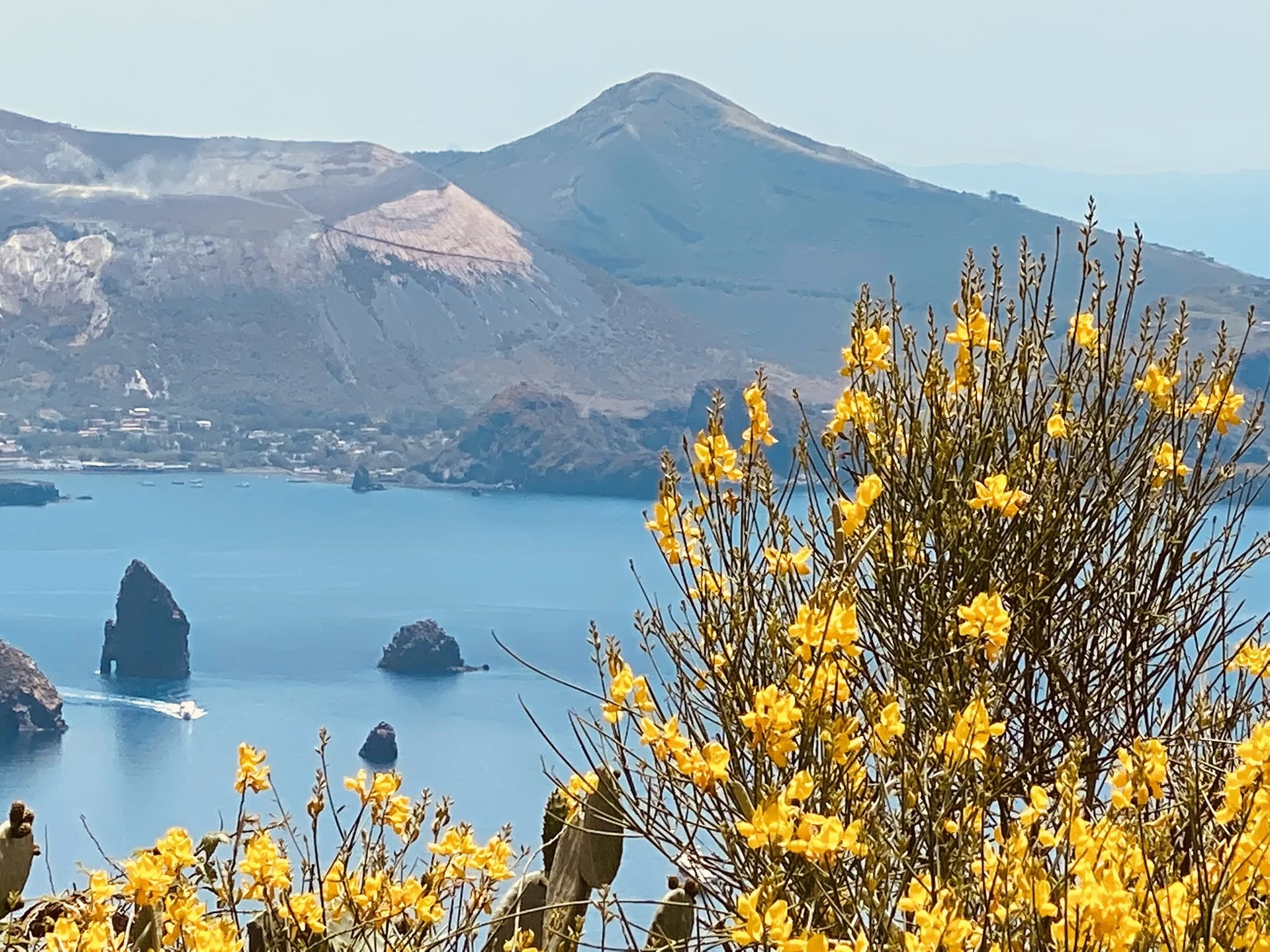
Day 8: Stromboli—The Dramatic "Lighthouse of the Mediterranean"
Today, we set our sights beyond Lipari to experience one of the most dramatic, raw, and awe-inspiring sights in the entire Aeolian chain: the active volcanic island of Stromboli.
Booking an Island Excursion from Lipari Town
If you want to explore the surrounding islands, Lipari town is the perfect home base. As you wander along the vibrant, bustling harbor streets, you’ll find numerous local boat tour operators offering day trips and sunset cruises. Getting on the water is incredibly easy, and a voyage to Stromboli is the ultimate Aeolian excursion.
The Conical Giant of the Tyrrhenian Sea
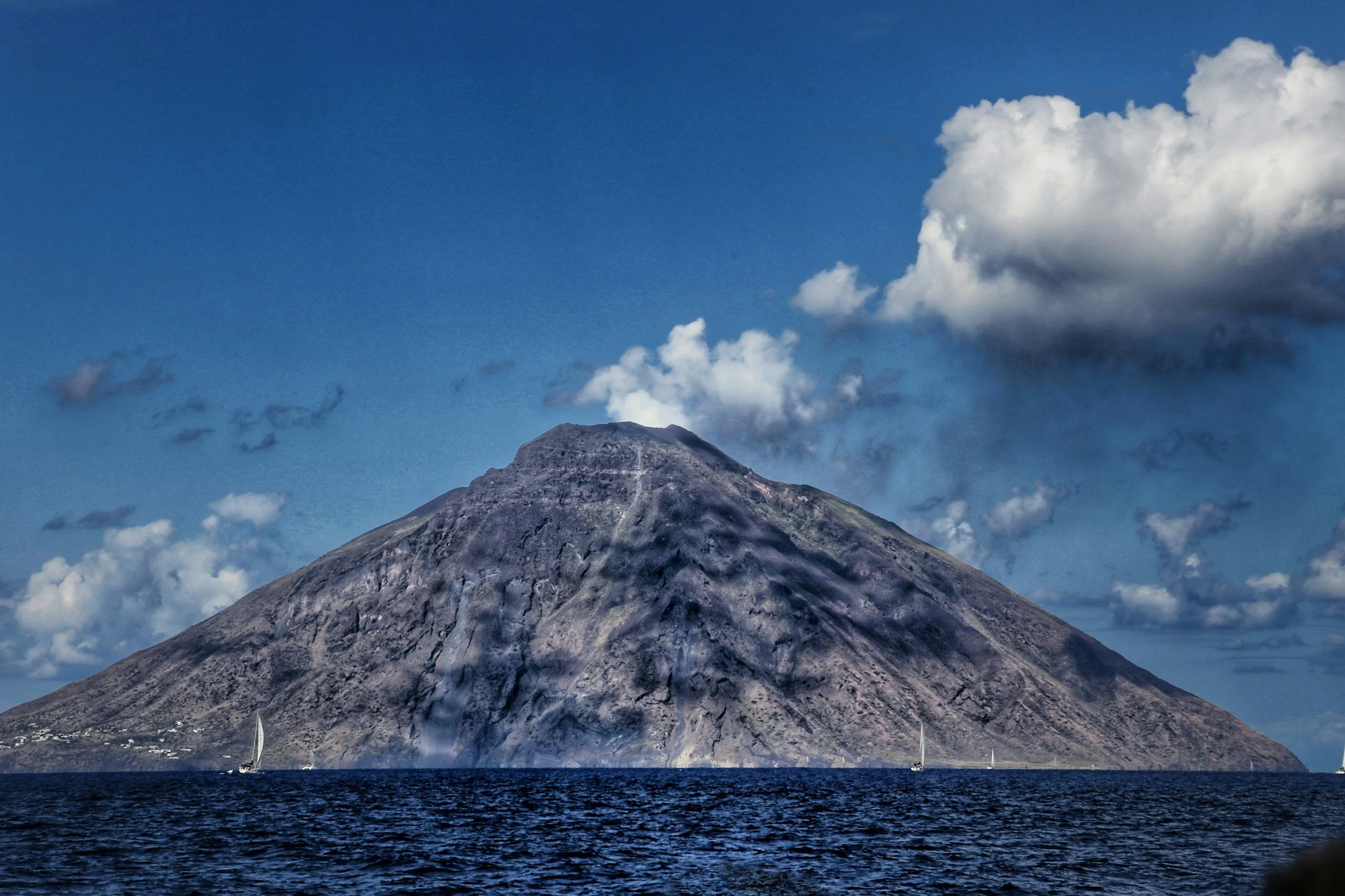
Known historically as the "Lighthouse of the Mediterranean," Stromboli is a jaw-dropping sight. It is a nearly perfect, jet-black conical volcano that rises completely sheer out of the deep blue Tyrrhenian Sea.
The Villages: Despite being an active volcano, the island is home to two tiny, wonderfully remote-feeling villages of whitewashed houses that stand in sharp, beautiful contrast to the dark volcanic rock.
The Black Sands: The island boasts striking, coal-black sand beaches, created from centuries of volcanic debris.
Constant Activity: Stromboli is famous for its near-constant state of mild eruption. It frequently shoots brilliant bursts of glowing, golden-red lava into the sky from vents near the summit—a mesmerizing phenomenon known worldwide by geologists as "Strombolian activity." Watching these fiery bursts against the evening sky from the deck of a boat is an unforgettable experience.
To truly appreciate the raw, isolated magic of this island, we highly recommend diving into some media before your trip:
📌 Travel Tip: Watch Rossellini's Stromboli (1950) Before you set foot on the island, find time to watch the classic 1950 post-war drama film Stromboli (Terra di Dio). Directed by the legendary Roberto Rossellini and starring the brilliant Ingrid Bergman, the movie tells the story of a displaced Lithuanian woman who marries an Italian fisherman to escape a refugee camp, only to find herself living a harsh, highly isolated life on this volcanic rock. It beautifully blends deep personal human drama with the raw, untamed power of the island’s active environment. The island itself is as much a main character as Bergman!
💡 Travel Tip: Watch Kylie Flavell’s YouTube Feature on Stromboli If you are looking for a beautiful modern perspective, search for filmmaker Kylie Flavell’s YouTube videos about Stromboli. Kylie is a magnificent, visual storyteller who creates incredibly high-quality travel films. Her footage captures the romantic, rugged, and poetic side of living in the shadow of an active Mediterranean volcano.
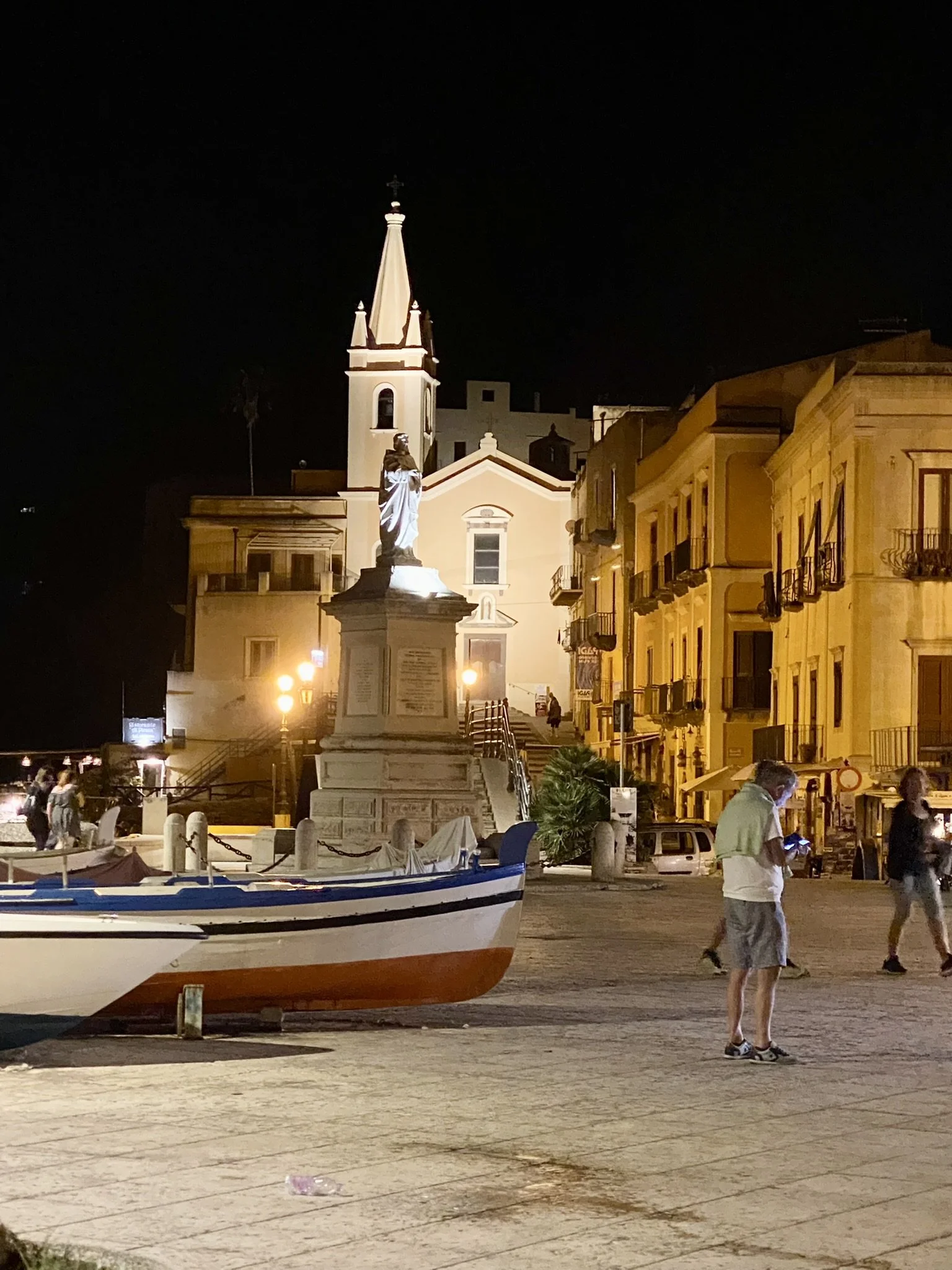
Day 9: Journey to Taormina—The Hilltop Jewel of Sicily
Today, we bid farewell to the volcanic peace of Lipari and made our way back to mainland Sicily. Our destination: Taormina, a town legendary for its sweeping Ionian views, timeless style, and cliffs that plunge directly into the sea.
The Transit: Navigating Back to the Mainland
Getting from the Aeolian Islands to Taormina is a multi-step journey, but with a bit of patience, it is incredibly scenic and straightforward:
The Hydrofoil (Aliscafo): We boarded the morning ferry from Lipari back across the Tyrrhenian Sea to the port of Milazzo.
Milazzo Port to Station: From the port, we grabbed a quick local taxi (a public shuttle bus is also available) to the Milazzo train station.
The Train to Messina: We hopped on a regional train to Messina, the gateway city on the tip of the Sicilian boot. (Tip: You can easily buy your tickets right at the station kiosks or on the handy Trenitalia mobile app).
Connecting to Taormina: At Messina, we switched trains and took a beautiful coastal rail line south to the Taormina-Giardini station.
Scaling the Mountain to the Town Center
The Taormina-Giardini train station sits right at sea level. However, the town of Taormina itself is perched high on a cliffside mountain. To get up to the town center, you have a couple of solid options:
The Interbus Service: This is the highly reliable public bus that departs frequently right from outside the train station. It costs only a few euros and takes a scenic, winding 10 to 15 minutes to deposit you directly at Taormina’s main bus terminal.
Local Taxi: If you have heavy luggage, a taxi from the station up the mountain is the most comfortable and direct option.
First Impressions of Taormina & "La Dolce Vita"
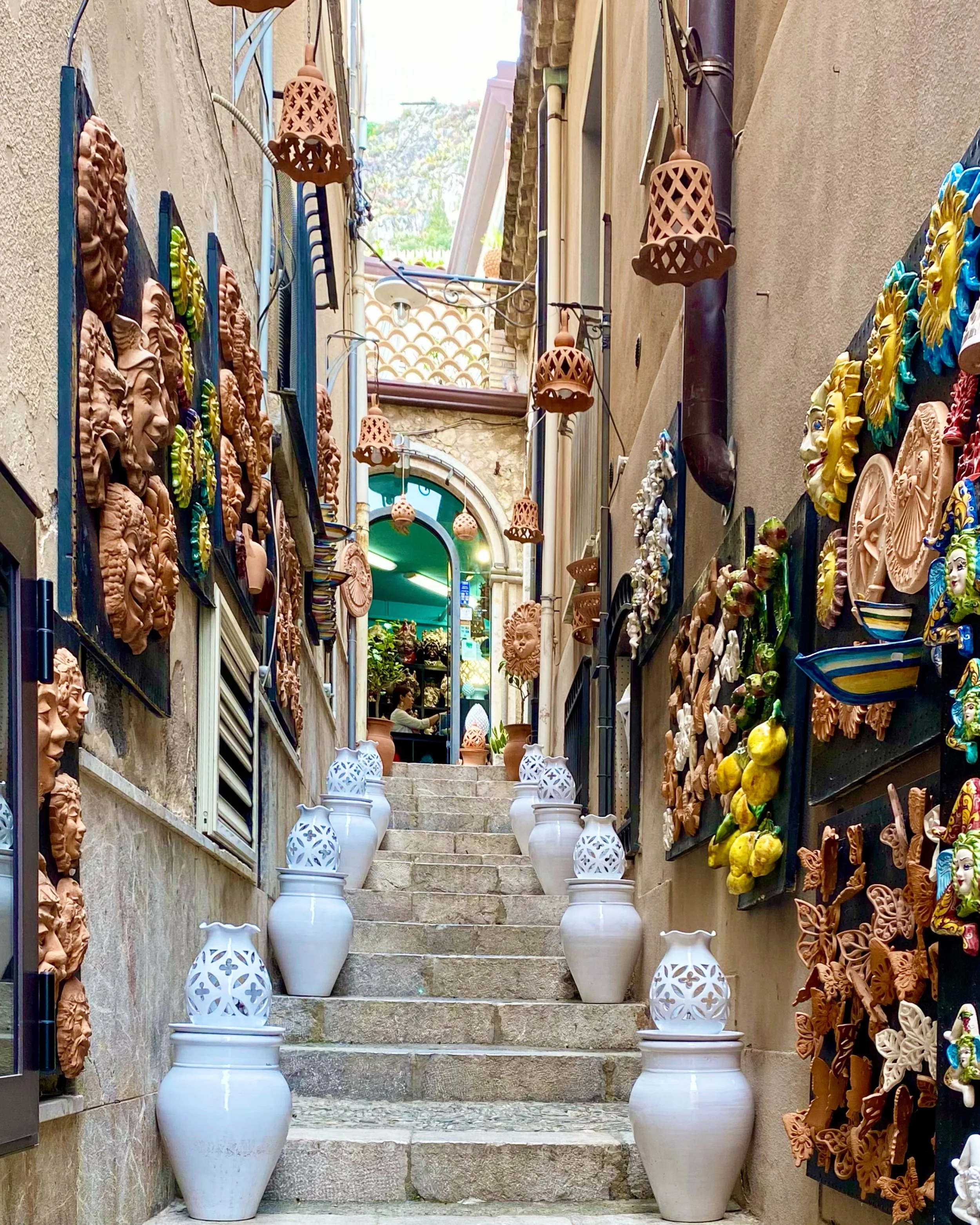
Perched dramatically above the glittering blue Ionian Sea, Taormina is the very definition of Sicilian la dolce vita. The town is a labyrinth of medieval lanes, ancient stone staircases, and vibrant, flower-draped balconies. It’s no wonder this gorgeous destination has recently captured the world's attention as the primary filming location for Season 2 of The White Lotus.
Because the town is built directly into the steep mountainside, where you stay matters:
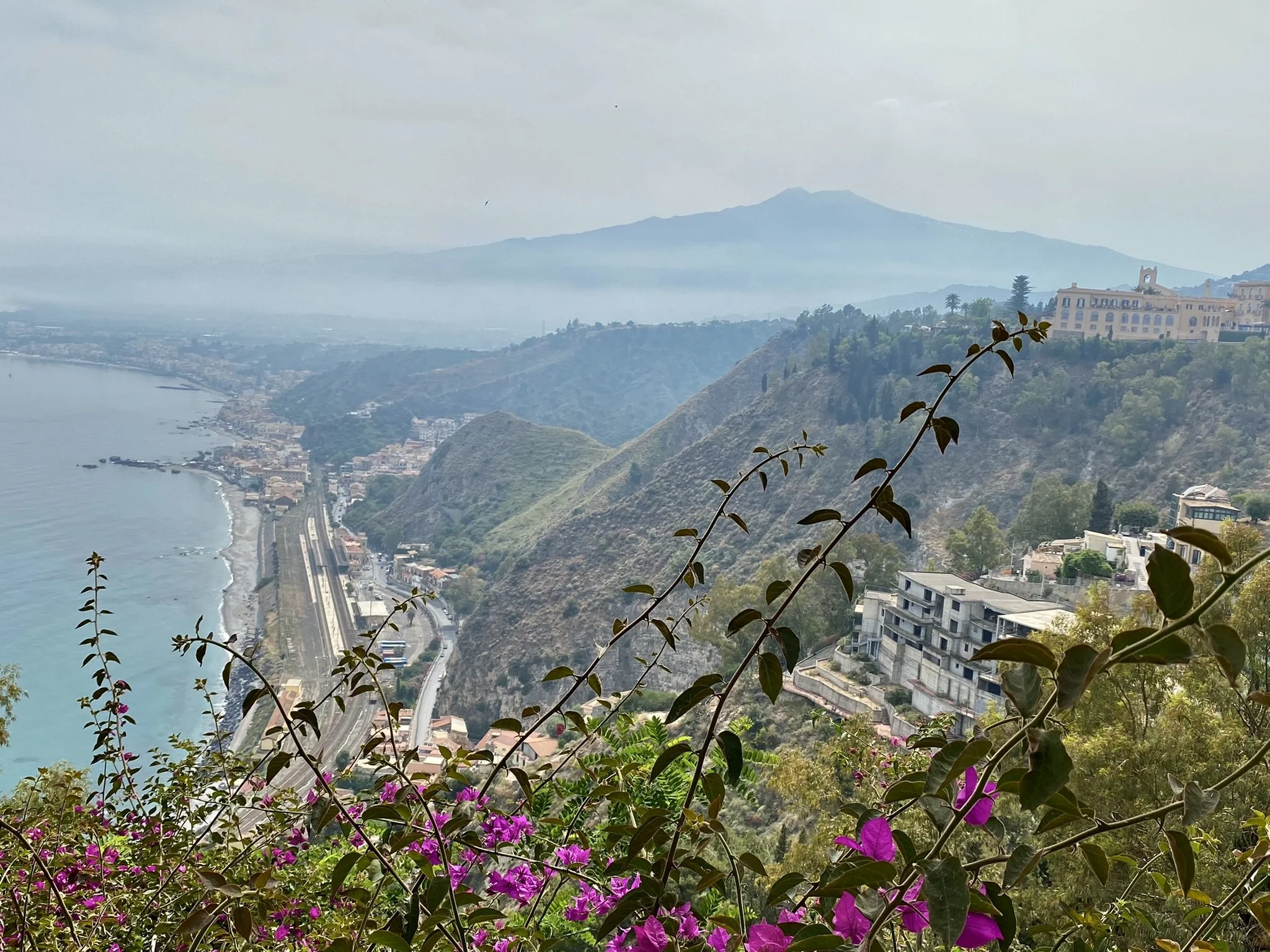
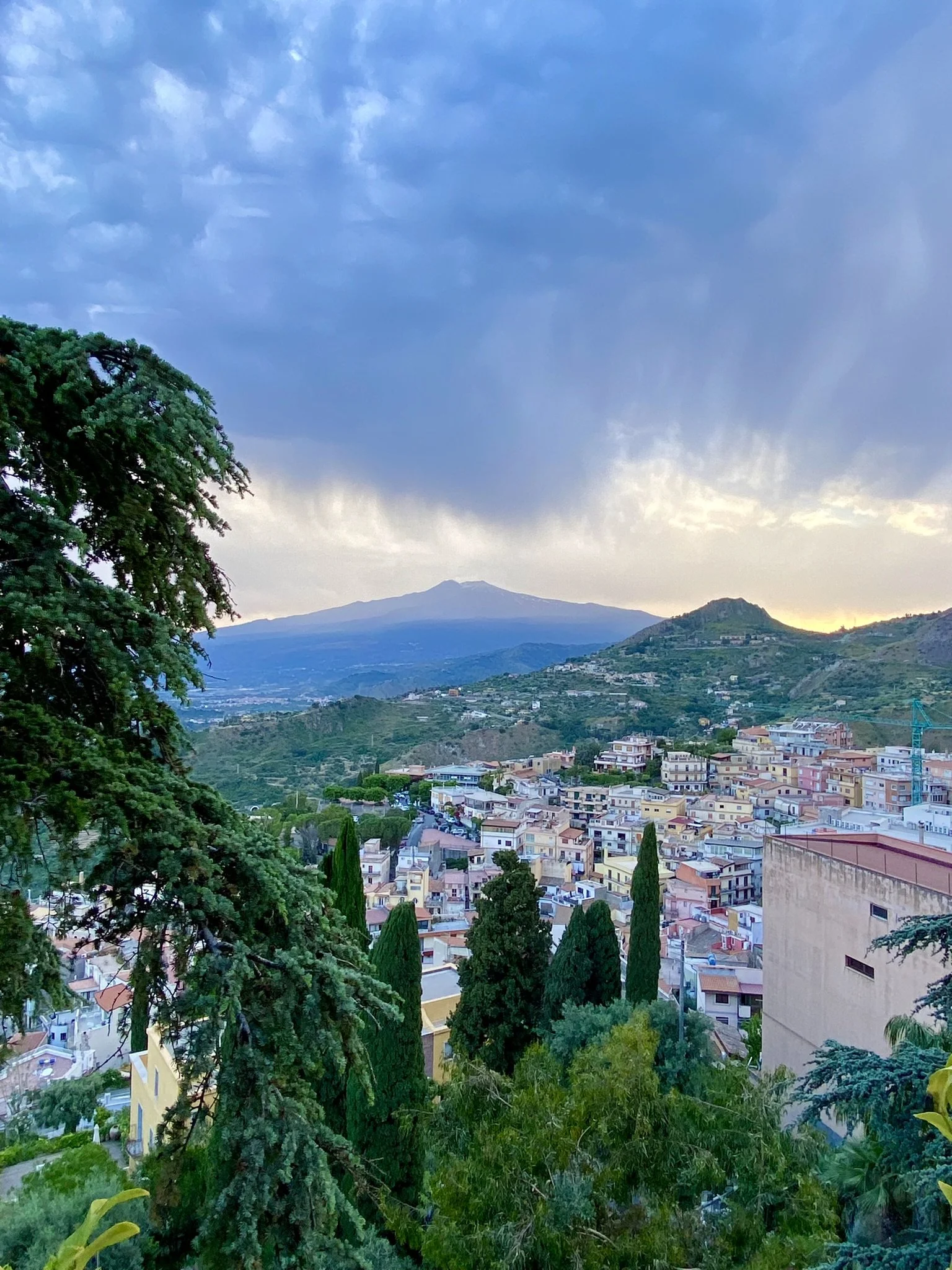
🏠 Our Airbnb Perch: We stayed in a spectacular apartment set 360 steps above Corso Umberto (the main pedestrian street). While walking up those steps at the end of a long day was definitely a workout, the reward was an incredibly peaceful sanctuary high above the crowds. From our private terrace, we had sweeping, postcard-perfect views of Mount Etna—Europe’s highest active volcano—and the Bay of Giardini-Naxos below.
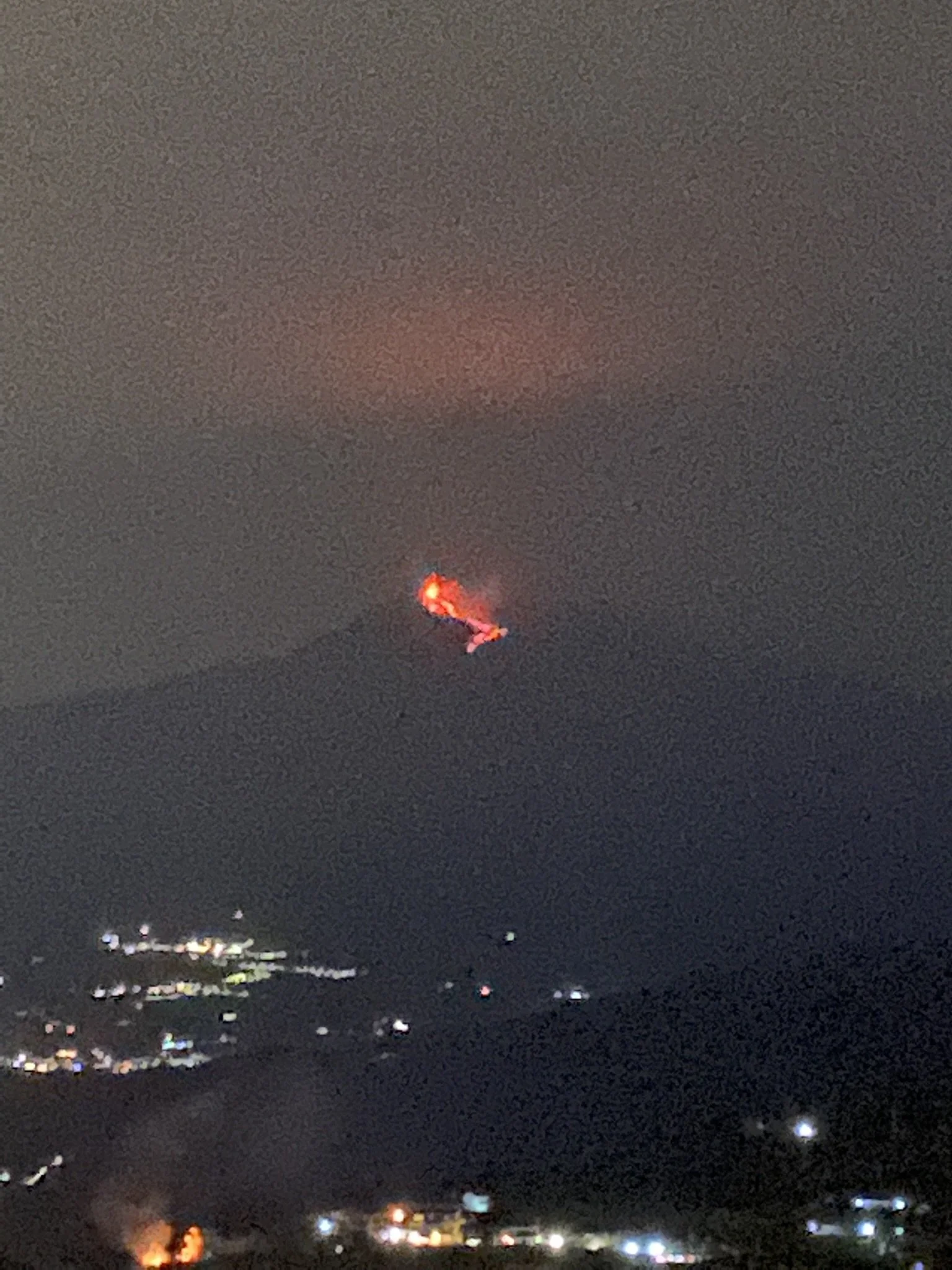
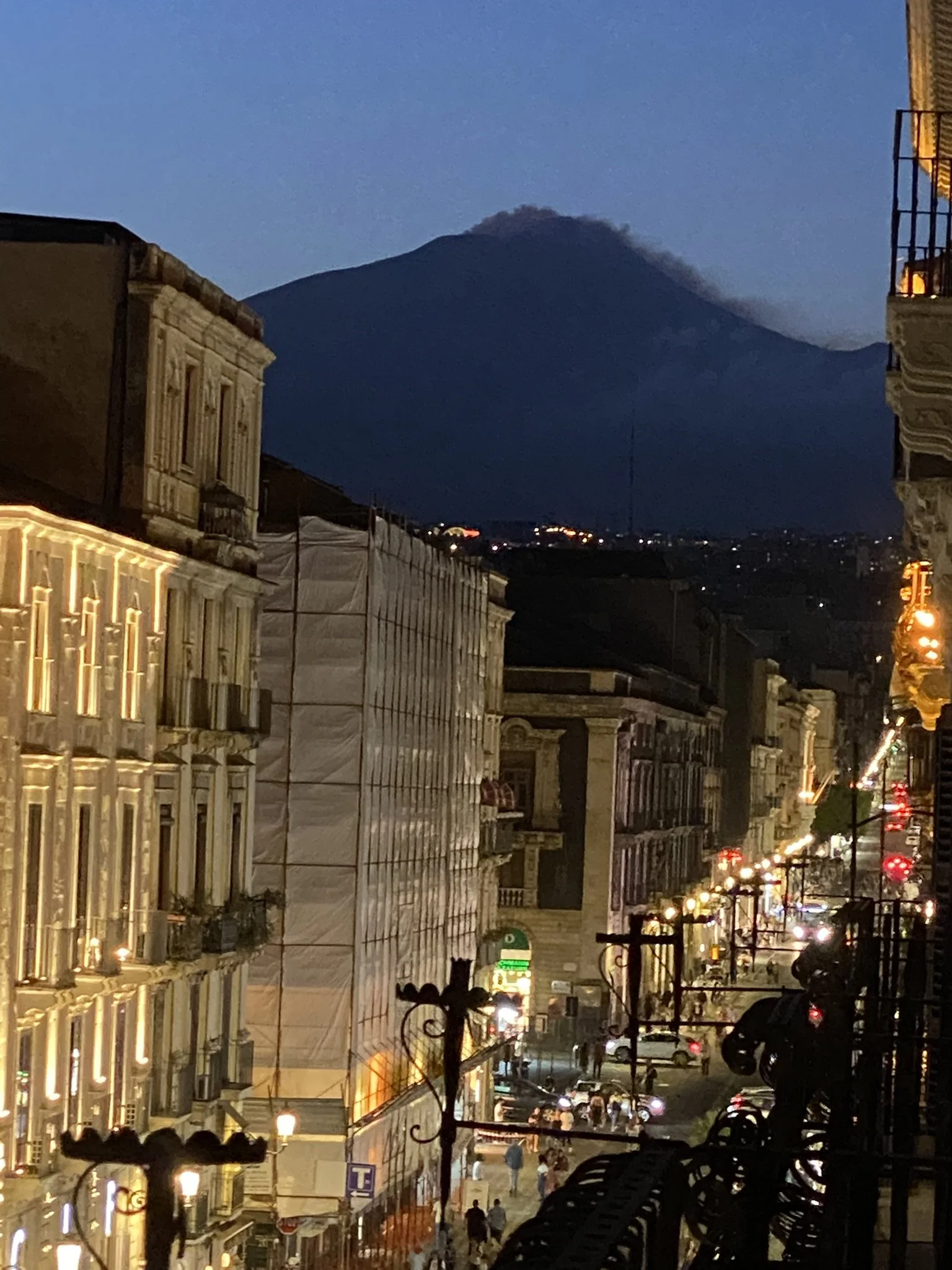
During our stay, we were even lucky enough to watch Mount Etna’s red lava glowing in the distance against the dark night sky. It was an absolutely unforgettable, once-in-a-lifetime sight right from our own balcony!
An Afternoon in the Gardens
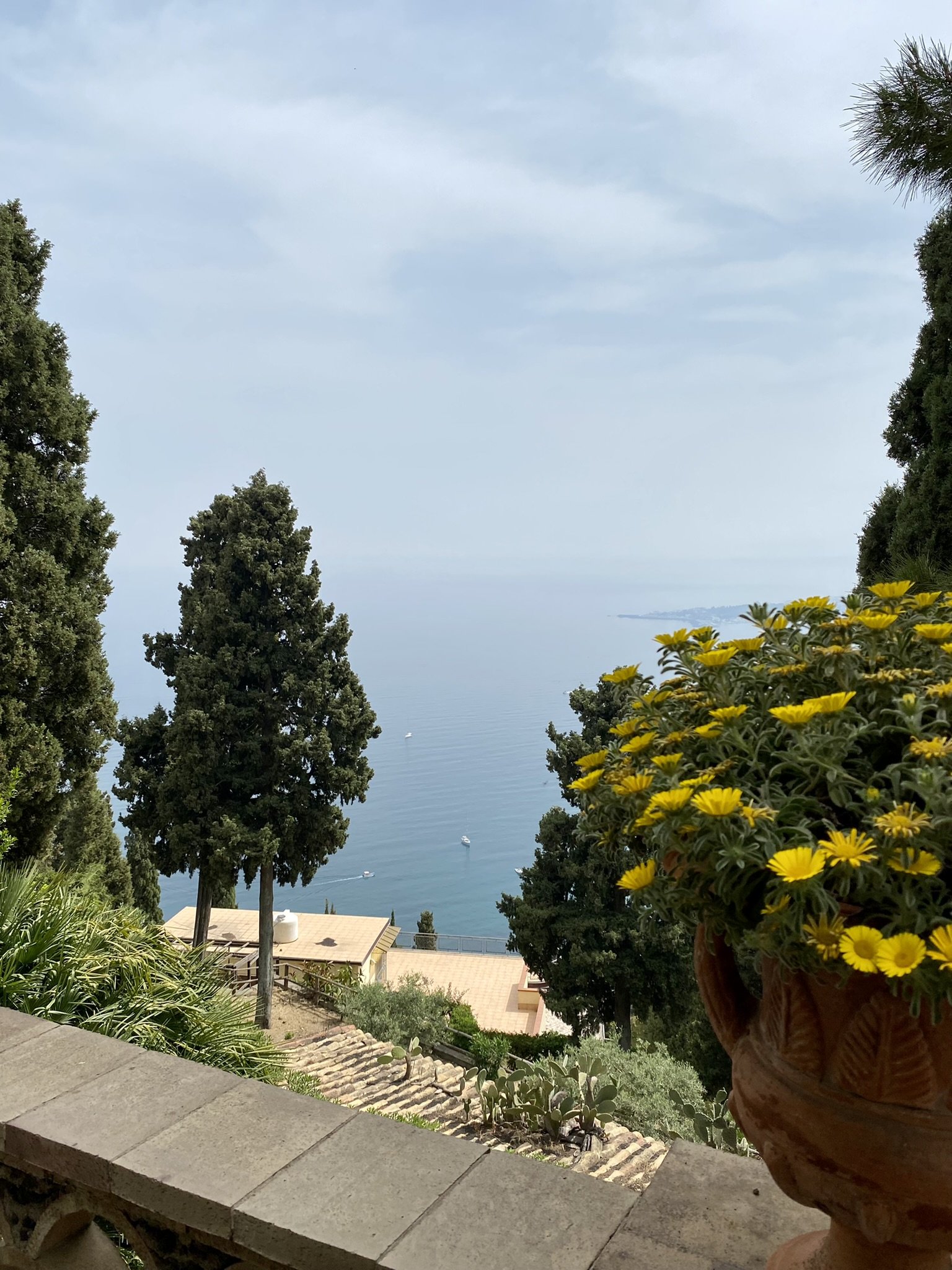
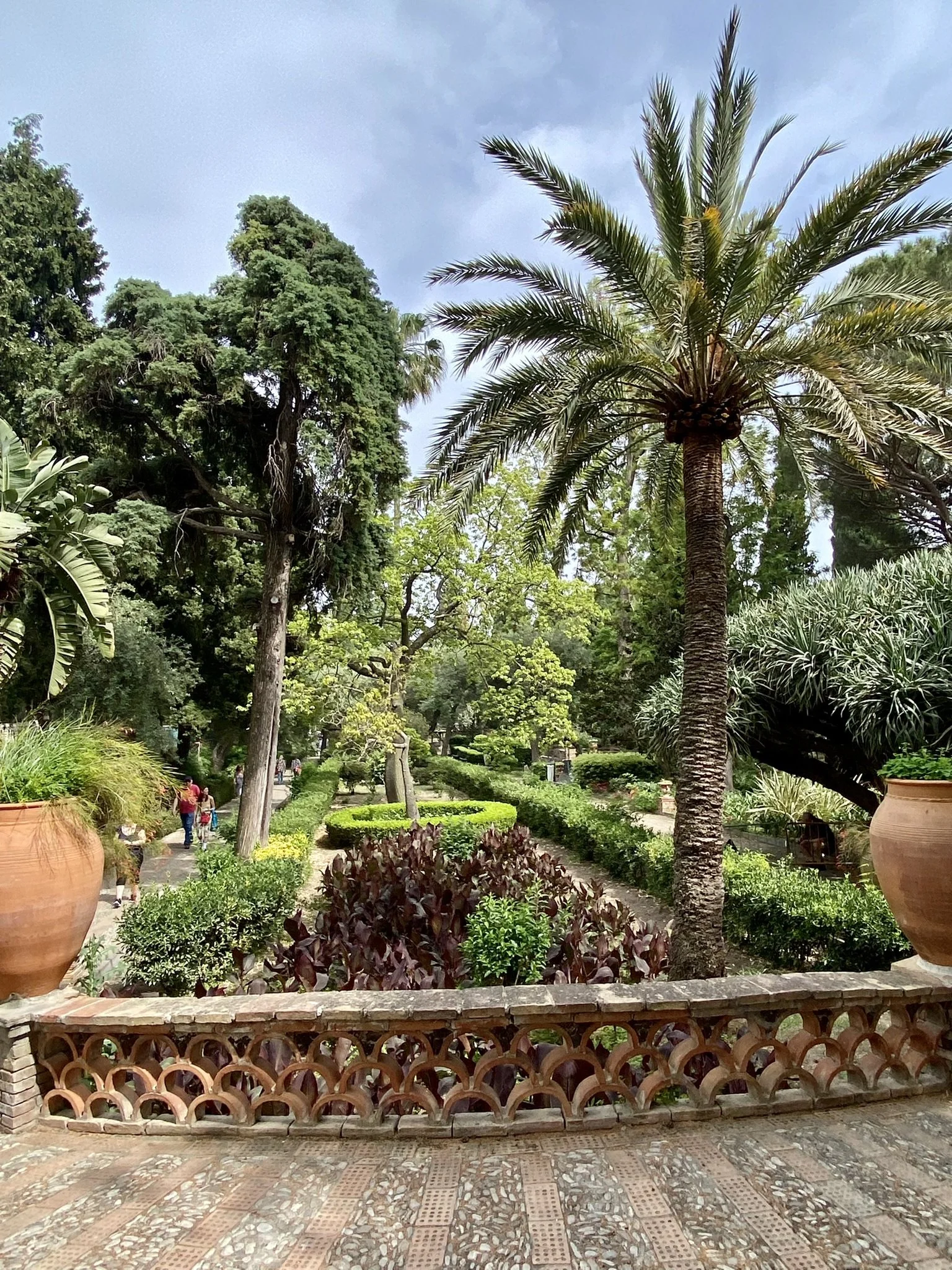
We spent our first afternoon slowly exploring the winding streets of the town before making our way to the Villa Comunale (also known as the Duke of Cesarò Public Gardens).
These lush, meticulously kept botanical gardens are a peaceful haven away from the bustling tourist crowds. Gifted to the town by a Scottish noblewoman in the late 19th century, the gardens are filled with rare, exotic plants, whimsical Victorian stone pavilions, and shady pathways that open up to absolutely spectacular, sweeping views of the coastline.
💡White Lotus Pop Culture Tip: If you are a fan of The White Lotus and are hoping to visit the beautiful beach shown in Season 2—the one portrayed as being "part of the hotel"—keep in mind that it is actually not located in Taormina! That famous beach cove is actually located across the island in the coastal town of Cefalù.
Day 10: Ancient Echoes & Tidal Magic in Taormina
Today was a day of beautiful contrasts: spending our morning standing in the monumental history of the ancient world, followed by an afternoon of pure relaxation at one of the most unique and iconic beaches in all of Italy.
Morning: Step Into the Greek Theatre of Taormina
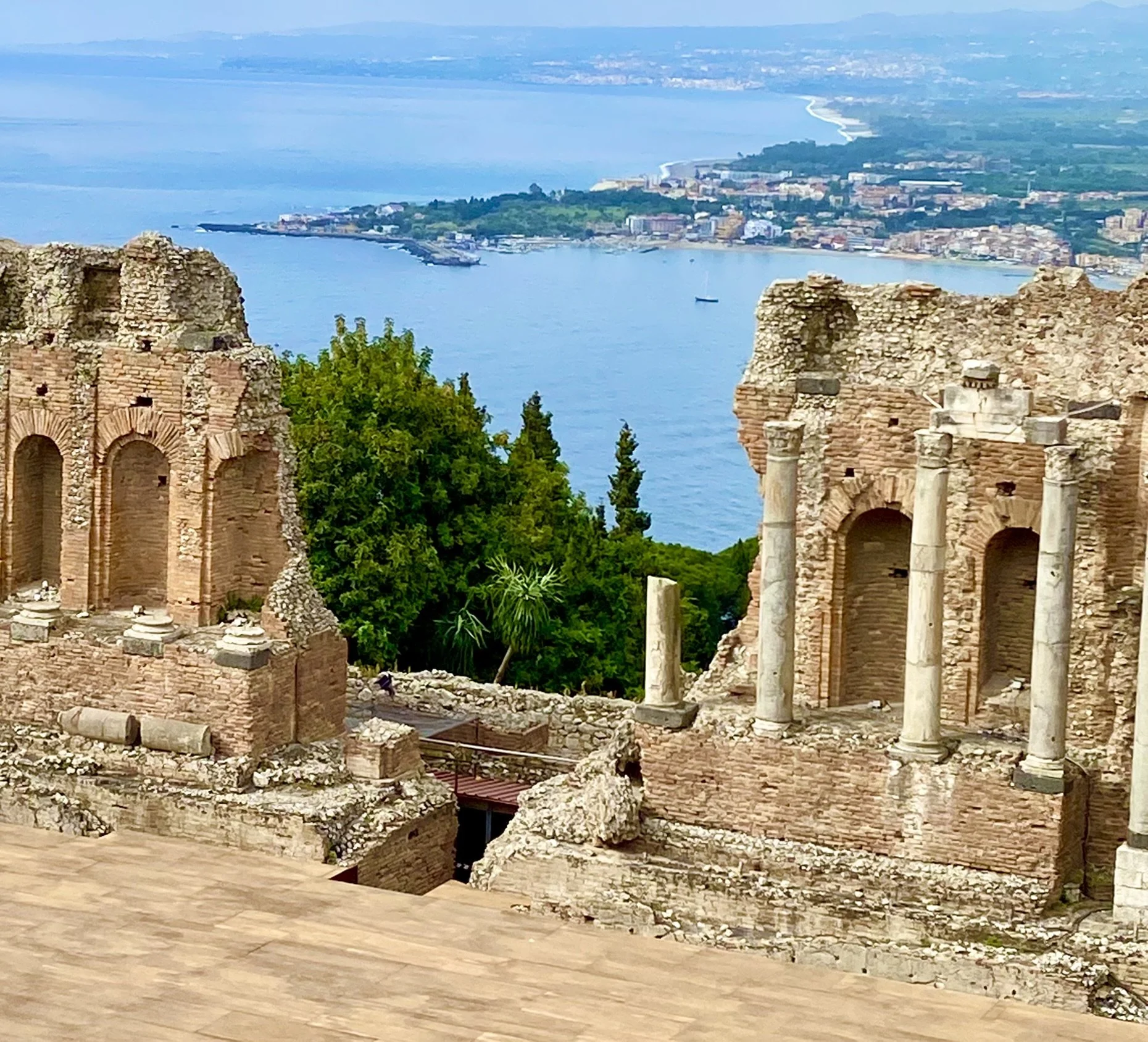
After breakfast, we headed out to visit the legendary Greek Theatre of Taormina.
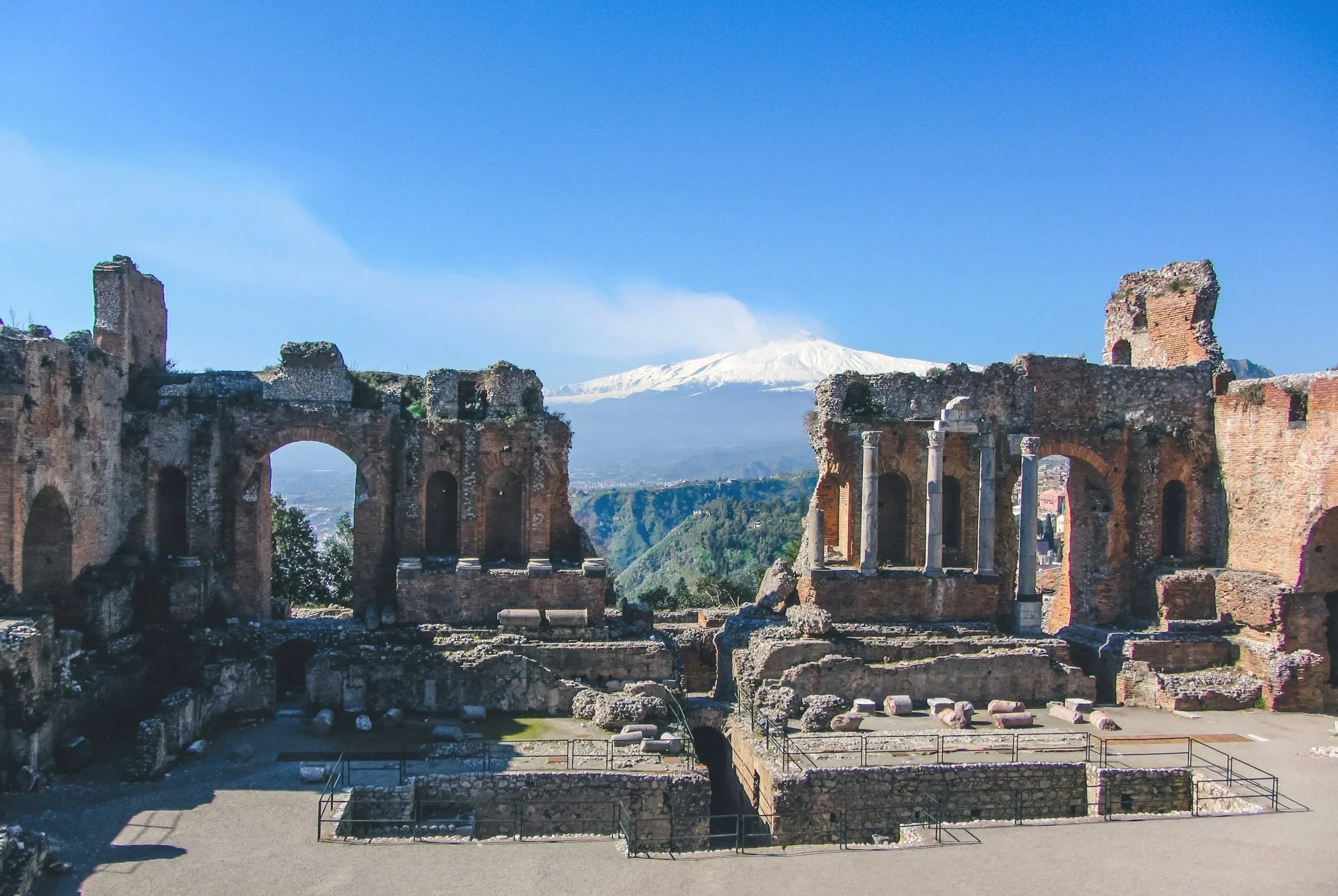
Carved directly into the rocky hillside in the 3rd century B.C., this ancient amphitheater is one of those places that feels almost surreal when you are standing in the center of it. It was built with absolute genius, perfectly framing the smoldering peak of Mount Etna on one side and the sweeping expanse of the blue Ionian Sea on the other. It is, without a doubt, one of the most dramatic theater backdrops on earth.
What makes this space truly special isn't just its remarkable age or beauty, but that it is still a living, breathing venue. To this day, the theater hosts world-class concerts, operas, and international film festivals under the stars, just as it did thousands of years ago. The acoustics are so pristine that a whisper on the stage can still be heard from the very top rows of stone seats. Standing here, looking out at the smoking volcano, you can feel the layers of Greek, Roman, and Sicilian history converging in one breathtaking spot.
🍝 Local Food Tip: On your way up to the Greek Theatre, make a mandatory pit stop at Rosticceria Da Cristina. This is the ultimate local spot to grab an arancino—Sicily's famous, golden-fried rice balls stuffed with savory fillings like meat ragù or melted cheese. They are hot, incredibly satisfying, and the absolute perfect fuel for a morning of exploring!
Afternoon: Descending to the Magic of Isola Bella
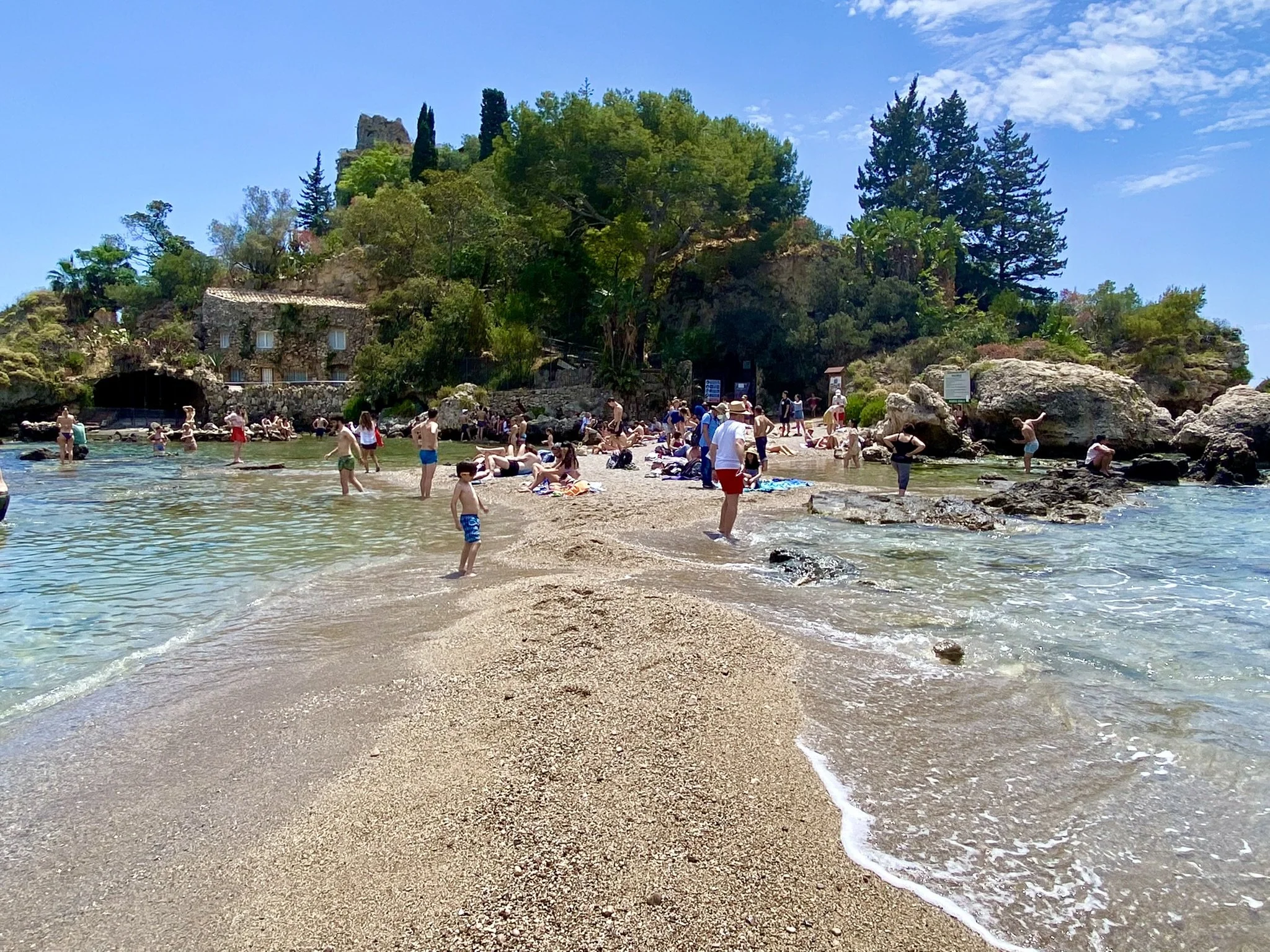
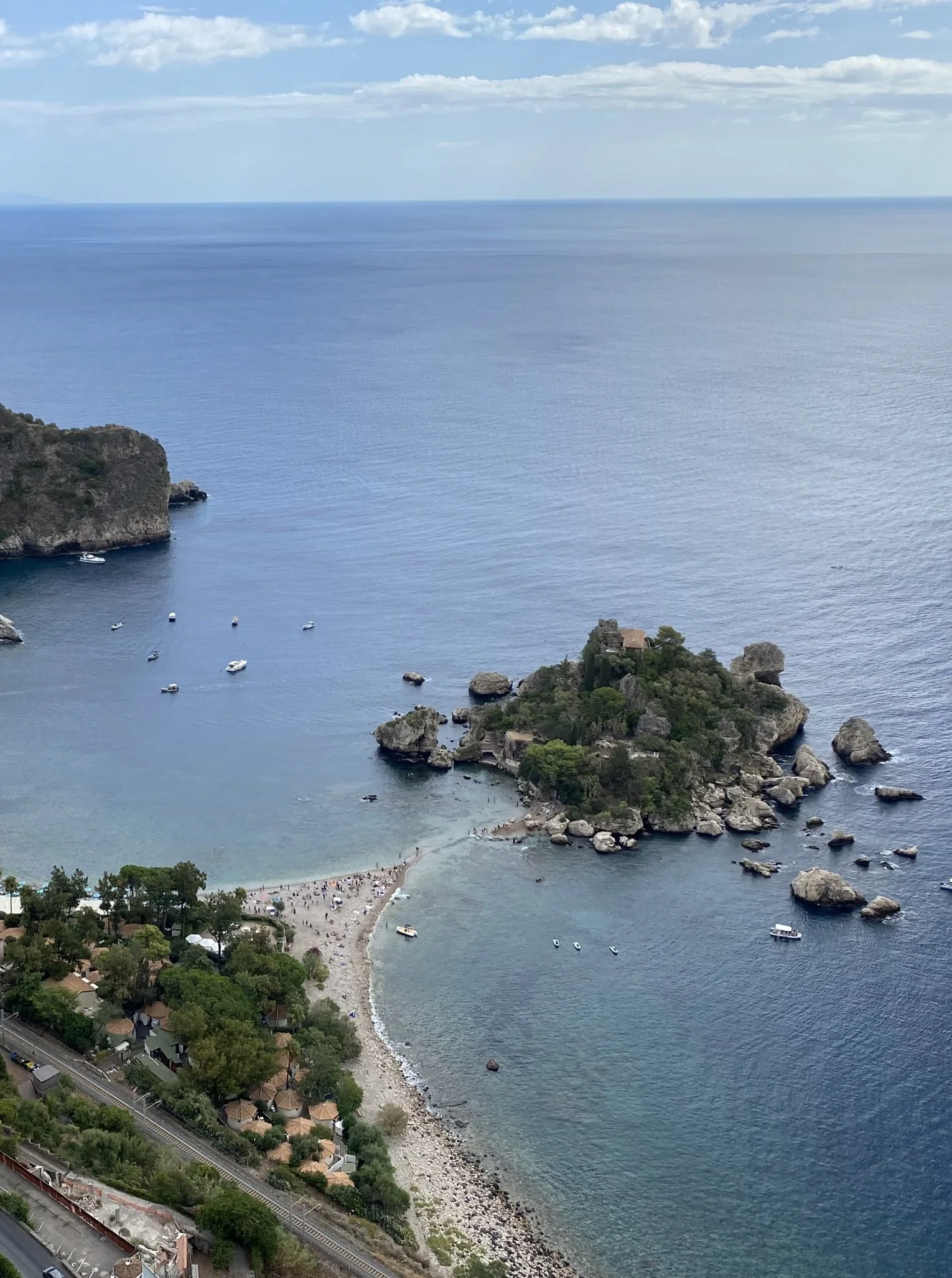
After our history lesson, it was time to cool off. We headed to the edge of town and took the quick, scenic cable car (funivia) down the cliffs to the beach level, heading straight for Isola Bella.
Isola Bella is Taormina's little slice of coastal paradise—a tiny, emerald islet that feels half wild and half dream. It is connected to the mainland beach by a very narrow, thin spit of pebbles. When the tide comes in, this rocky path completely disappears under a few inches of clear water, leaving the island looking as though it is floating completely free in the sea.
Once the ultra-private, exotic retreat of an eccentric English aristocrat, Isola Bella is now a protected nature reserve. It is covered in lush, overgrown Mediterranean plants and framed by shockingly clear, turquoise waters. Whether you spend your afternoon swimming, snorkeling around the rocky coves, or simply relaxing on the pebbles and admiring the view from the shore, Isola Bella has a quiet, cinematic beauty that makes you slow down and completely fall in love with Sicily.
Day 11: Beyond Taormina—Bar Vitelli & Castle Peaks
Today, we slipped away from Taormina's bustling center to explore two historic hilltop villages perched high in the surrounding mountains.
Savoca: Step Into The Godfather
Our first stop was Savoca, a quiet mountain village famous as the setting for Francis Ford Coppola’s The Godfather.
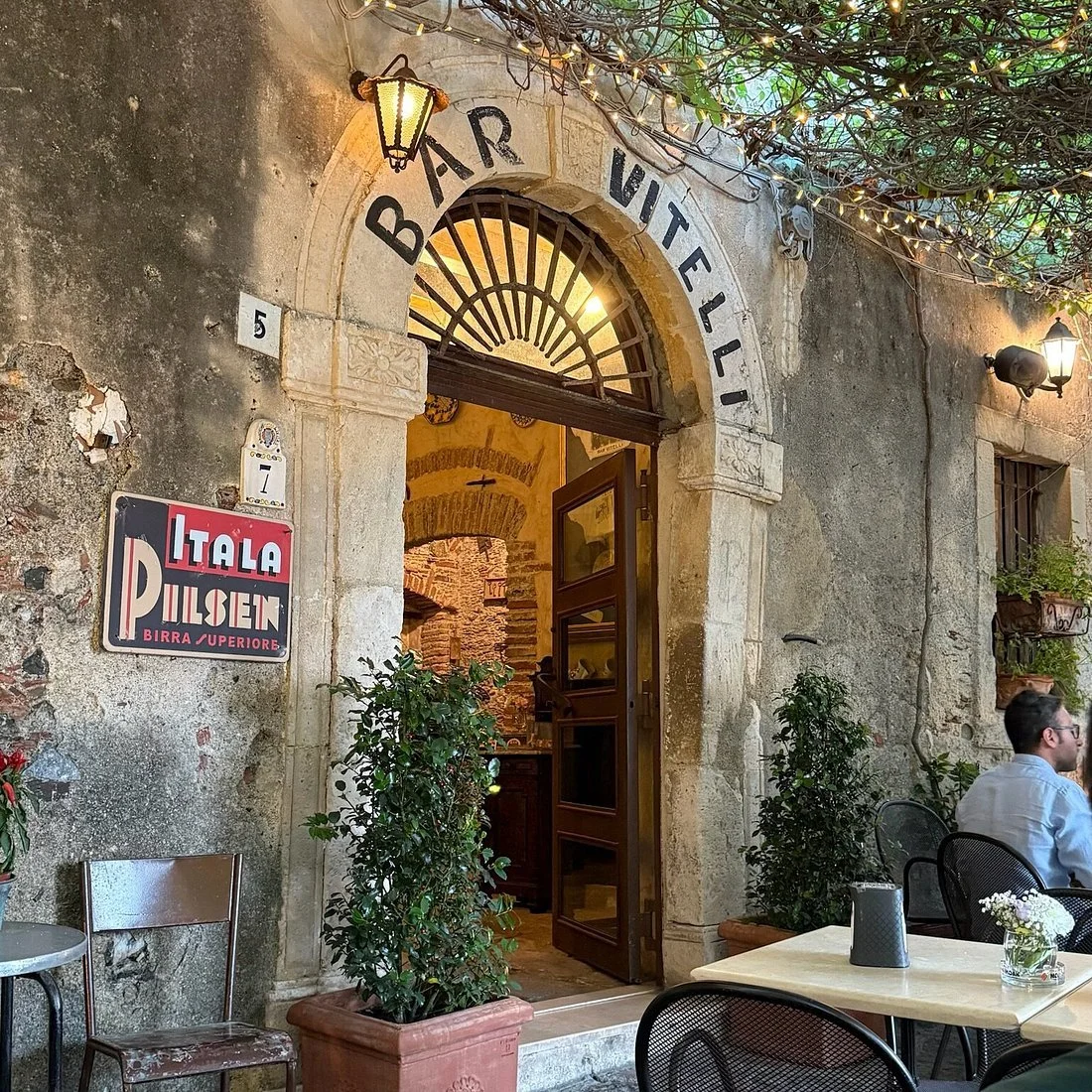
Stepping into the town square feels like stepping onto a 1970s film set. You can still sit under the vine-covered canopy of the iconic Bar Vitelli, completely unchanged by time, and enjoy a cool lemon granita.
But even without the cinema fame, Savoca is deeply magical. Once the day-trippers leave, a peaceful, almost sacred stillness settles over its medieval churches and crumbling stone palazzi. It’s a place where life slows to a crawl, church bells echo across the valleys, and Sicily whispers its secrets rather than shouting them.
Castelmola: The Balcony of Sicily
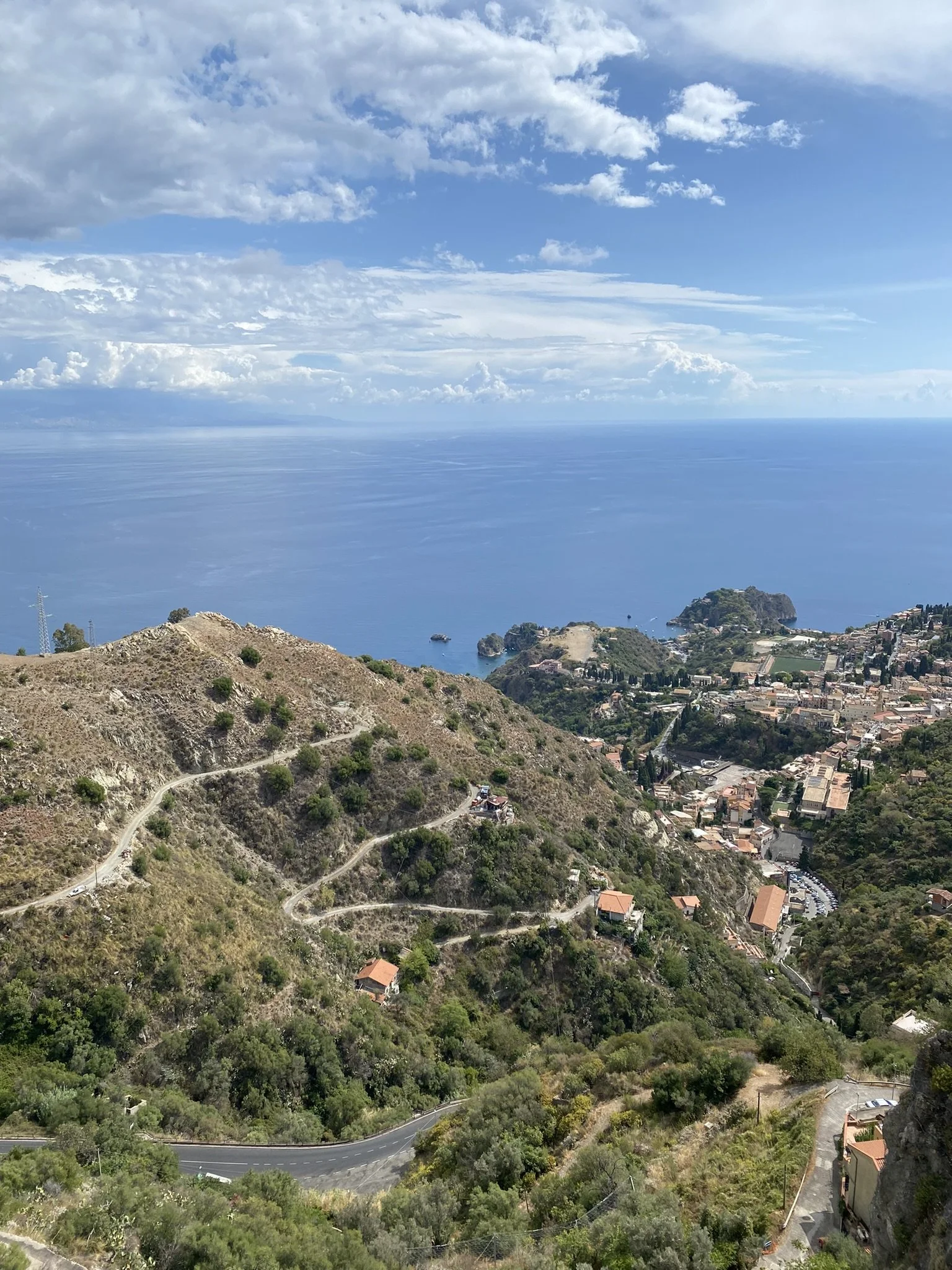
Next, we wound our way up to Castelmola, a spectacular medieval village perched on a massive crag directly above Taormina.
Officially named one of Italy's most beautiful villages ("I Borghi più belli d'Italia"), Castelmola acts as a natural viewing platform for the entire coast. From its polished stone piazzas, you get dizzying, panoramic views of Mount Etna on one side and the sweeping blue Ionian coastline on the other.
Wandering its narrow alleys and sampling the village's signature vino alla mandorla (sweet almond wine) was the perfect end to our afternoon.
Day 12: Catania—Lava Stone, Roman Ruins & The Soul of Pasta alla Norma
Sprawling at the foot of Mount Etna on Sicily's eastern coast, Catania is a city of raw, elemental energy—brooding, beautiful, and unlike anywhere else in Italy. It has been buried by lava and leveled by earthquakes, most catastrophically in 1693, only to be rebuilt each time.
That rebuilding gave the city its defining character: a sweeping Baroque cityscape constructed almost entirely from dark volcanic lava stone. This unique stone gives Catania a dramatic, slightly Gothic grandeur that stands in vivid contrast to the brilliant Mediterranean sunlight. Catania is a working city, gritty and authentic, featuring world-class street food, bustling markets, and a passionate local culture presiding under the watchful eye of Mount Etna herself.
We checked into our beautiful Airbnb, which featured tall frescoed ceilings in a historic square overlooking Via Etnea—the ultimate central street for exploring. In the evening, this avenue transforms into a bustling, energetic pedestrian thoroughfare.
Morning: Baroque Squares & Ancient Ruins
We started our morning in Piazza del Duomo, Catania's magnificent central square. At its center stands the city's beloved symbol, the Fontana dell'Elefante—an ancient lava-stone elephant topped with an Egyptian obelisk. Surrounding the fountain are grand Baroque palaces and the Catania Cathedral (Duomo di Sant'Agata), which houses the tomb of the legendary composer Vincenzo Bellini, Catania's most famous son.
Next, we went on a hunt for the city's half-buried Roman history:
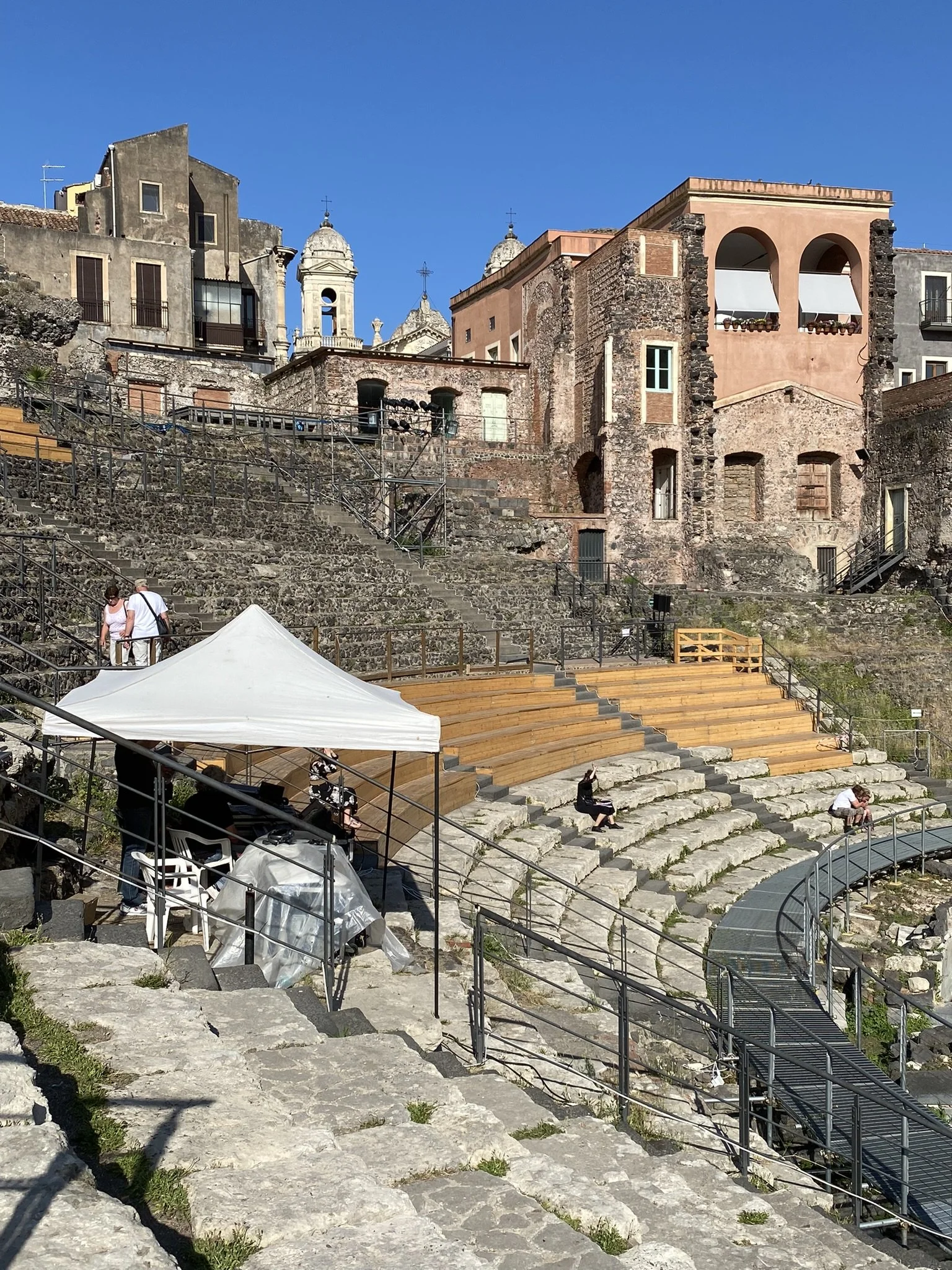
The Roman Amphitheater: Located in Piazza Stesicoro, this was once one of the largest amphitheaters in the Roman world, with its massive stone ruins now dramatically half-buried beneath modern street levels.
The Odeon & Greek-Roman Theatre: Hidden away in a quiet residential neighborhood, this 2nd-century B.C. complex is remarkably intact, offering a peaceful step back in time.
Afternoon: Europe's Giant Monastery
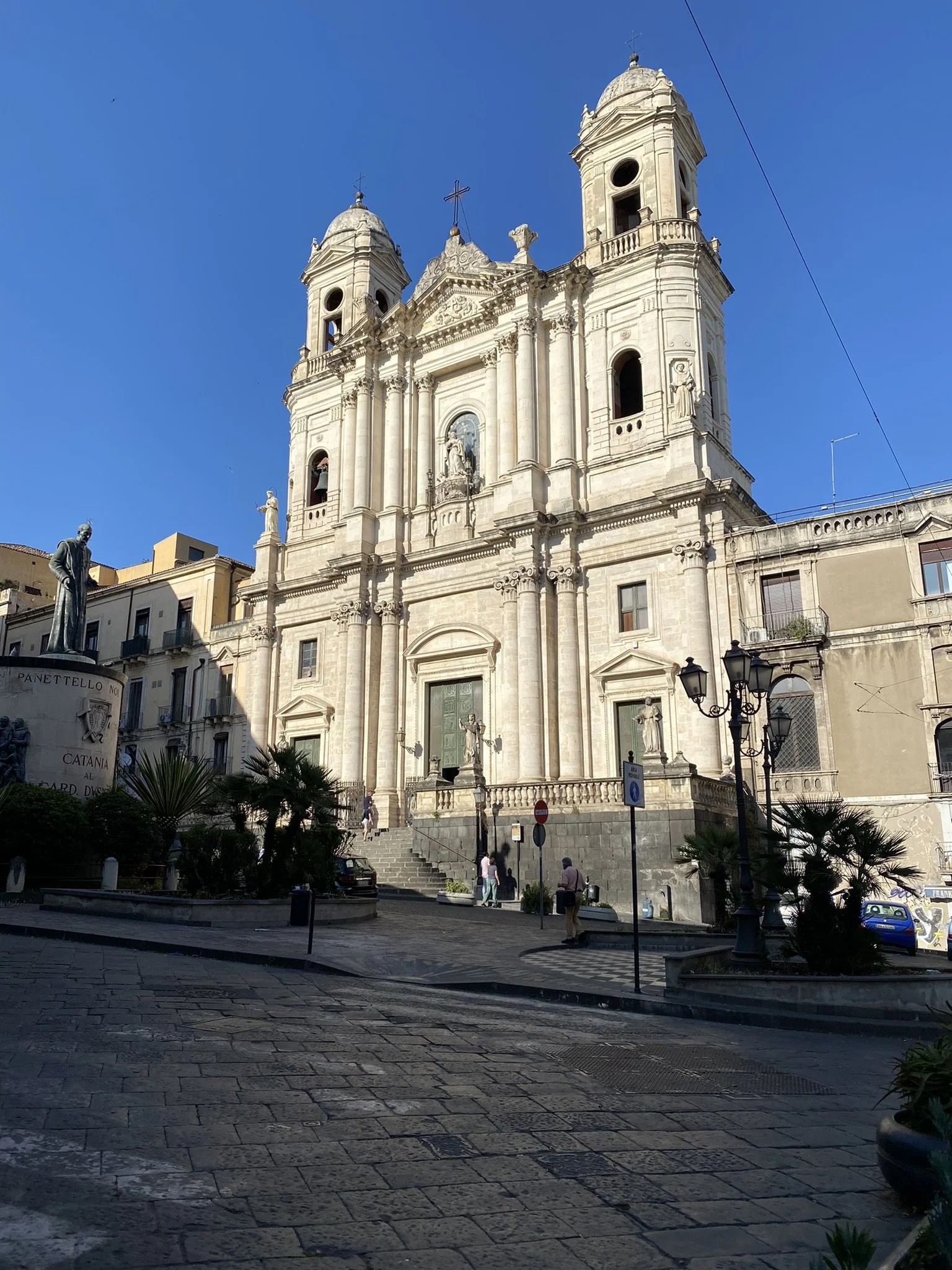
In the afternoon, we explored the Monastery of San Nicolò l'Arena, one of the largest Baroque monasteries in Europe and now part of the University of Catania. Its unfinished facade is hauntingly beautiful, and walking through its grand cloisters, libraries, and historic sundial corridors is extraordinary.
Right next door, we peeked inside San Nicolò all'Arena, the biggest church in all of Sicily, featuring a vast, cavernous interior that feels incredibly humbling.
Evening: Aperitivo & Catania's "Food District"
For evening drinks, we headed to the lively Piazza Teatro Massimo area for a classic Italian aperitivo.
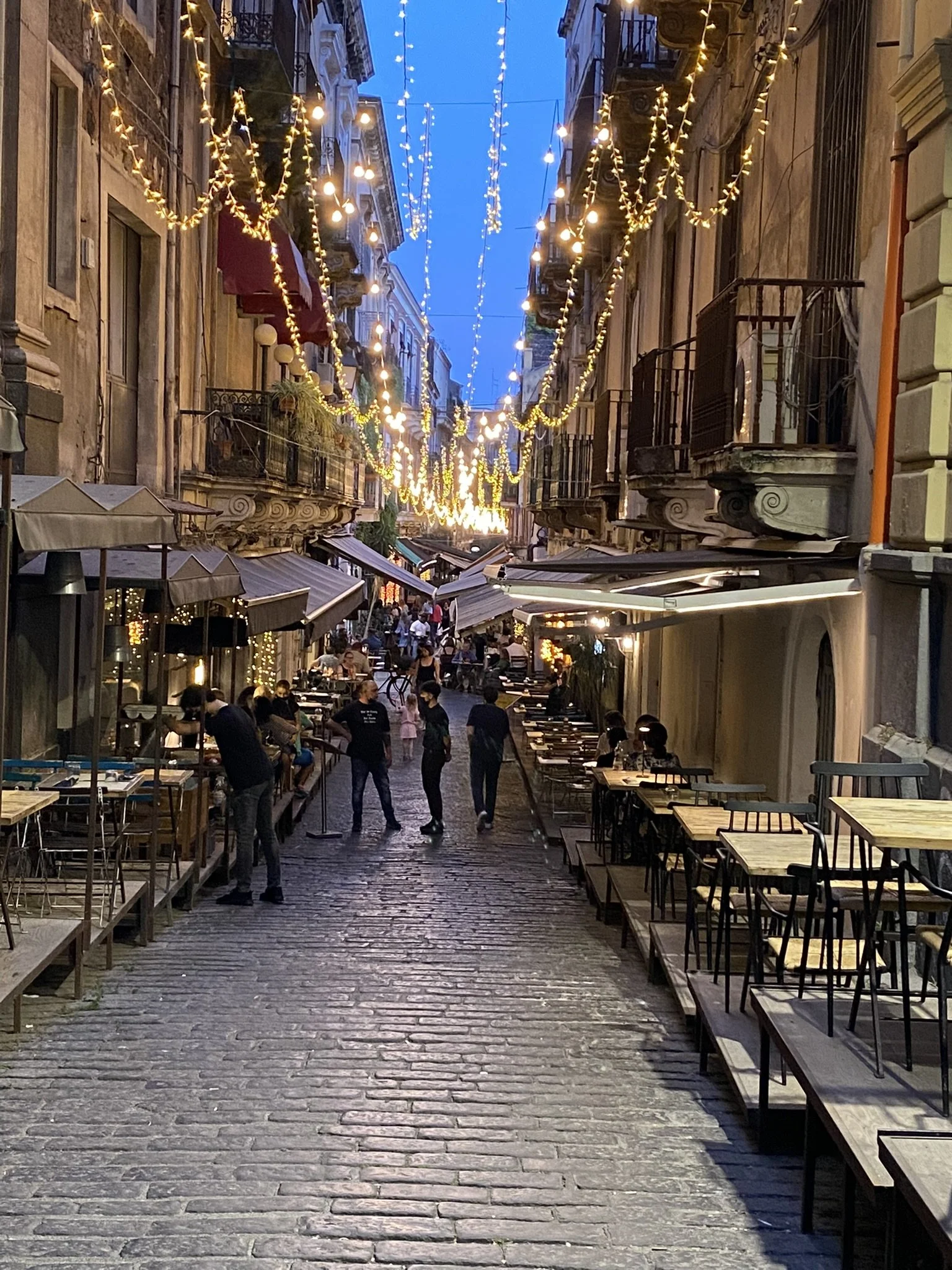
When it came time for dinner, we made an incredible discovery. Just a few blocks east of Via Etnea, we stumbled upon Via Santa Filomena. This short, lively, and incredibly atmospheric lane is Catania's unofficial food district, famous for its hanging string lights, tightly packed outdoor tables, and vibrant, warm evening energy.
🍝 The Legend of Pasta alla Norma While dining in the trattorias around Piazza Federico di Svevia, we had to order Catania's signature dish: Pasta alla Norma. Named after Vincenzo Bellini's famous opera La Norma, this soulful dish is edible symbolism for the city and the volcano that rules it:
The dark eggplant represents the brooding slopes of Mount Etna.
The rich red tomatoes represent the flowing volcanic lava.
The fresh green basil represents the lush greenery surrounding the mountain.
The grated Ricotta Salata represents the snow-capped peak of the volcano.
Simple ingredients that tell the entire story of Sicily in a single bowl!
Day 13: Catania & Mt. Etna—Sensory Markets & Volcanic Heights
Today was all about experiencing Catania’s wilder sides—first through the theatrical chaos of its historic fish market, and then by standing on the slopes of Europe's most active giant.
Morning: The Theatre of La Pescheria
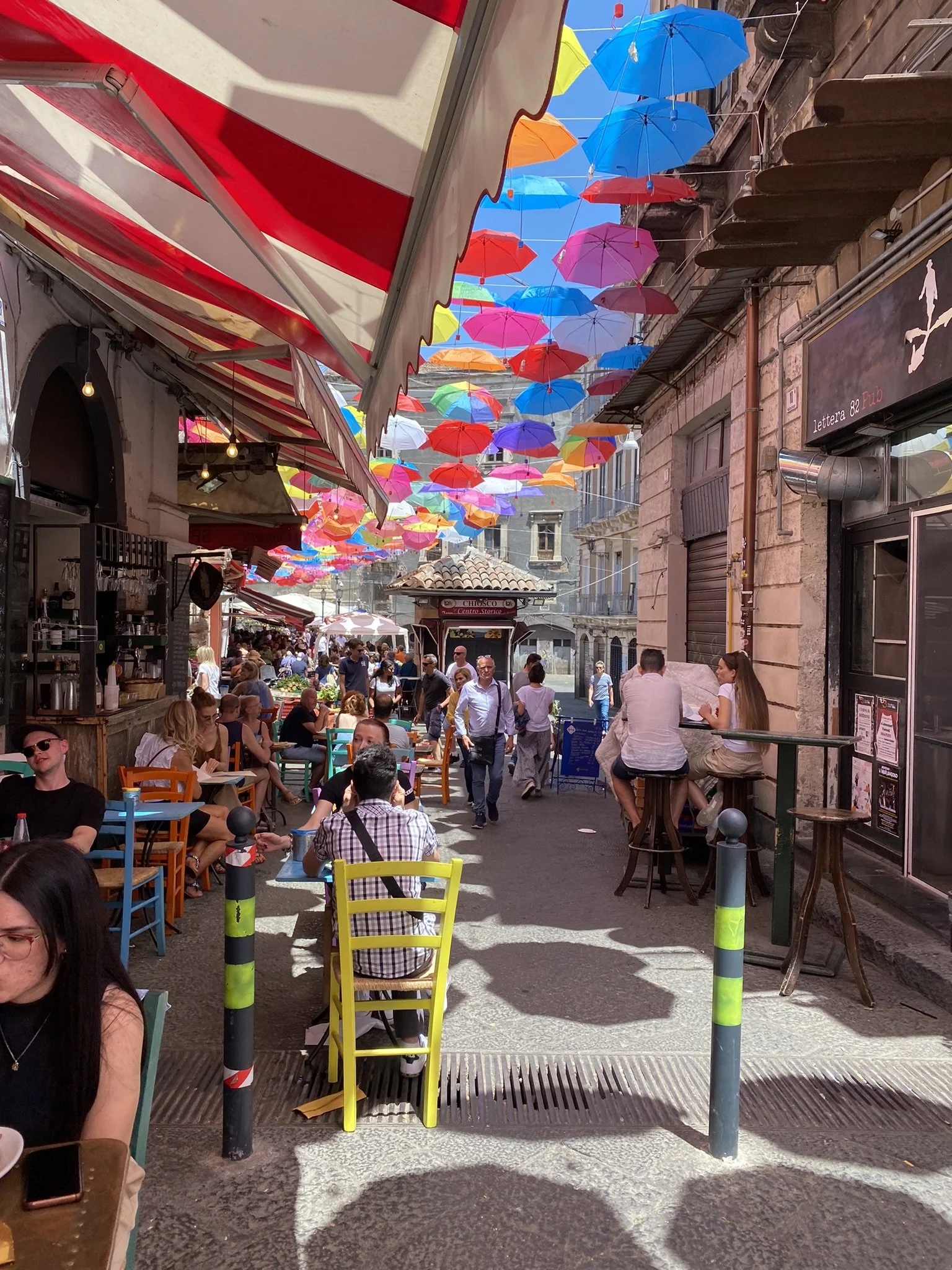
We started the day by diving straight into La Pescheria, the extraordinary fish market that erupts into life right behind the Duomo every morning.
This is easily one of the most raw and theatrical street markets in Europe. It is a complete sensory overload: mounds of fresh swordfish, giant tuna, sea urchins, wriggling eels, and colorful shellfish are piled high on dripping marble slabs. All around you, fishmongers holler at the crowd in a thick, singing Sicilian dialect, competing for attention in a tradition that has remained unchanged for centuries.
🍢 Street Food Pick: As you make your way out of the market, keep an eye out for local street vendors. Grab a warm, crispy arancino or a stigghiola (a classic, seasoned Sicilian street-food skewer) to fuel up for the afternoon.
Afternoon: Scaling the Slopes of Mount Etna
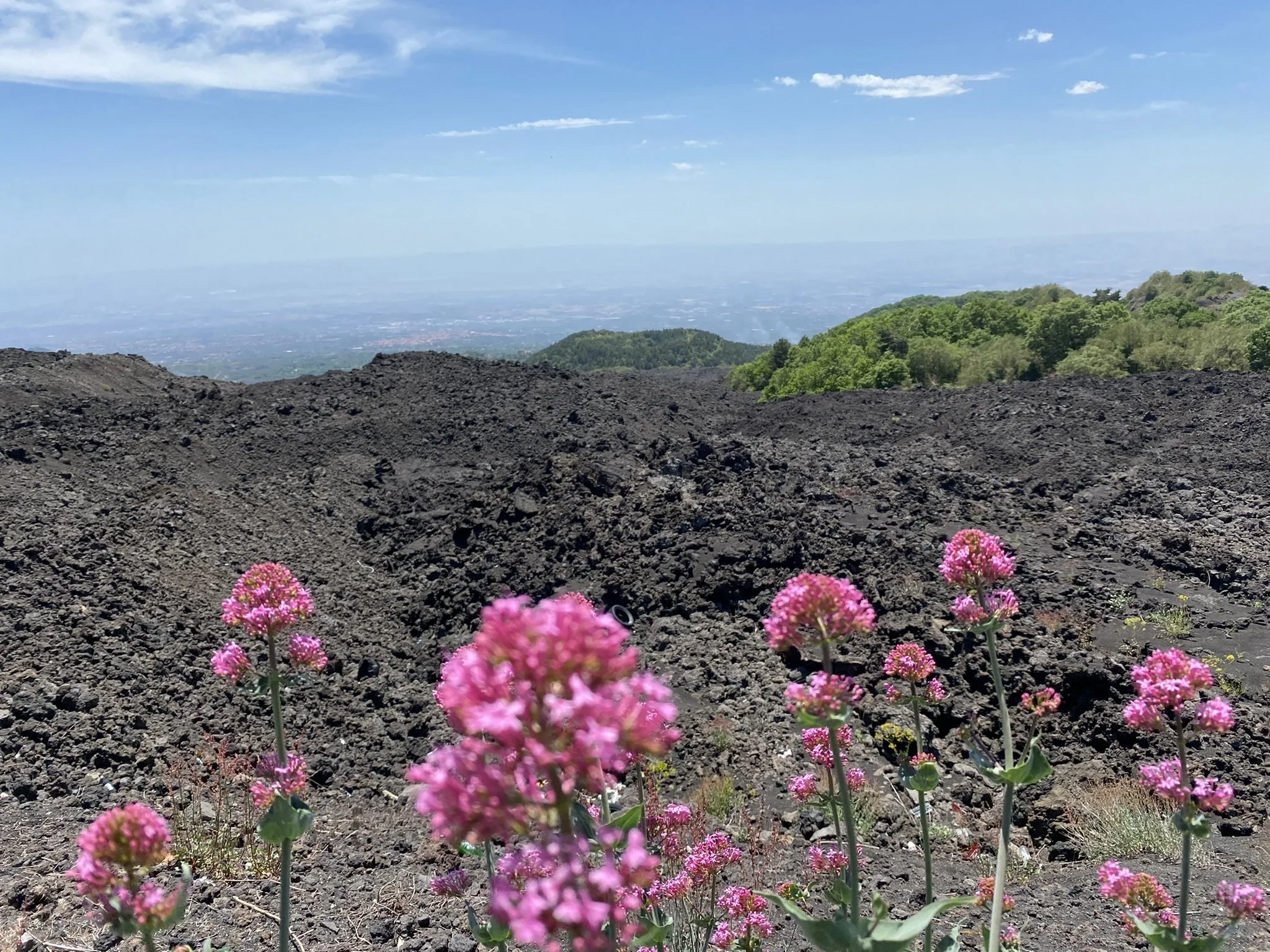
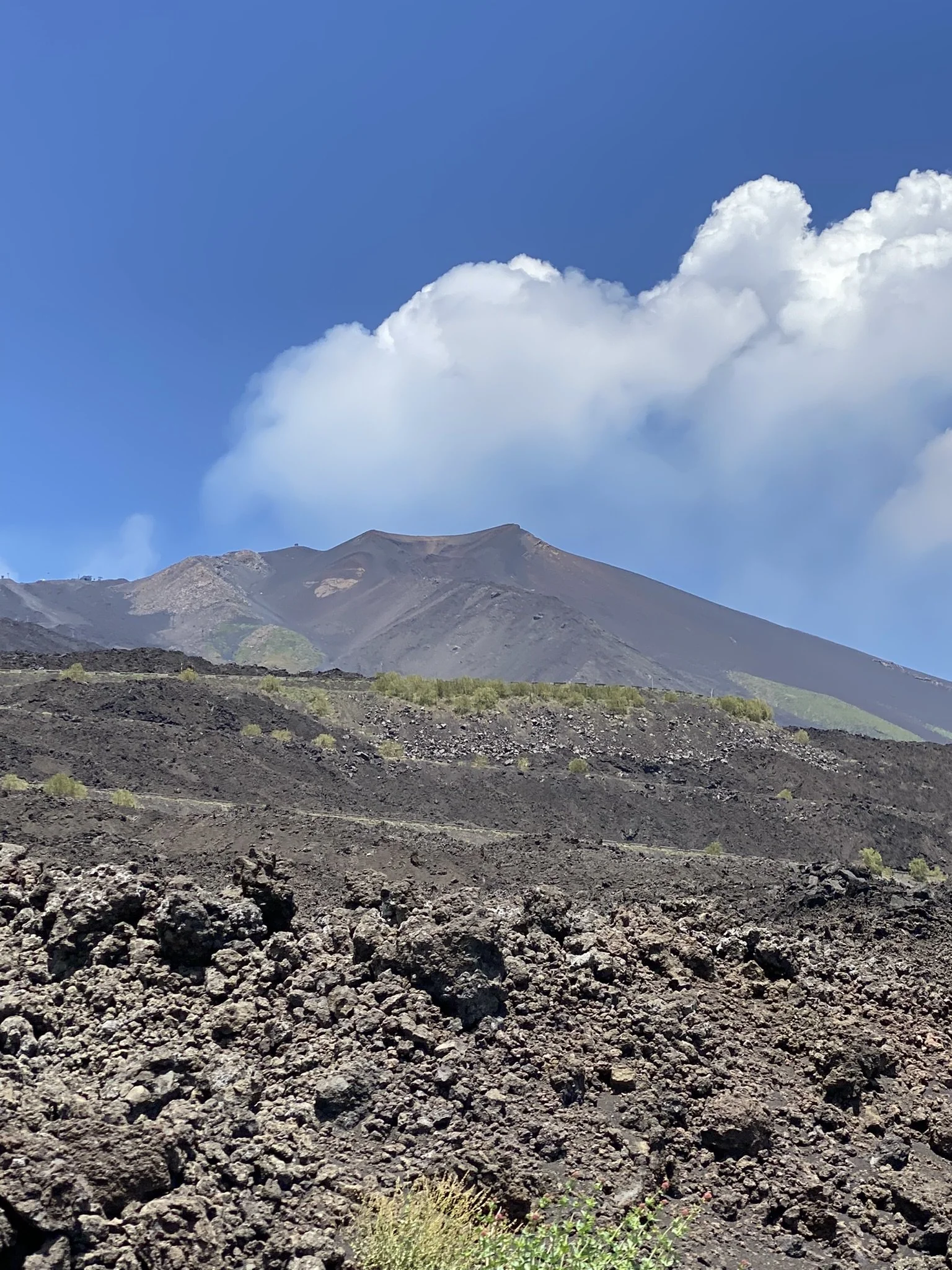
After the market, we set off for Mount Etna. Standing on the upper slopes of this magnificent volcano is an experience that makes you feel incredibly small.
You have a few great ways to experience the volcano depending on your travel style:
Guided Excursion: There are numerous local tour operators located right along Via Etnea offering half-day small group tours.
The Circumetnea Railway: A historic, slow-paced train line that winds all the way around the volcanic base through old lava fields and vineyards.
Cable Car & 4x4: For the most dramatic experience, you can take a bus up to Rifugio Sapienza, ride the cable car (funivia) higher up, and then hop into rugged 4x4 vehicles to reach the permitted areas near the active summit craters.
No matter how you get there, standing on the dark, barren volcanic earth with panoramic views stretching across the entire eastern coast of Sicily to the shimmering Ionian Sea is staggering.
Evening: The Perfect Catanese Finale
We returned to Catania in the late afternoon and ended our time in the city exactly like the locals do.
We joined the sunset passeggiata—the traditional evening stroll—along the grand, wide pedestrian lanes of Via Etnea, watching the golden light hit the dark volcanic-stone buildings. For dinner, we headed straight back to our favorite atmospheric alley, Via Santa Filomena, for one last unforgettable meal under the fairy lights.
Day 14: Ortigia—The Golden Ancient Heart of Syracuse
Up until today, our journey through Sicily had unfolded entirely on trains, ferries, and the occasional taxi. While traveling car-free was a wonderfully unhurried way to see the island, our upcoming destinations lay beyond the reach of the rail lines. Having our own wheels had become a necessity.
We took a taxi back to Catania Airport and picked up a rental car through Sicily by Car (which we pre-booked on Booking.com). The local agency proved straightforward and reliable, and we were quickly on our way south.
The drive to Syracuse was quick and easy, but driving within the ancient island of Ortigia is a different story. The island is protected by strict ZTL (limited traffic zone) laws and is closed to outside cars.
🚗 Parking Tip: Immediately after crossing the bridge into Ortigia, we found a parking spot in one of the main pay-lots on the right-hand side. This made a perfectly convenient base, allowing us to easily explore this incredibly compact, pedestrian-friendly island on foot.
Timeless, Golden, and Vibrantly Alive
Ortigia completely stole my heart. Barely a kilometer wide, this small island is the ancient historical heart of Syracuse, connected to the mainland by two short bridges but feeling like an entirely different world. Settled by Greek colonists in 734 B.C., it is one of the oldest continuously inhabited places in the Western world.
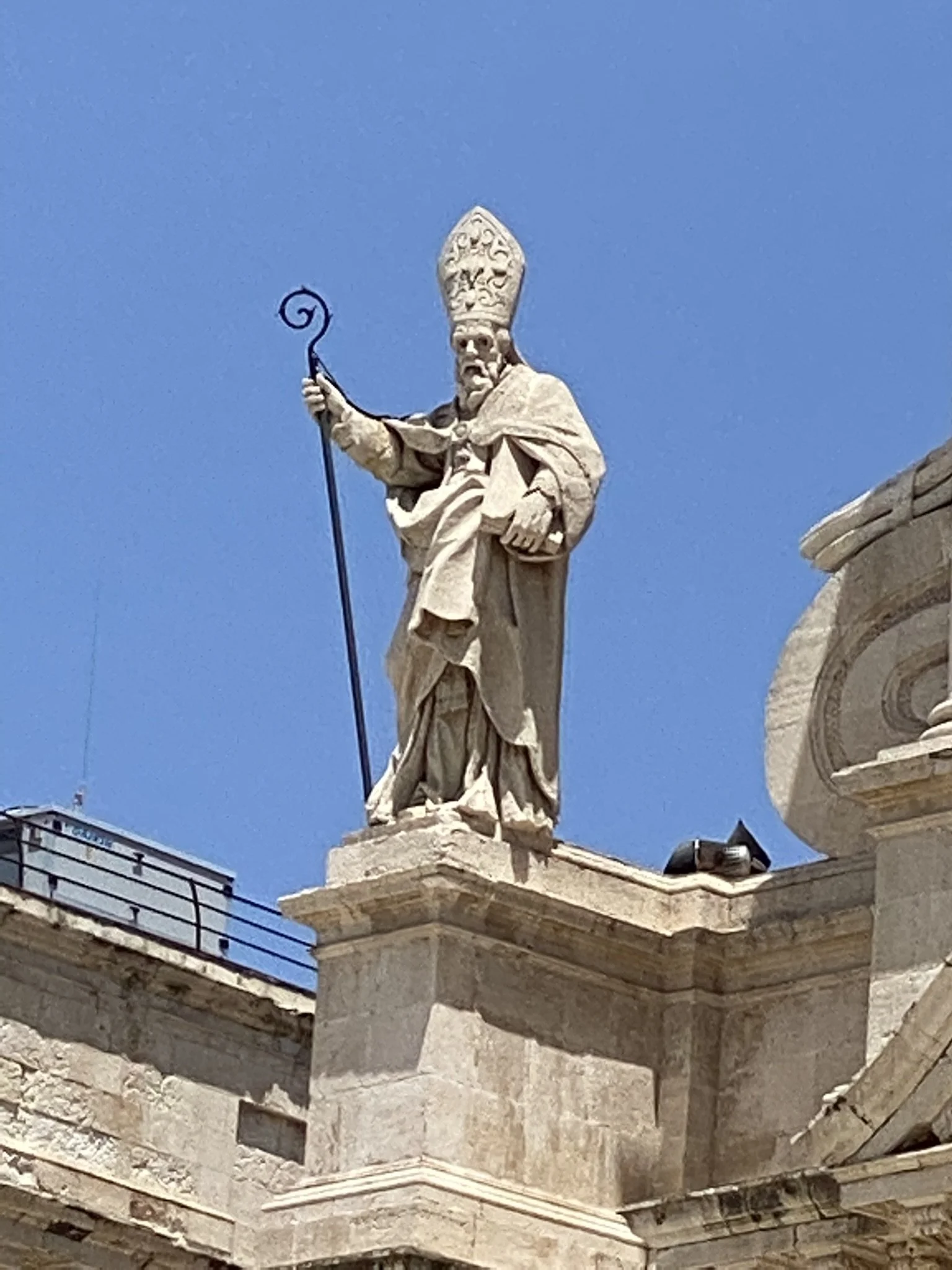
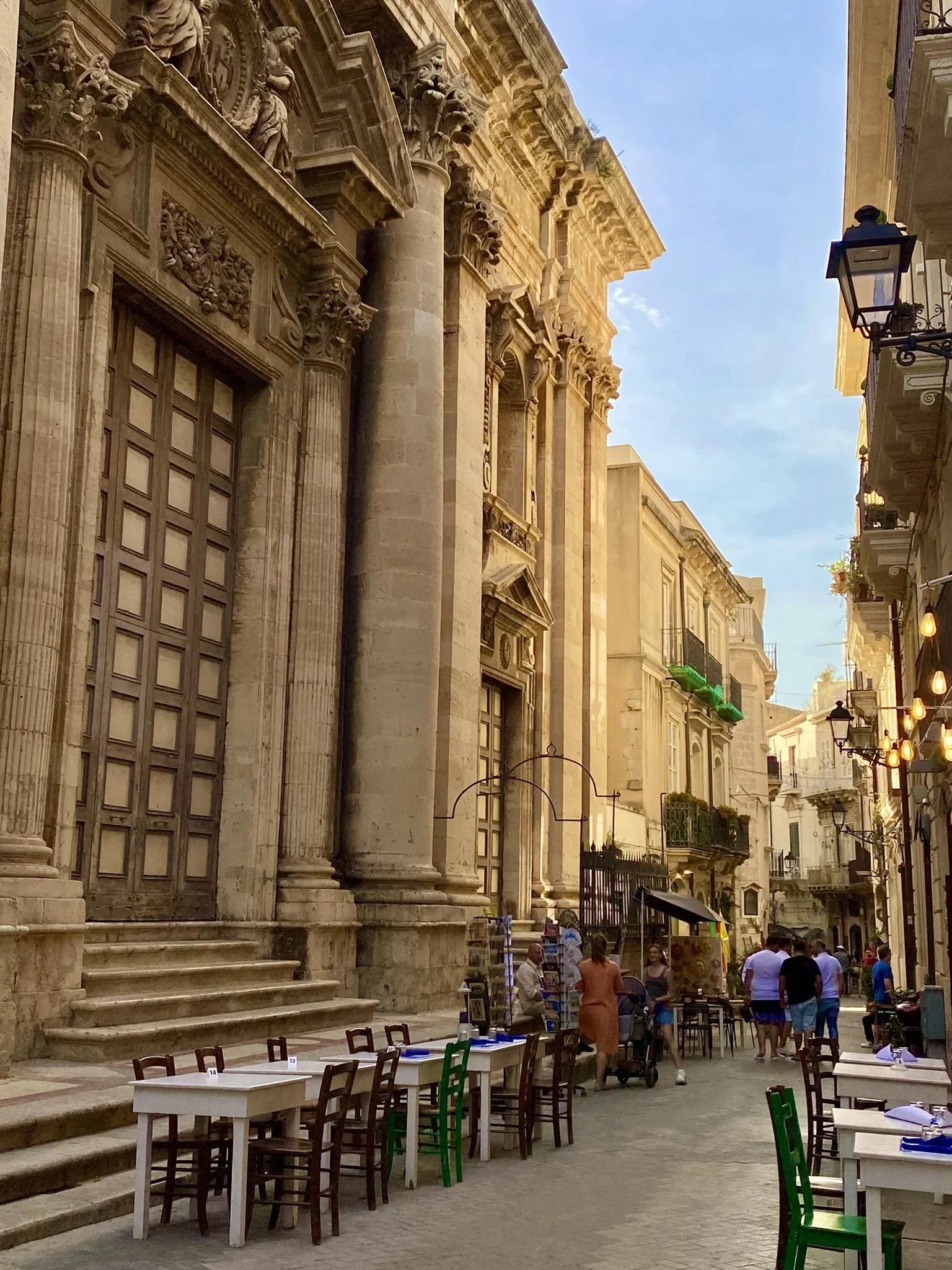
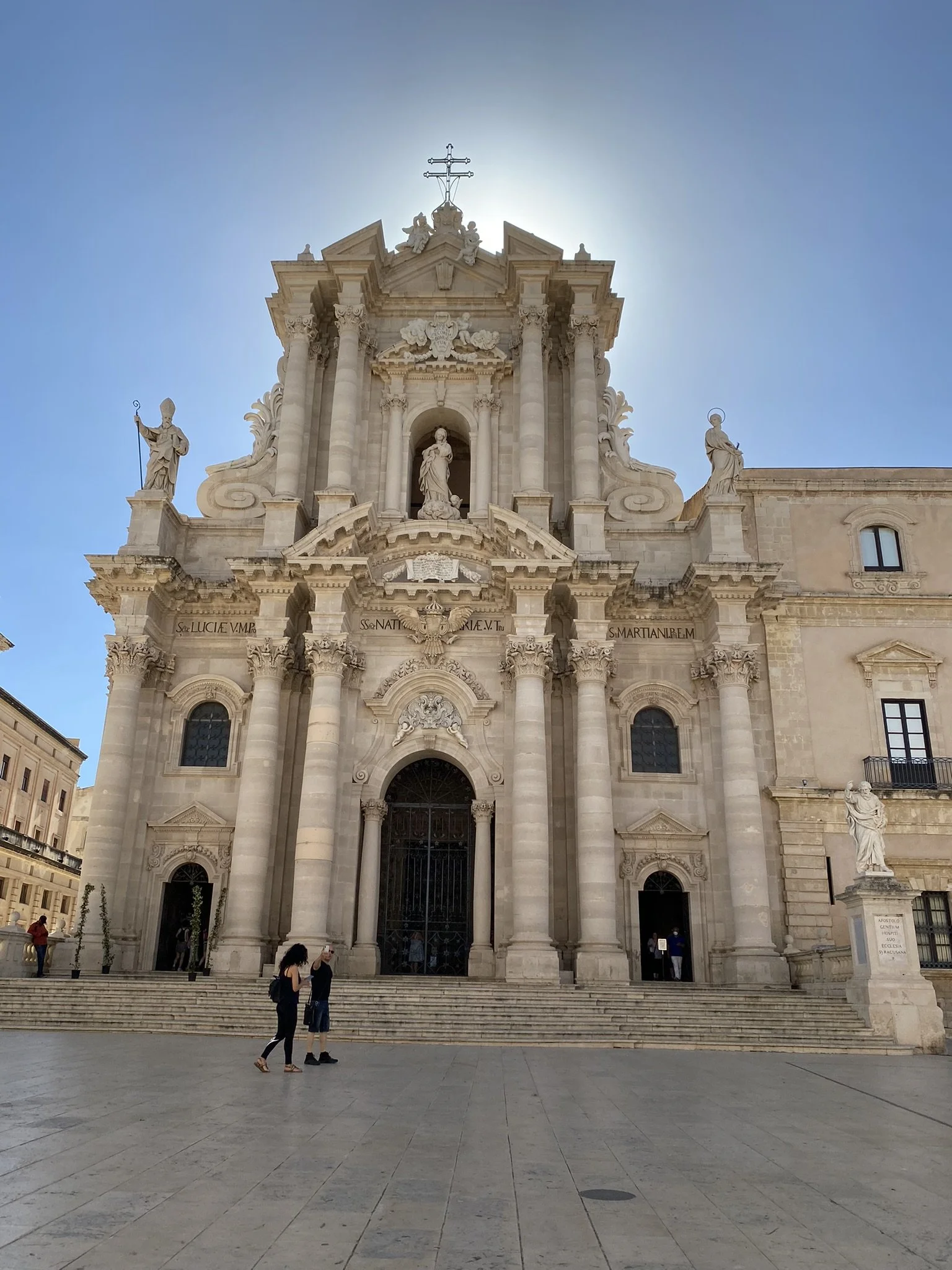
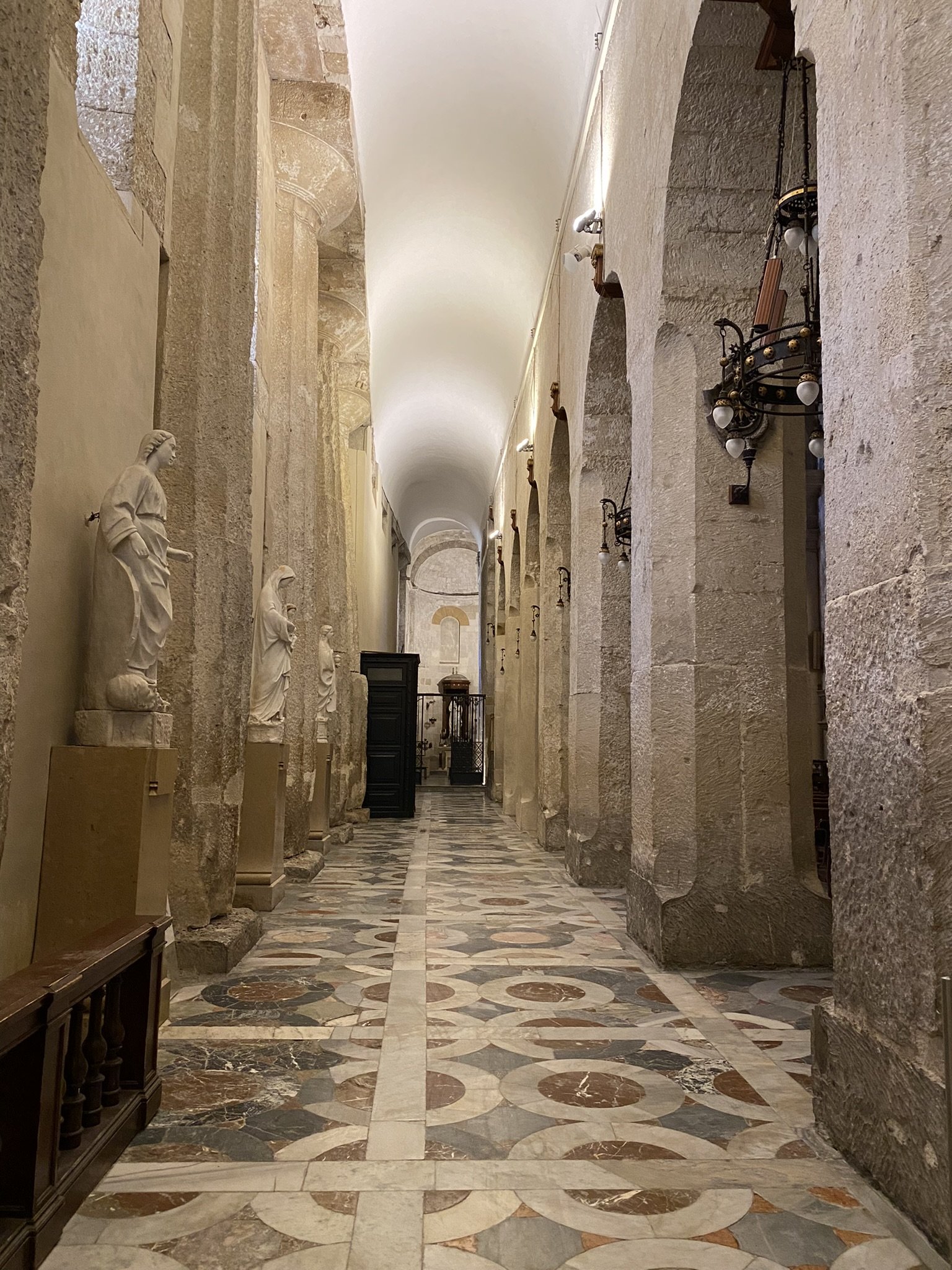
Ortigia's layered history reveals itself at every corner: 5th-century B.C. Greek temple columns are embedded directly into the walls of the Baroque Cathedral, medieval Norman palaces look out to sea, and maze-like alleyways open up suddenly onto grand, honey-golden piazzas.
🎬 My Inspiration for Sicily: Malèna Long before booking a flight, Ortigia was the very reason I wanted to travel to Sicily. I was utterly captivated by the grand, sweeping piazza in the movie Malèna(directed by Giuseppe Tornatore). Many of the film's most striking scenes were shot right here. After doing a deep dive into the filming locations, Ortigia became the anchor for our first post-pandemic trip. I highly recommend watching the film before visiting! More about this can be found in my other posts: How to Plan a Trip and How was Sicily?
Where We Stayed: A Front-Row Seat to a Myth
Ortigia is packed with boutique hotels and beautifully renovated historic apartments featuring vaulted stone ceilings. Because the island is so small, you are never more than a short stroll from anything.
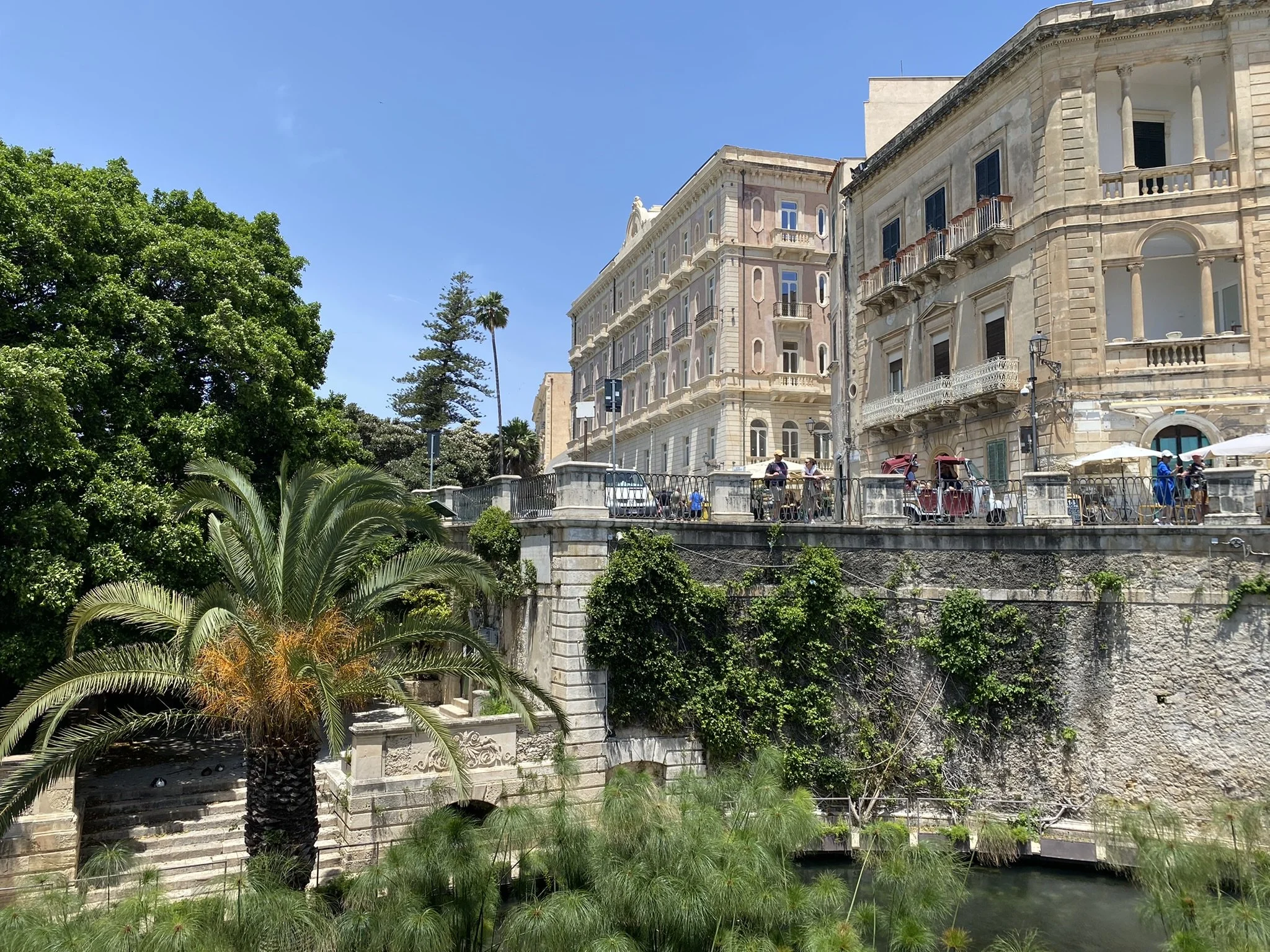
We absolutely struck gold with our apartment. It was a beautifully renovated space located directly beside the legendary Fonte Aretusa, giving us a front-row view of the freshwater spring and the glittering harbor.
The Catch: Because the location is so prime, the lively sounds of the waterfront drift through the windows.
The Verdict: For a setting that spectacular, we would make that trade-off again in a heartbeat.
The Ultimate Ortigia Checklist
To make the most of your time on the island, here are the absolute must-visit sights:
Fonte Aretusa: A legendary natural freshwater spring right on the edge of the sea, tied to the Greek myth of the nymph Arethusa. Today, it is a tranquil, walled pool filled with wild papyrus plants, swimming ducks, and koi fish.
Piazza del Duomo: Arguably one of the most beautiful Baroque squares in all of Italy. Surrounded by elegant palaces, this grand, elongated piazza is the social and architectural heart of the island.
Temple of Apollo: Located near the island’s entrance, the weathered ruins of this 7th-century B.C. structure are the oldest Doric temple ruins in Sicily.
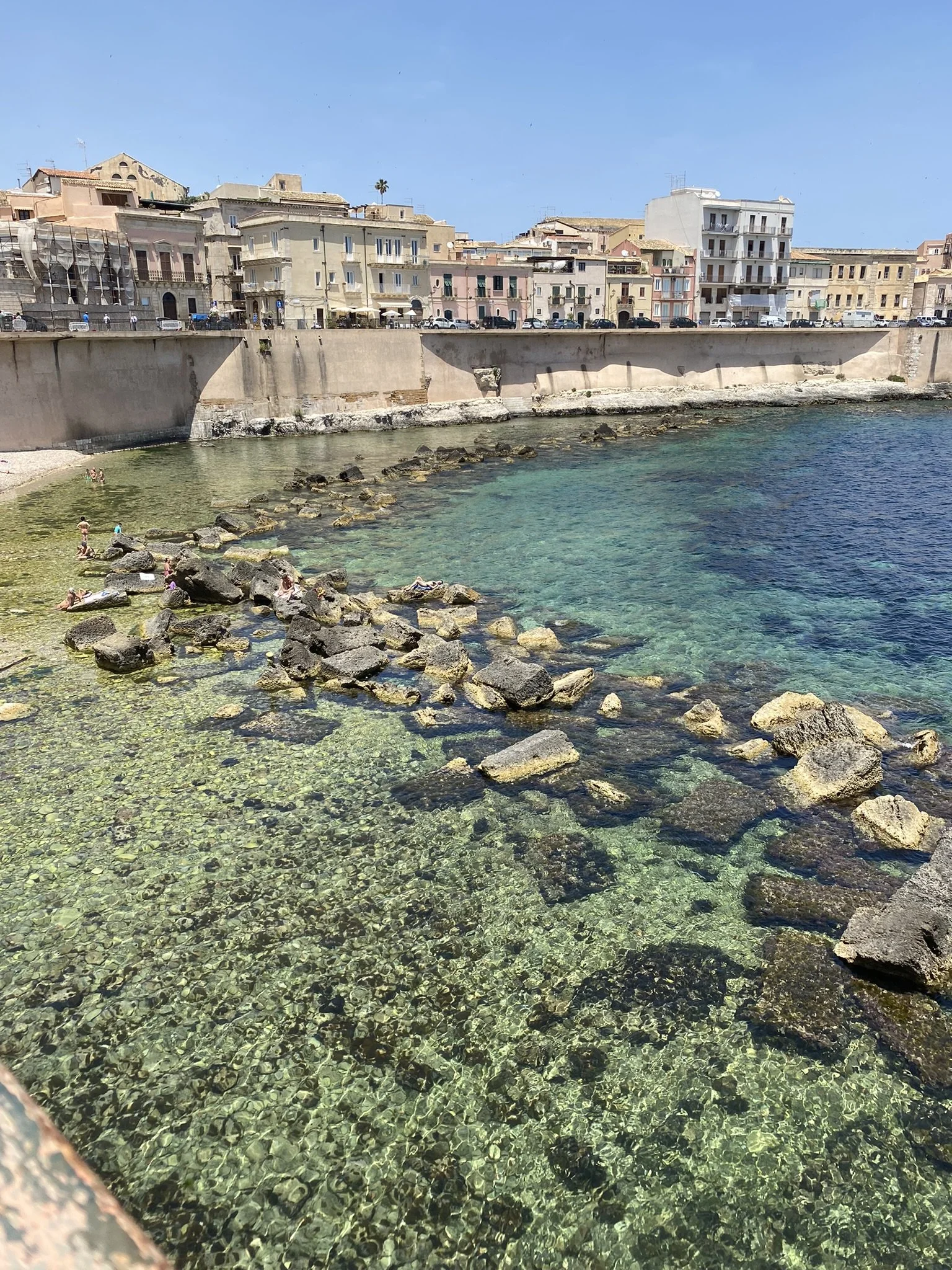
Lungomare Alfeo: A walk along this rocky seafront promenade rewards you with sweeping views of the sparkling Ionian Sea. It's the perfect spot to watch locals dive into the turquoise waters, or to jump in yourself.
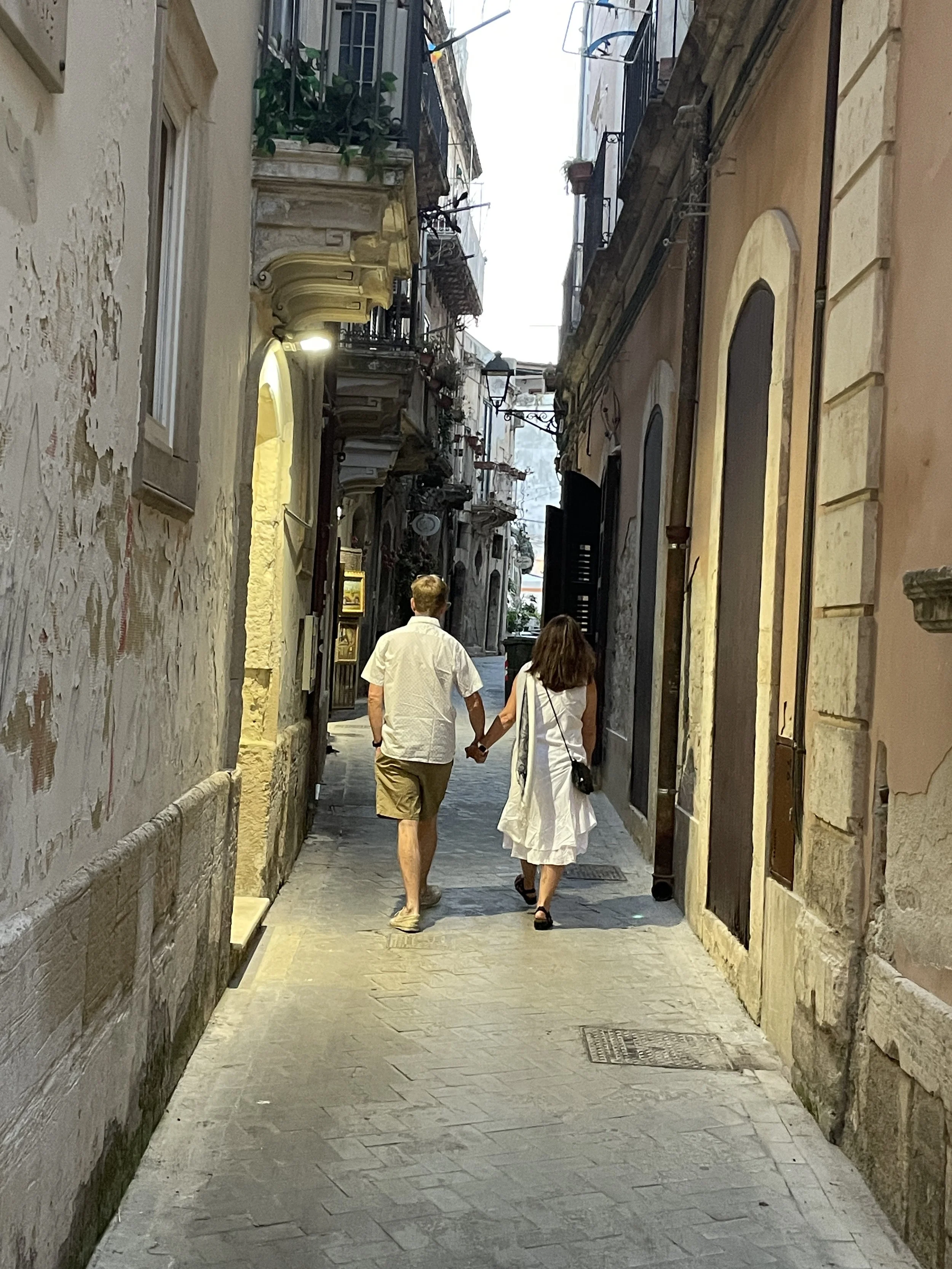
The best way to experience Ortigia? Simply get lost. Wander the narrow stone alleyways, enjoy the early morning hues of the main piazza with a fresh cornetto and an espresso, and let the sheer history of this spectacular island wash over you.
Day 15: Deep Into Ortigia—Ancient Temples & Family Kitchens
We dedicated today to diving deeper into Ortigia’s history, choosing our own afternoon pace, and enjoying two incredible dining spots.
Morning: History & Markets
Cathedral of Syracuse (Duomo): A Baroque masterpiece built directly around the massive standing columns of a 5th-century B.C. Greek Temple of Athena—a physical timeline spanning 2,700 years. (Tickets required at the entrance).
Ortigia Fish Market: A sensory morning feast near the port. It overflows with swordfish, sea urchins, and fresh produce, accompanied by the lively shouts of local vendors.
Maniace Castle: A formidable 13th-century fortress guarding the very tip of the island, offering dramatic sea views in three directions. (Tickets required at the entrance).
Afternoon: Choose Your Adventure
Option 1: Ancient Syracuse (Neapolis Archaeological Park): Walk or take a quick taxi over the bridge to the mainland to explore one of Italy’s most important archaeological sites. Don't miss the spectacular Greek Theatre, the echoing Ear of Dionysius cave, the greenery-draped Roman Amphitheatre, and the Statue of Archimedes.
Option 2: Sun and Sea: Jump in the car and drive south to the white sands of Fontane Bianche, or stay on Ortigia to sunbathe and swim straight off the unique wooden solarium platforms built over the rocks.
Where to Eat in Ortigia
Ortigia’s alleys feel like a fairytale at night, with lanterns flickering against honey-colored stone and tiny trattorias spilling onto the cobblestones. Two personal recommendations:
🍷 Vicchio Pub 1979 - Head straight to the back to find a gorgeous, hidden garden shaded by massive trees and lit by glowing string lights.
🍝 Lafoglia - Set in the owners' former family home and still furnished with their personal antiques, this intimate restaurant serves incredible, rustic Sicilian dishes.
I ordered the meatballs, and after praising them, the chef came out of the kitchen to share her recipe while her husband proudly translated. It was a beautiful, unforgettable moment of true hospitality.
💡 Food Tip: Lafoglia stays incredibly busy, so making a reservation in advance is essential!
Day 16: Road Trip to Noto—The Amber Stage of Sicilian Baroque
Today, we took a quick 40-minute drive southwest of Ortigia to visit Noto, one of the most beautiful small towns in all of Italy.
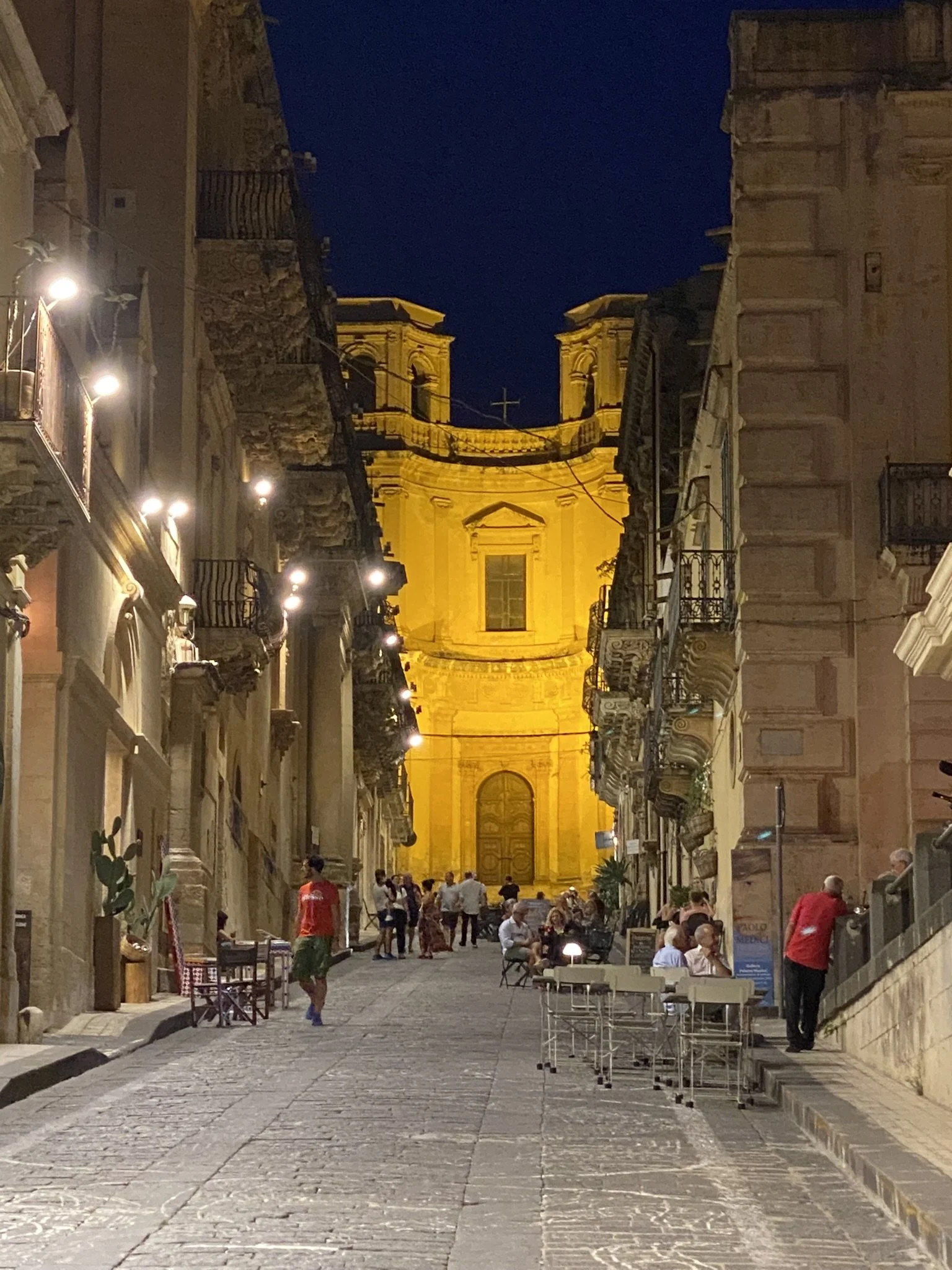
🚗 Timing Tip: Plan your visit for the late afternoon. This is when the sun hits the unique stone of Noto at its most dramatic angle, giving you the perfect light to stroll the Corso, enjoy a legendary granita, and linger over a golden-hour aperitivo before the easy drive back.
Why Noto is So Extraordinary?
Born From Catastrophe: The original medieval town of Noto was completely leveled by the catastrophic earthquake of 1693. Rather than rebuild on the ruins, the townspeople decided to start entirely from scratch on a new site nearby. This clean slate produced an architectural masterpiece.
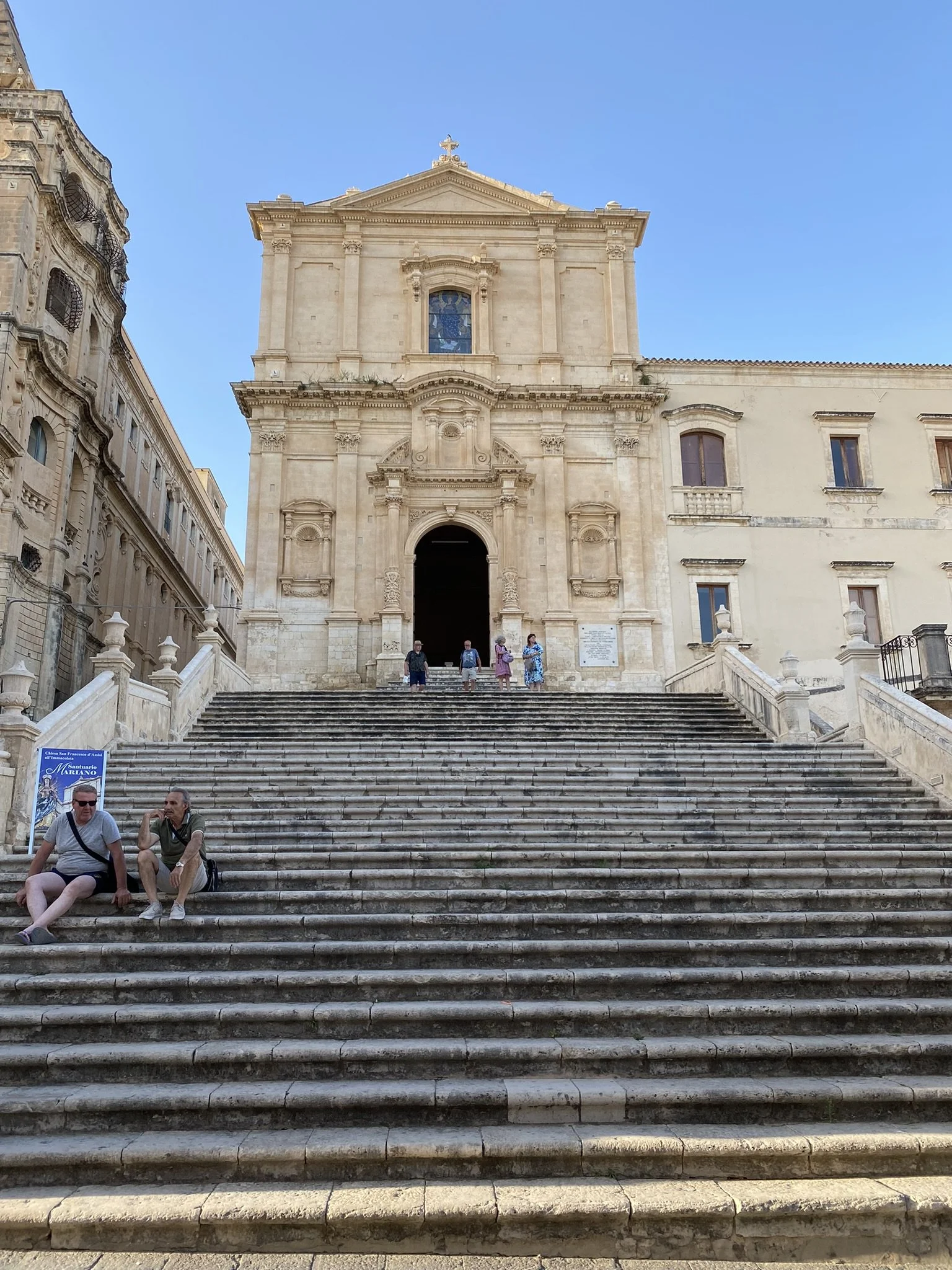
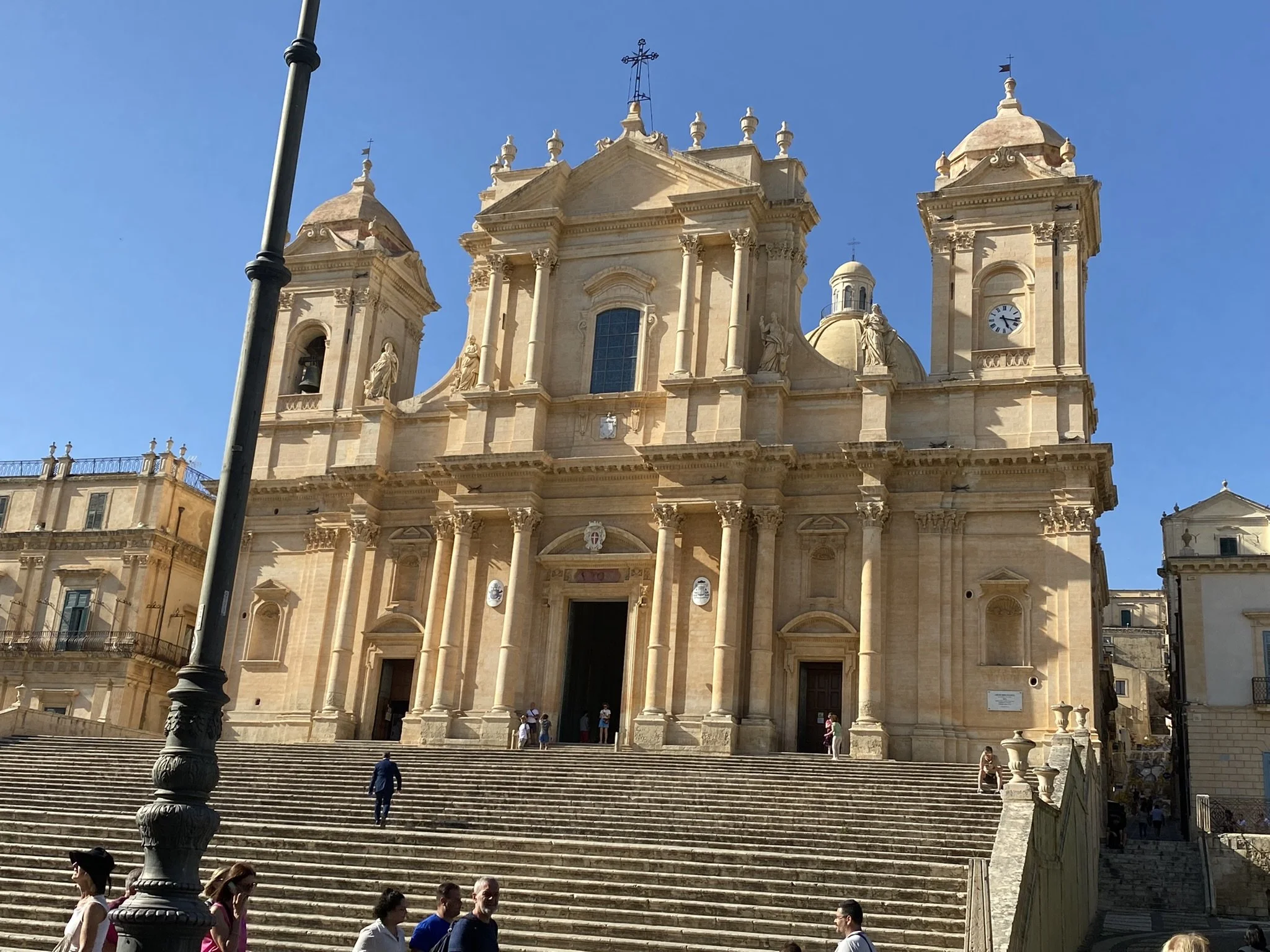
A City Designed as Theatre: Rebuilt in the early 18th century, Noto’s architects designed the town as a single, unified visual statement. Built from warm, honey-colored limestone, the town features sweeping staircases, elegant palaces, and ornate balconies decorated with carved cherubs, faces, and grotesque figures. Walking down the main pedestrian street, Corso Vittorio Emanuele, feels like walking through a grand theatrical stage set. At golden hour, the limestone glows a deep, warm amber, looking as though it is lit from within.
UNESCO Gold: Today, Noto is a UNESCO World Heritage Site and is celebrated as the absolute peak of Sicilian Baroque architecture. Its magnificent Cathedral, which partially collapsed in 1996 and was painstakingly rebuilt over a decade, anchors the main piazza and is worth lingering in front of.
The Capital of Granita
Beyond its architecture, Noto has a strong claim to producing the finest granita in Sicily—especially their famous almond (mandorla) and mulberry (gelsi) flavors.
Don't miss a stop at Caffè Sicilia on the Corso. This century-old, legendary institution is world-famous for its incredible textures and authentic local flavors. Sitting outside with a cool dish of granita and a brioche bun is a mandatory Sicilian experience.
🎬 Setting the Scene: Cyrano (2021)
If you want to add another layer of magic to this road trip, look up the 2021 musical film Cyrano, starring Peter Dinklage.
This beautifully shot, bittersweet love story was filmed extensively in this exact corner of Sicily. You'll easily recognize Castello Maniace in Ortigia and the sweeping staircase of the Church of Saint Francis of Assisi in Noto acting as stunning backdrops. Watching the film either before or after your visit gives these grand stone steps and fortresses an entirely different, poetic feel.
Day 17: Heading West—Beach Detours & the Magic of Ragusa
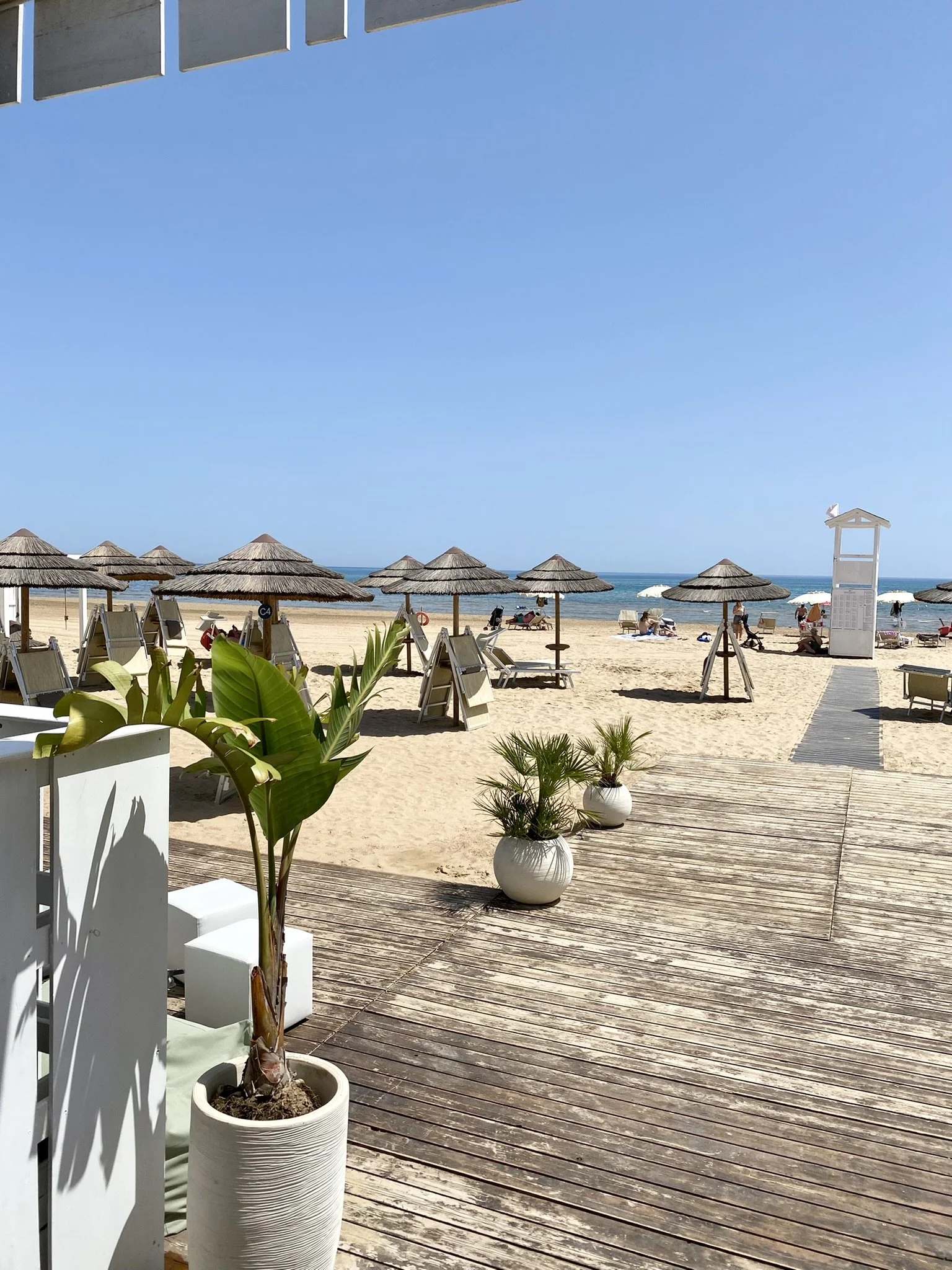
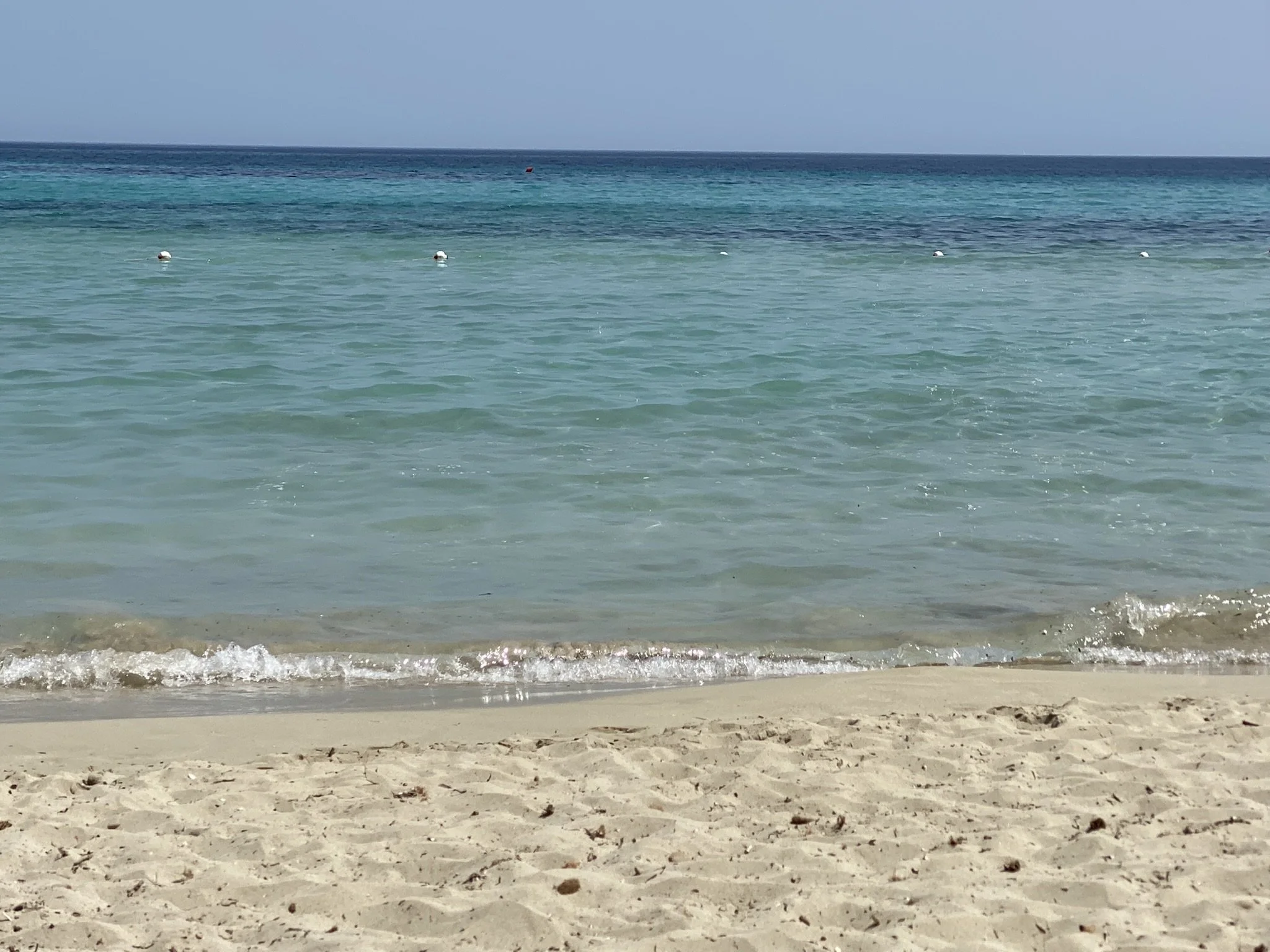
Leaving Ortigia, we set our sights on the hills of Ragusa. But with the Sicilian sun beating down, we made a quick detour to Spiaggia di Marina di Ragusa for a fantastic swim and lunch before making the climb inland.
A Tale of Two Cities
Ragusa is one of Sicily's most visually striking towns, famously split into two halves following the great earthquake of 1693:
Ragusa Superiore: The newer, modern upper town built on a high grid system.
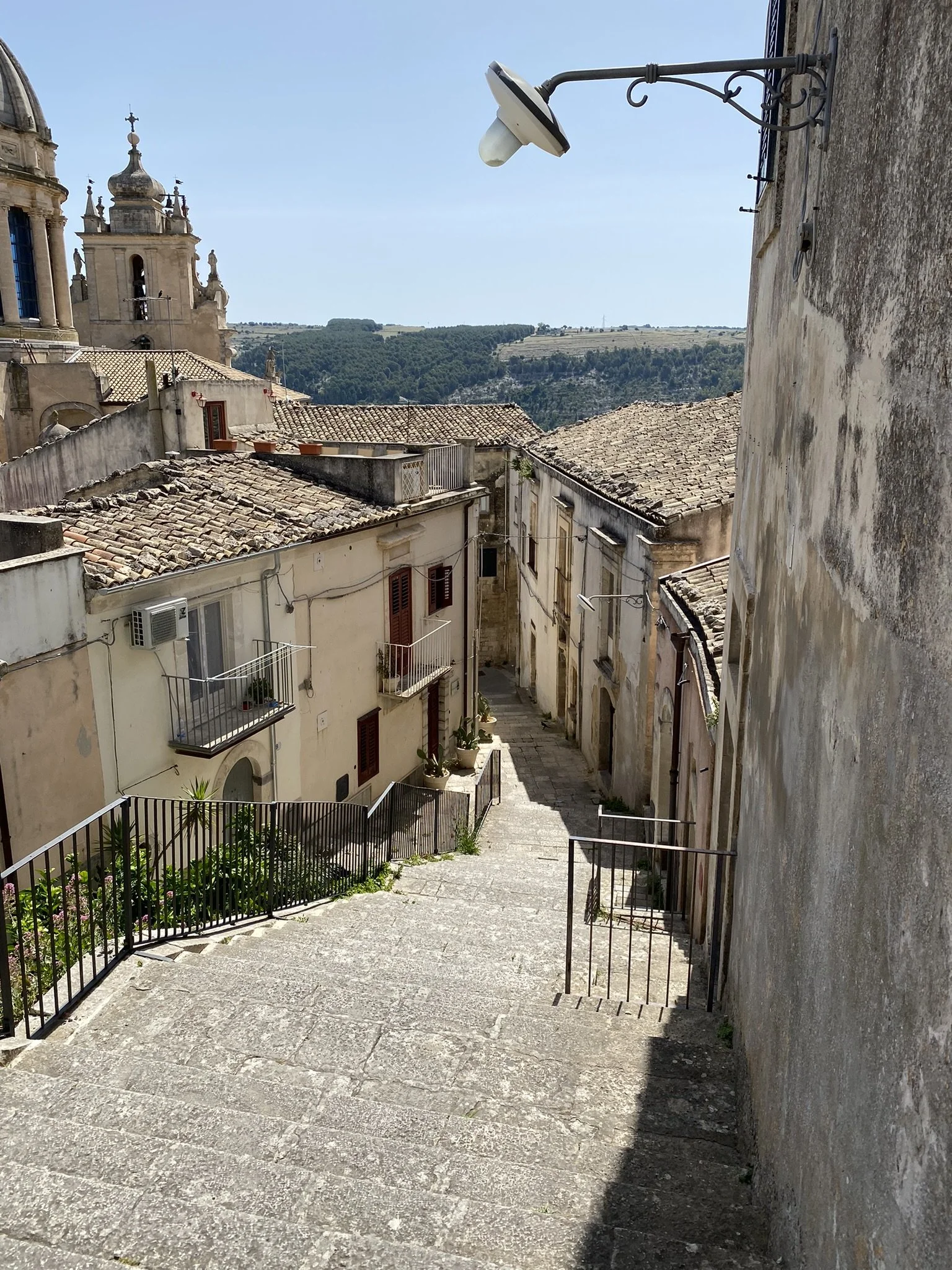
Ragusa Ibla: The historic old town—a spectacular cascade of winding alleys, stone staircases, and honey-colored Baroque buildings tumbling down the hillside.
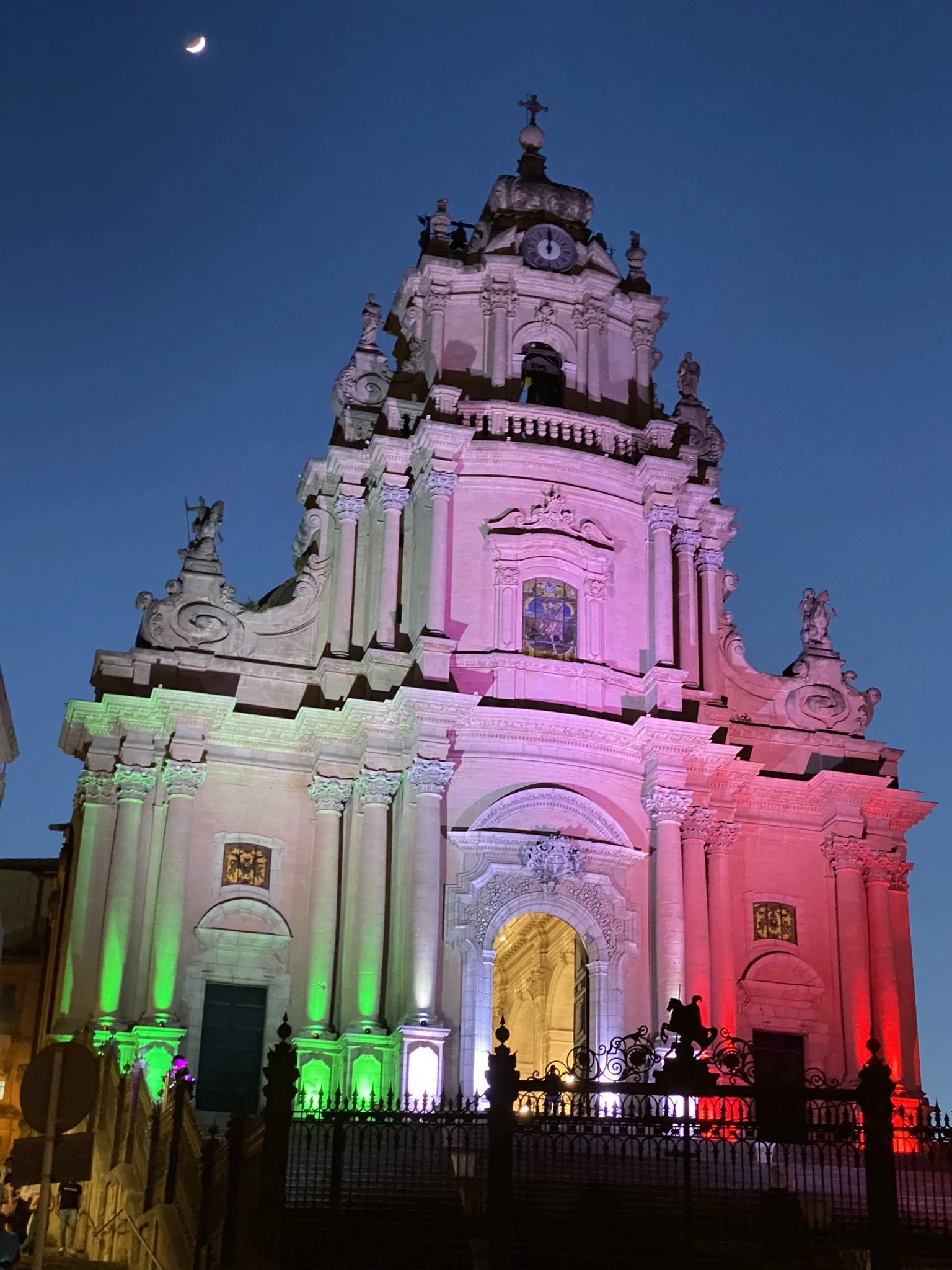
Because we love old-world charm, we stayed in Ragusa Ibla. Our apartment was in an epic location, sitting directly in front of the historic old town's crown jewel: the magnificent Duomo di San Giorgio.
How to Explore: No Map Needed
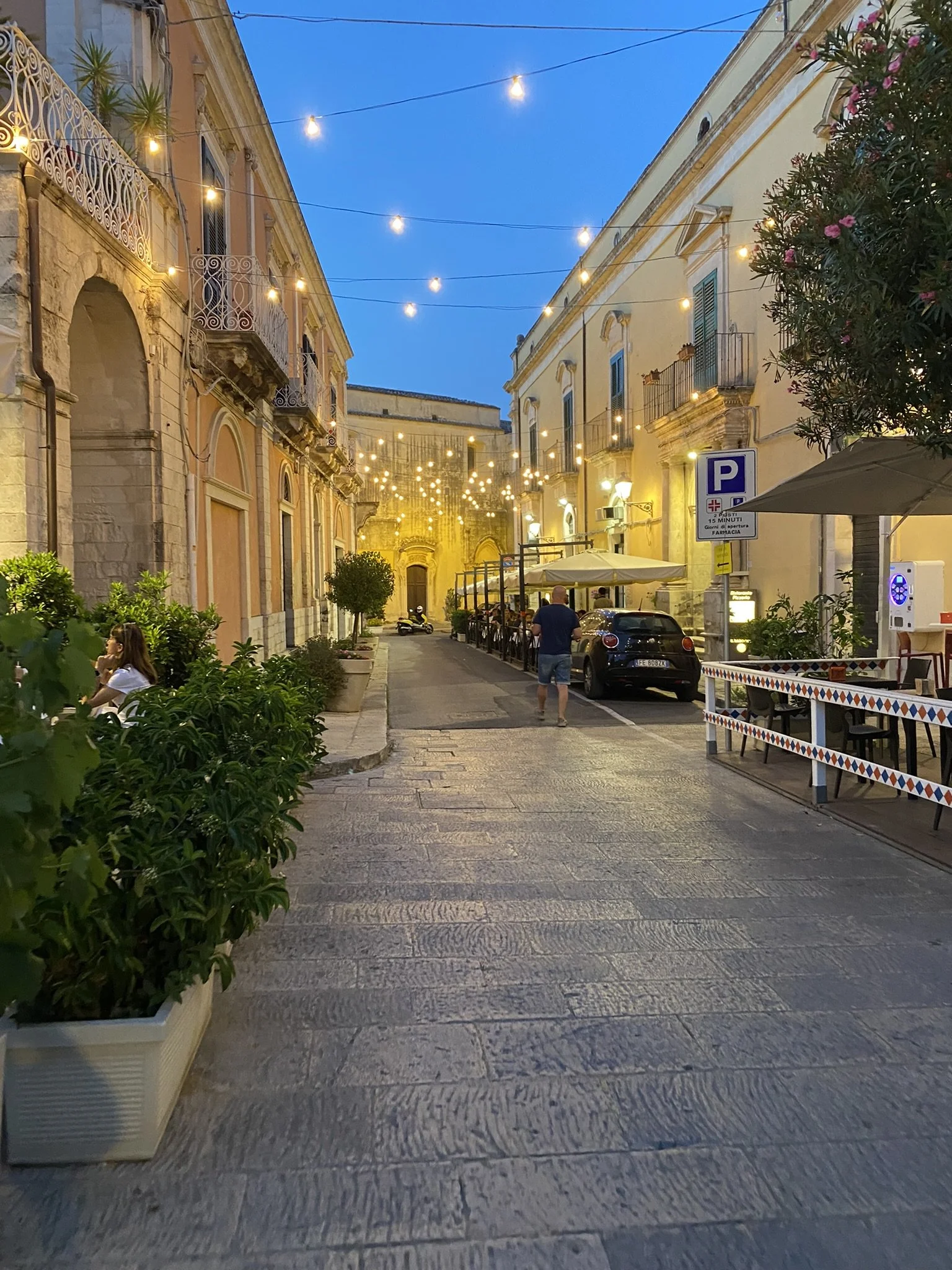
The real magic of Ragusa is in getting lost. Put away your map, embrace the steep steps, and simply wander:
Discover Hidden Spaces: Drift through quiet, narrow alleys that open suddenly into hidden stone courtyards.
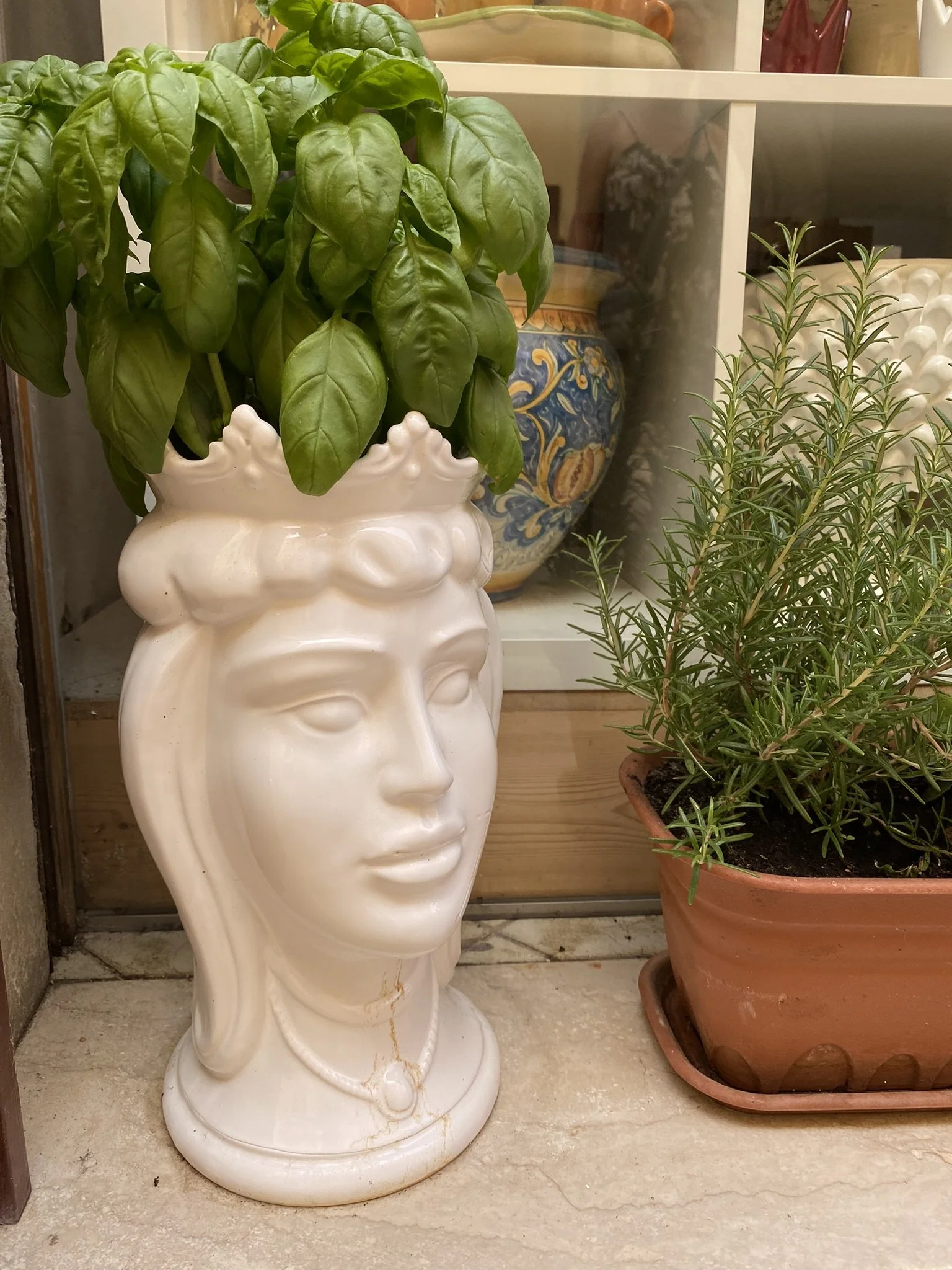
Look Up: Spot the famous Baroque balconies decorated with incredibly detailed, hand-carved stone faces and mythical figures.
Capture the Contrast: The views connecting the upper and lower towns offer incredible photo spots around every single turn.
Day 18: Exploring Ragusa—Baroque Landmarks & Valley Views
We spent today continuing our exploration of Ragusa, taking in its quiet spaces, magnificent architecture, and stunning valley views.
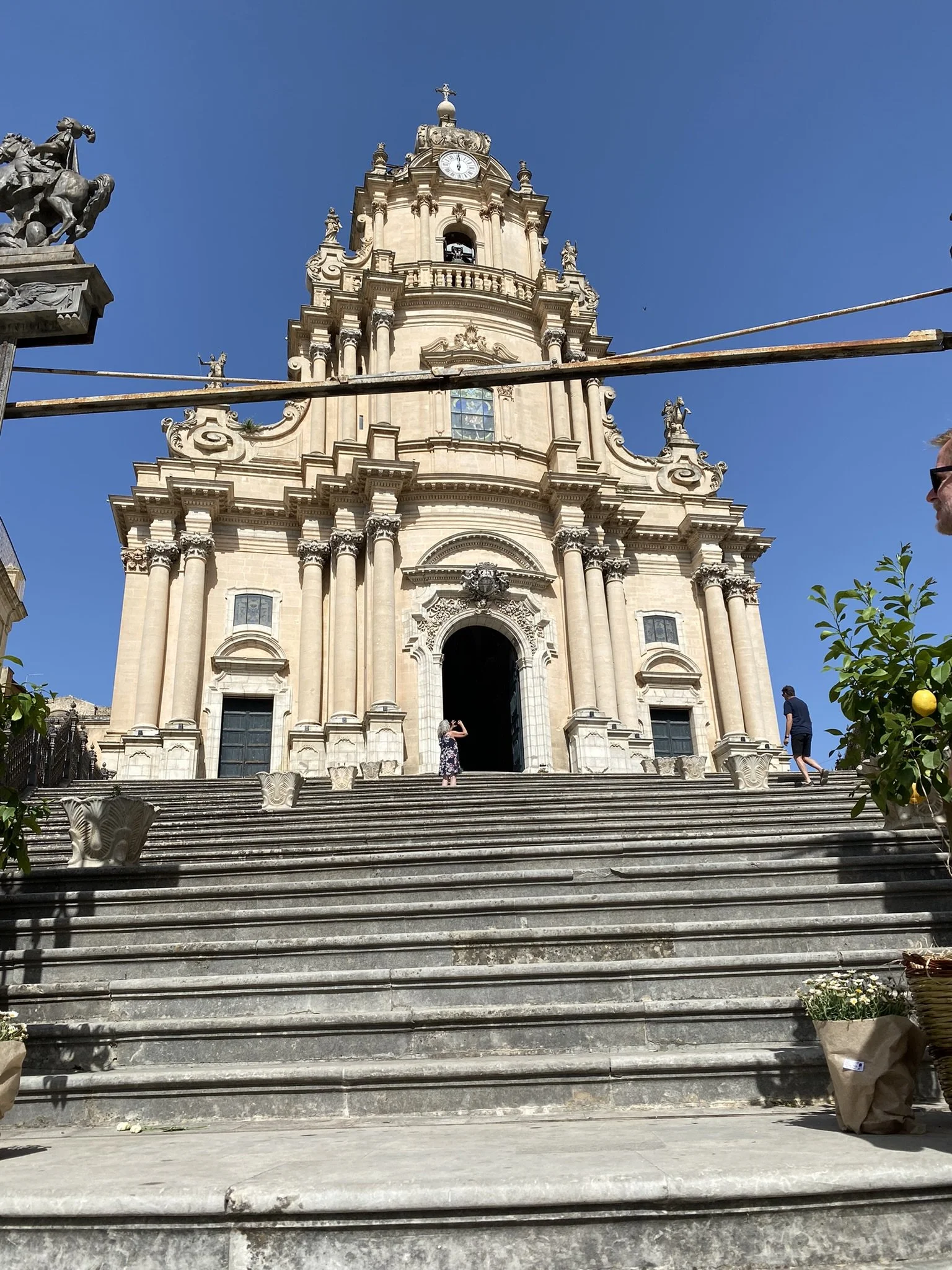
Duomo di San Giorgio
This is the true crown jewel of Ragusa Ibla.
The Approach: A grand, dramatic staircase leads up to a towering, elegant Baroque facade that dominates the main piazza.
The Interior: Inside, the church is quiet and reverent, offering a cool escape from the afternoon sun.
The Golden Hour: The best time to appreciate the Duomo is at sunset, when the limestone glows a brilliant, warm golden hue.
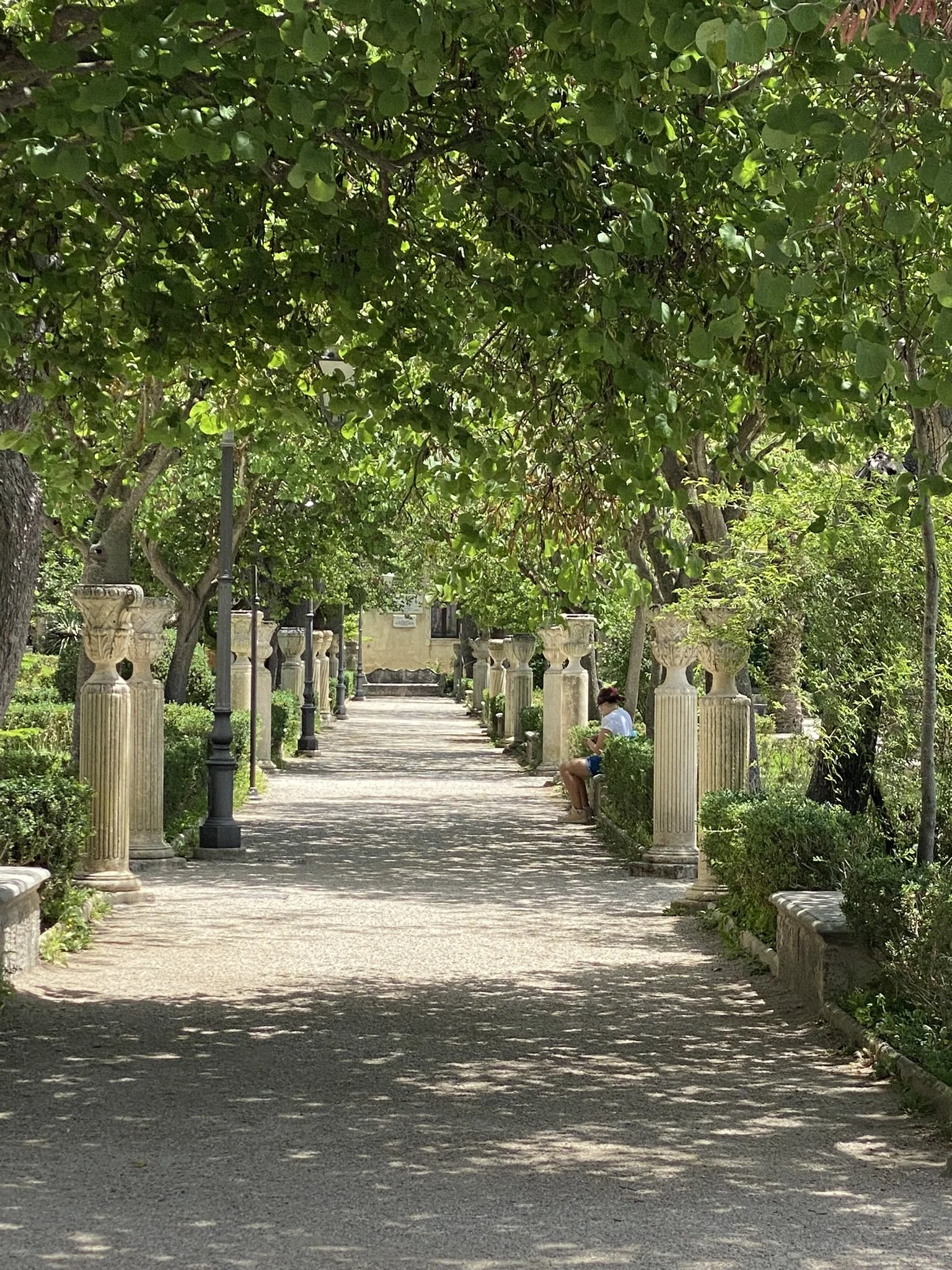
Giardino Ibleo
For a change of pace, we walked to the far eastern edge of the old town to visit this beautiful public park.
The Vibe: It is a wonderfully quiet, manicured garden filled with shaded gravel paths, towering palm trees, and stone benches.
The Views: Located right on the edge of the cliffs, it offers sweeping, panoramic views of the surrounding valley and rocky gorges below.
The Perfect Break: It is the absolute perfect place to rest your legs and take a peaceful break from climbing Ragusa’s steep, winding streets.
Day 18: The Finale—Scala dei Turchi & Agrigento
Our final day in Sicily perfectly paired coastal drama with ancient wonders—the ultimate way to wrap up an unforgettable trip. We left Ragusa early to make the absolute most of the day.
Morning: The Chalk-White Cliffs of Scala dei Turchi
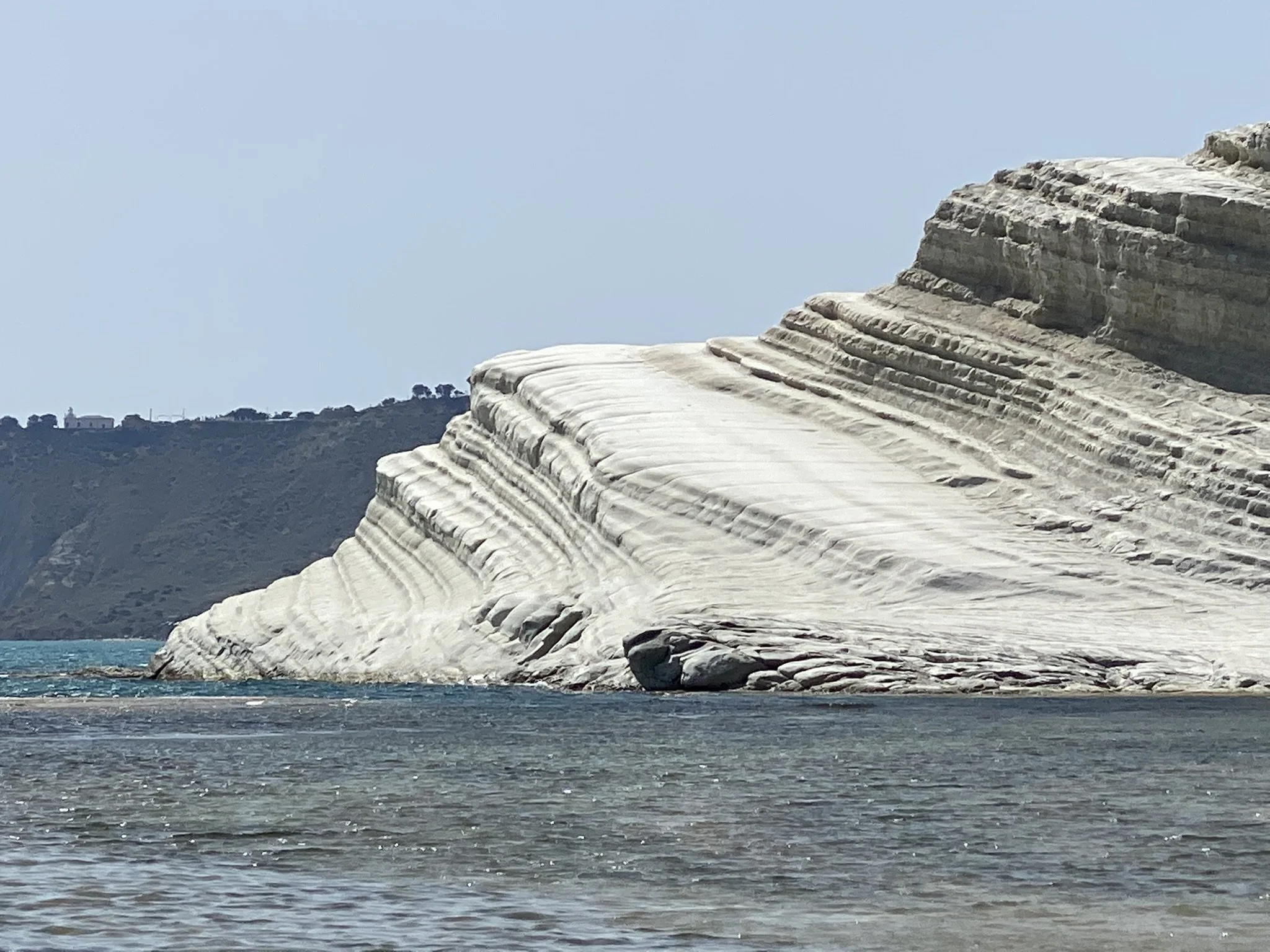
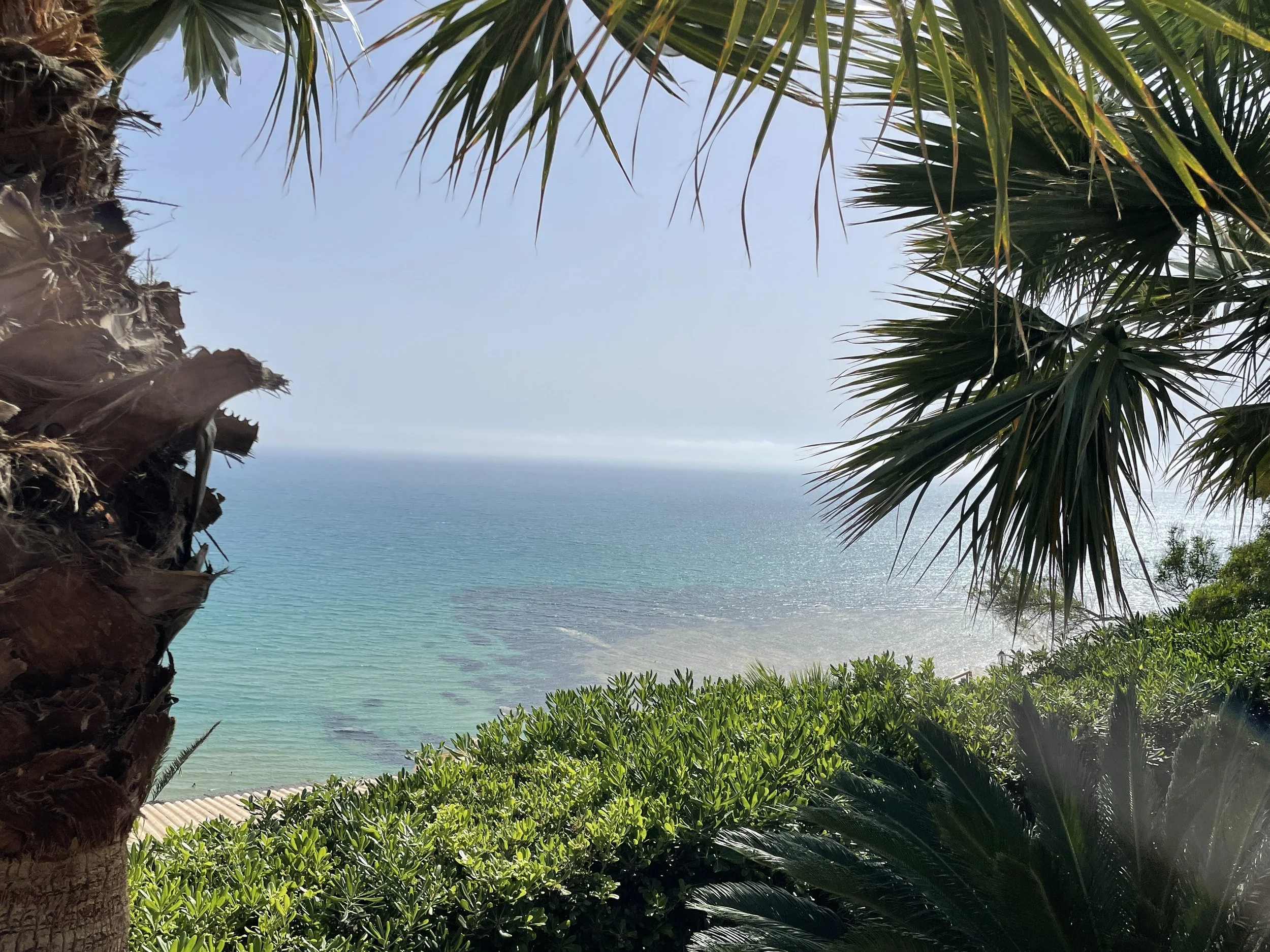
We drove west along the southern coast toward Scala dei Turchi (Stair of the Turks), one of Sicily’s most striking natural landmarks.
Before heading down, we paused for an early lunch at RistoBar Acanthus, which offered sweeping, elevated views of the brilliant white cliffs contrasting against the deep blue sea.
The Formation: This massive, wave-shaped cliff is made of marl (a soft, white limestone) sculpted by wind and waves into smooth, curved steps that resemble a giant staircase flowing into the ocean.
The Experience: Because the delicate white rock is protected, direct access onto the cliff is restricted. However, the adjacent sandy beach is fully open, offering incredible views of the formation and a perfect spot for a swim.
Afternoon: Temples at Golden Hour
To avoid the intense midday heat, we checked into our stunning hotel first, washed off the salt and sand, and waited for the late afternoon.
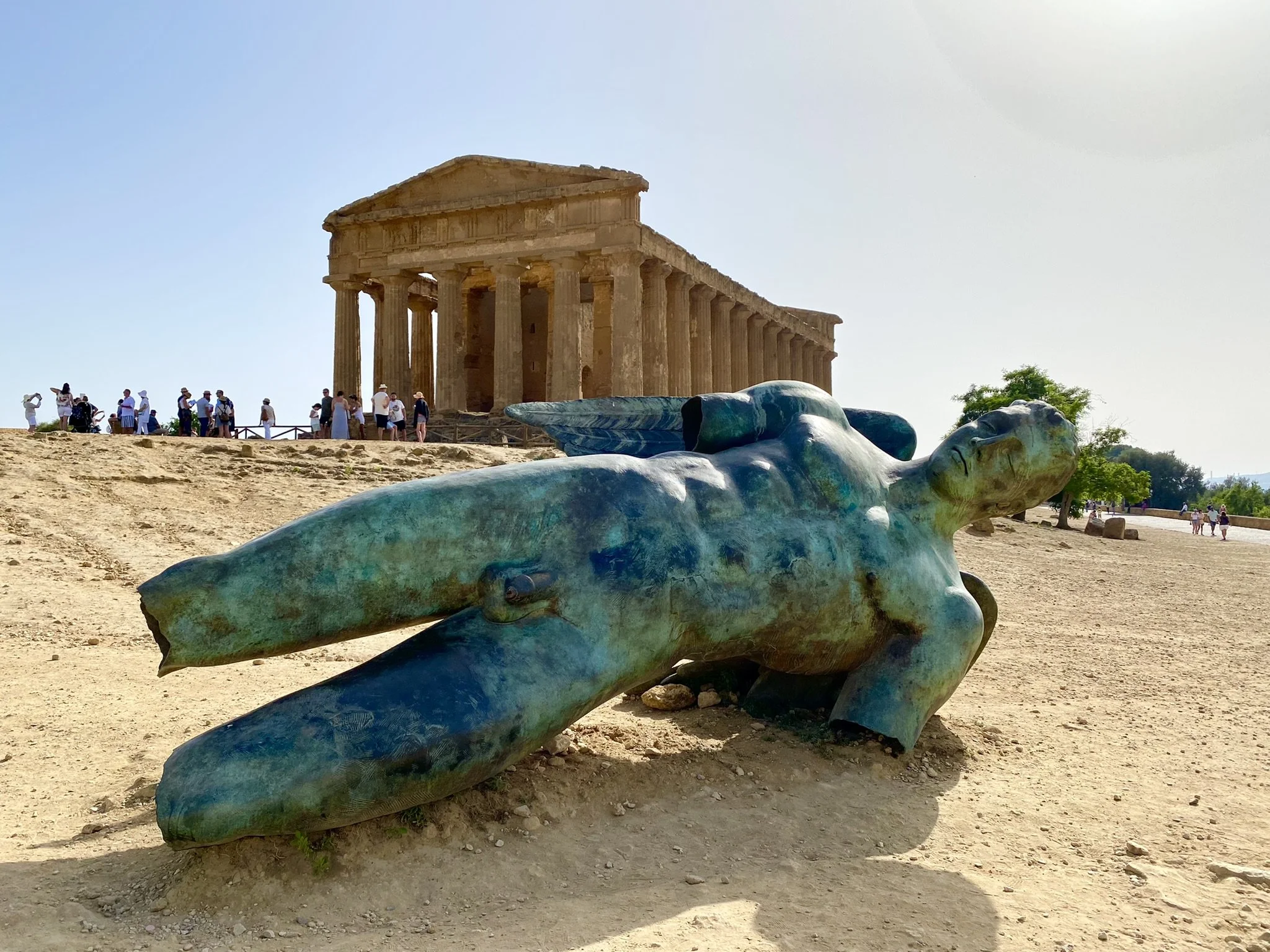
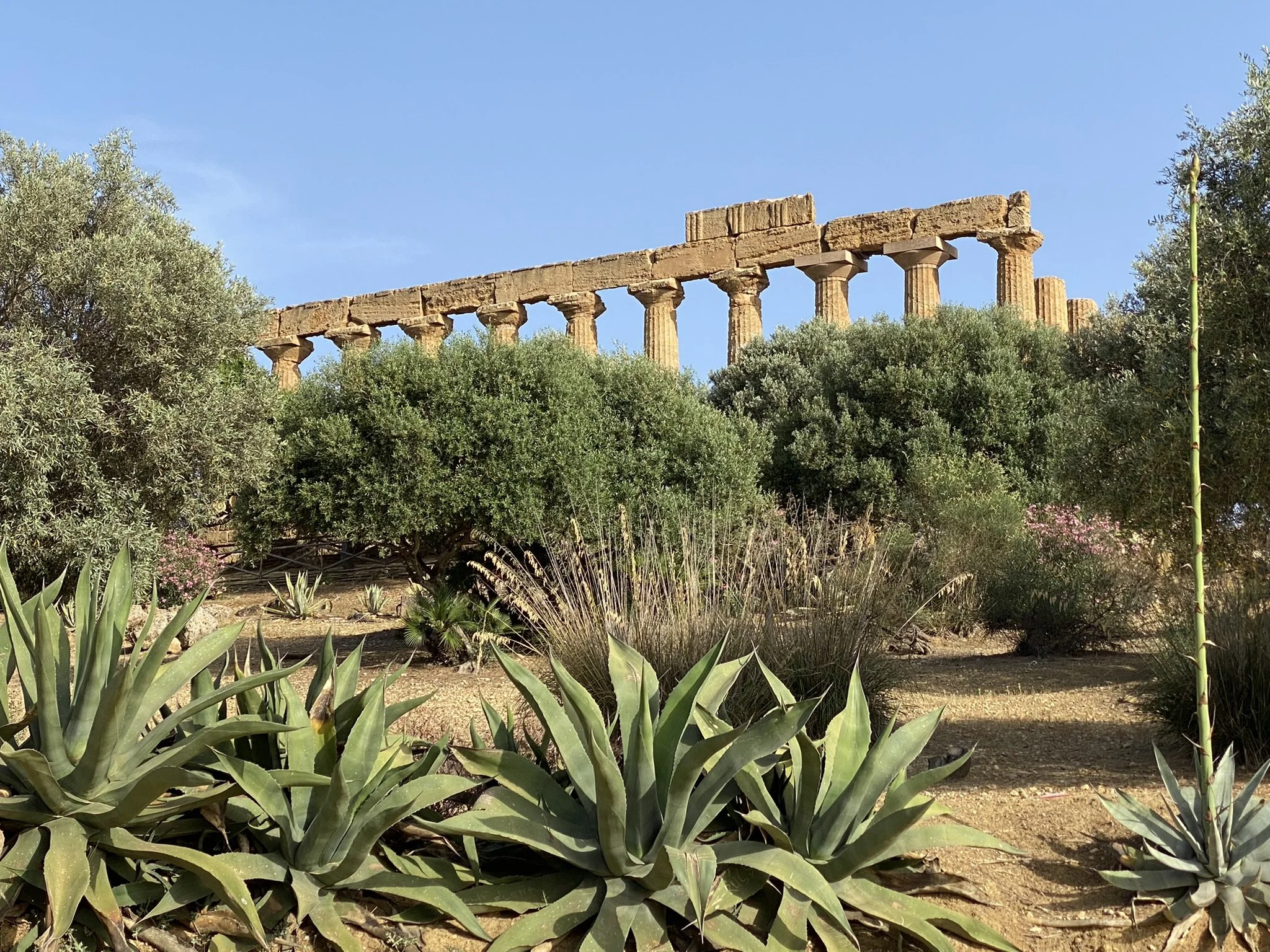
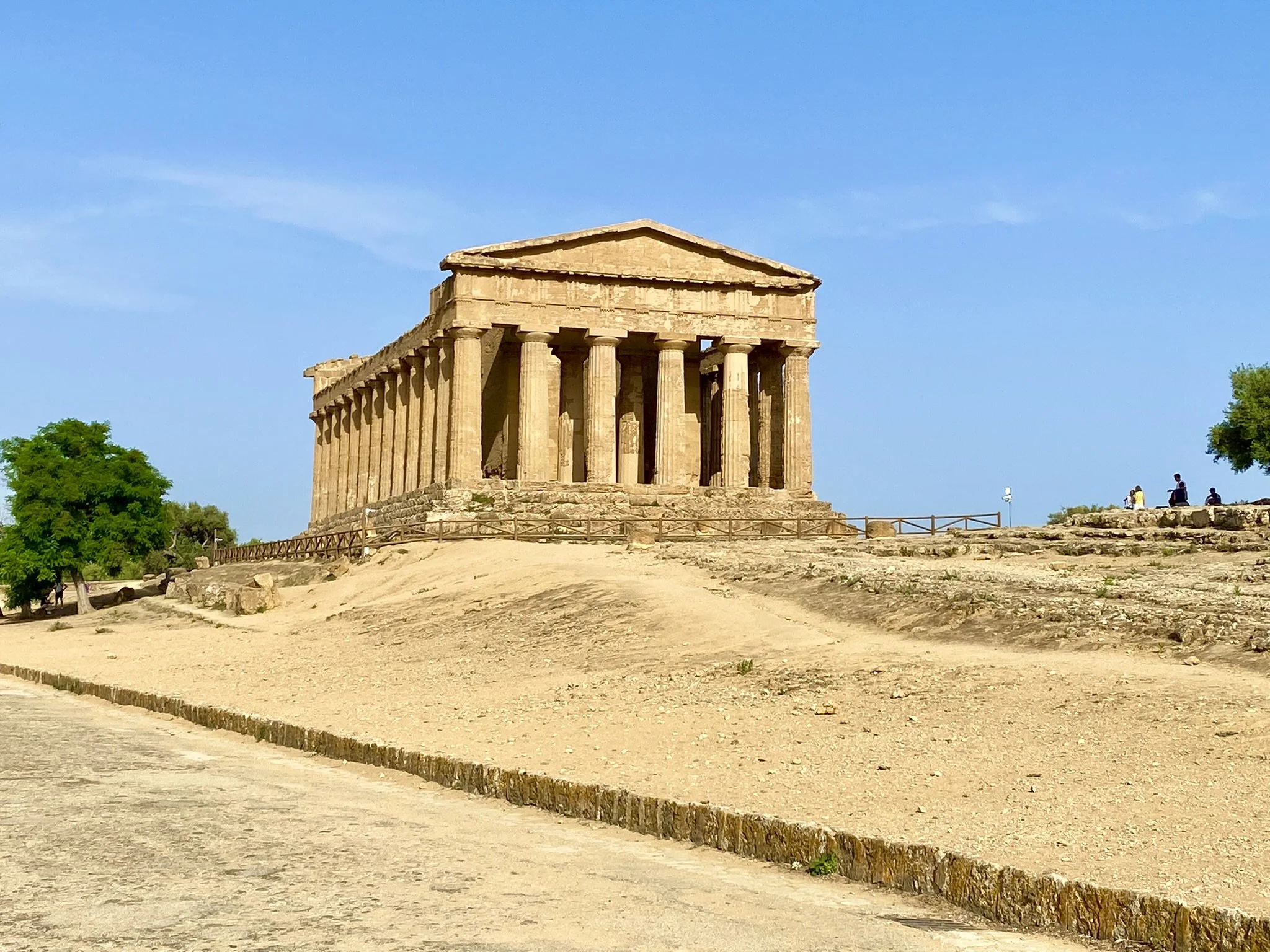
As the sun began to dip, we headed to Agrigento and its world-famous Valley of the Temples. Once the powerful ancient Greek city of Akragas (founded in the 6th century B.C.), this sprawling UNESCO World Heritage Site holds some of the most extraordinarily preserved ancient Greek ruins on earth.
Wandering among the towering columns as the late afternoon light turned the stone deep amber was pure magic.
💡Travel Tip: You can easily purchase your tickets to the Valley of the Temples in advance. However, depending on the season, buying them directly at the gate is often just as quick and hassle-free.
Day 19: Leaving Sicily—Arrivederci, Island of Sun & Stone
Our journey through Sicily was nothing short of spectacular—a rich, unforgettable blend of ancient history, dramatic landscapes, and unmatched flavors. But eventually, even the best adventures must reach their final chapter.
When it's time to fly out of Sicily back to mainland Italy, you generally have two main airport hubs to choose from: Palermo in the west, or Catania in the east. Because we had picked up our rental car at Catania Airport, we completed the loop, returned the car to Sicily by Car, and caught our flight to Rome from there.
Before making the long journey all the way back home, we treated ourselves to a few final, magic days wandering the historic streets of Rome, the Eternal City.
🍋 Final Reflections on Sicily From the quiet cobblestones of Cefalù and the volcanic heights of Lipari and Etna, to the ancient, honey-colored alleys of Ortigia and Ragusa, Sicily proved to be a place both timelessly ancient and vibrantly alive. We woke up to the sound of church bells, ate the best meals of our lives under fairy-lit canopies, and left a piece of our hearts behind on this beautiful island.