
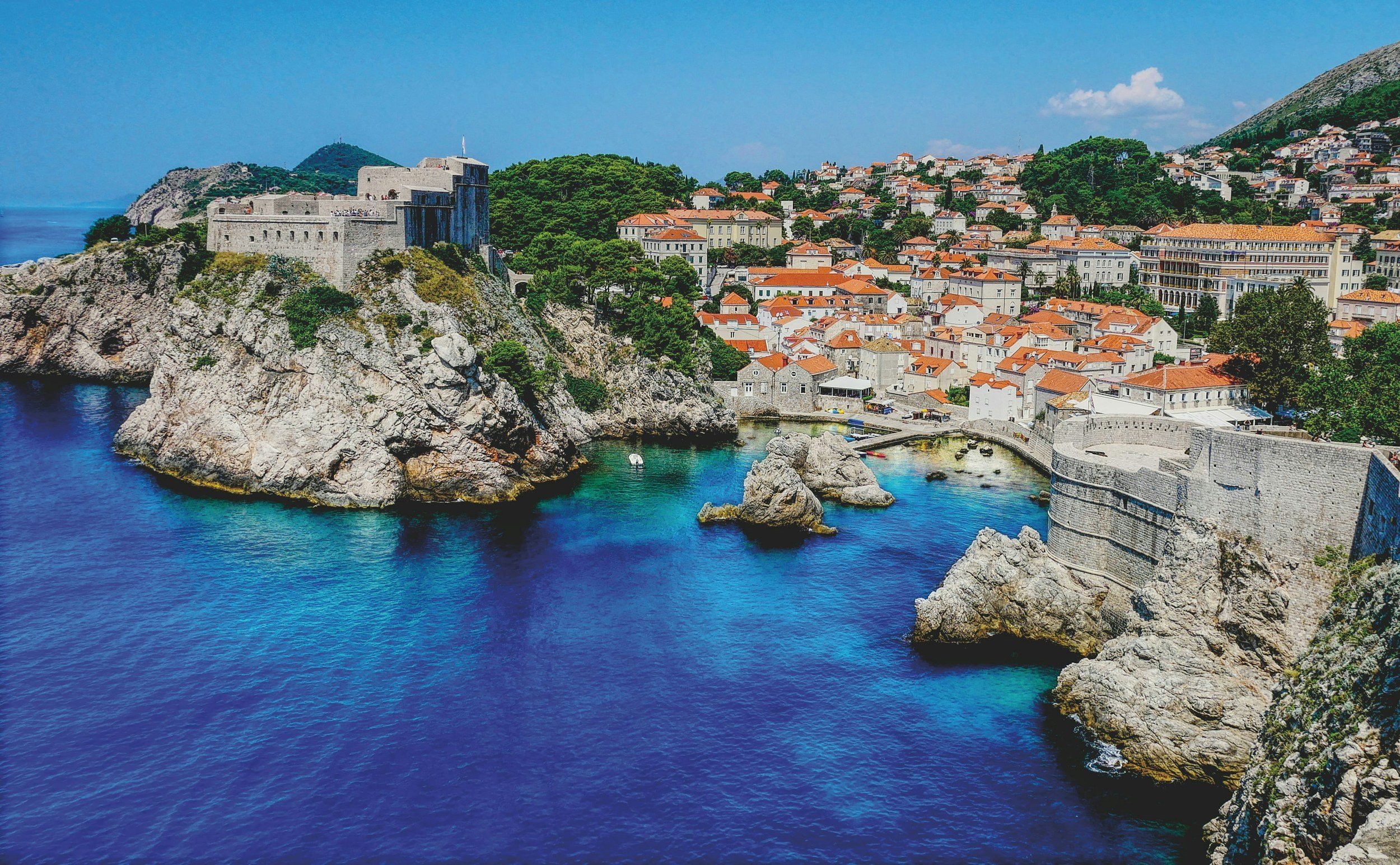
2 Week Croatia Itinerary: The Ultimate Croatia Road Trip
Planning a Croatia itinerary? This roughly 2 week Croatia road trip itinerary takes you from Zagreb through Istria, Plitvice Lakes, Zadar, Split, Korčula and Dubrovnik, with a bonus day trip into Montenegro. We've included driving times, where to stay, parking tips and the best things to do each day.
Quick Croatia Itinerary at a Glance
| Day | Highlights | Overnight |
|---|---|---|
| Day 1 | This is the travel day. Getting to the airport and taking an overnight flight to Zagreb. | In flight |
| Day 2 | Arriving in Zagreb, renting a car and driving to Ljubljana, Slovenia. | Ljubljana |
| Day 3 | Exploring Ljubljana. Old town, castle and streets. | Ljubljana |
| Day 4 | Leave Ljubljana, visit Slovanias Skocjan Caves and Predjama Castle before arriving in Rovinj, Croatia. | Rovinj |
| Day 5 | Visit the hilltop towns of Motovun and Groznjan near Rovinj. | Rovinj |
| Day 6 | Explore the city of Pula, the largest city on the Istrian penincula. | Rovinj |
| Day 7 | Drive to Plitvice National Park area while visiting a couple of seaside towns. | Plitvice |
| Day 8 | Hike through the waters of Plitvice National Park, and then drive to Zadar. | Zadar |
| Day 9 | Walk the old town of Zadar. | Zadar |
| Day 10 | Hike through Krka National Park and arrive in Split. | Split |
| Day 11 | Explore the historic Klis Fortress and in the afternoon climb Marjan Hill. | Split |
| Day 12 | Enjoy the city of Split. | Split |
| Day 13 | Drive to the port town of Orebic and board the ferry for the island of Korcula. | Korcula |
| Day 14 | Wander through the main the historic fortified town of Korcula. Afternoon relax on one of the many beaches. | Korcula |
| Day 15 | Drive to Dubrovnik. | Dubrovnik |
| Day 16 | Explore the historic town of Dubrovnik and walk the medieval walls. | Dubrovnik |
| Day 17 | Cross the border to Montenegro. Explore Kotor and the bay. | Dubrovnik |
| Day 18 | Fly home from Dubrovnik. |
Day 1 - Travel Day
We flew overnight on a transatlantic flight to Rome, Italy.
Day 2 - Zagreb and Ljubljana, Slovenia
We enjoyed one of the many lounges at the Rome Fiumicino airport before boarding a flight to Zagreb via Ryanair. After picking up a rental car at the airport (pickup location in Zagreb airport, drop off at Dubrovnik airport), we headed straight to our Airbnb in Ljubljana, Slovenia. It was simply a personal preference to skip Zagreb and visit Ljubljana in Slovenia instead. The Airbnb was excellent! It was easy to find off the highway—which was very important since we were arriving in the dark— offered free parking, was very spacious, sat very close to the sights in the historic centre, and best of all, had a super comfortable bed.
Day 3 - Ljubljana
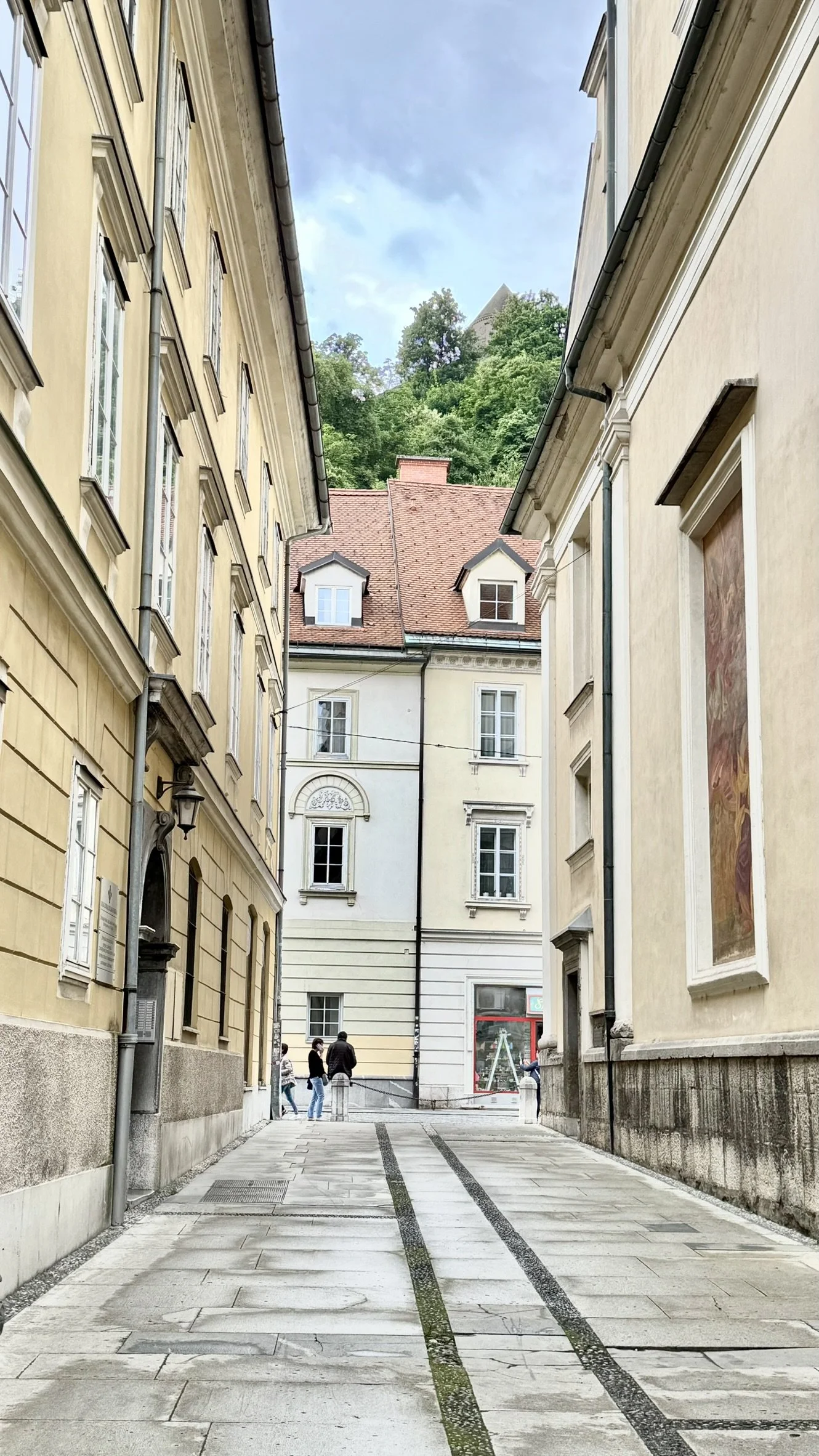
Ljubljana is a compact European capital packed with charm and surprises. We spent the day wandering through this beautiful city, checking out these highlights:
Triple Bridge (Tromostovje) A unique architectural gem designed by Jože Plečnik that connects the old town with the modern city. It is the perfect spot for photos and people-watching.
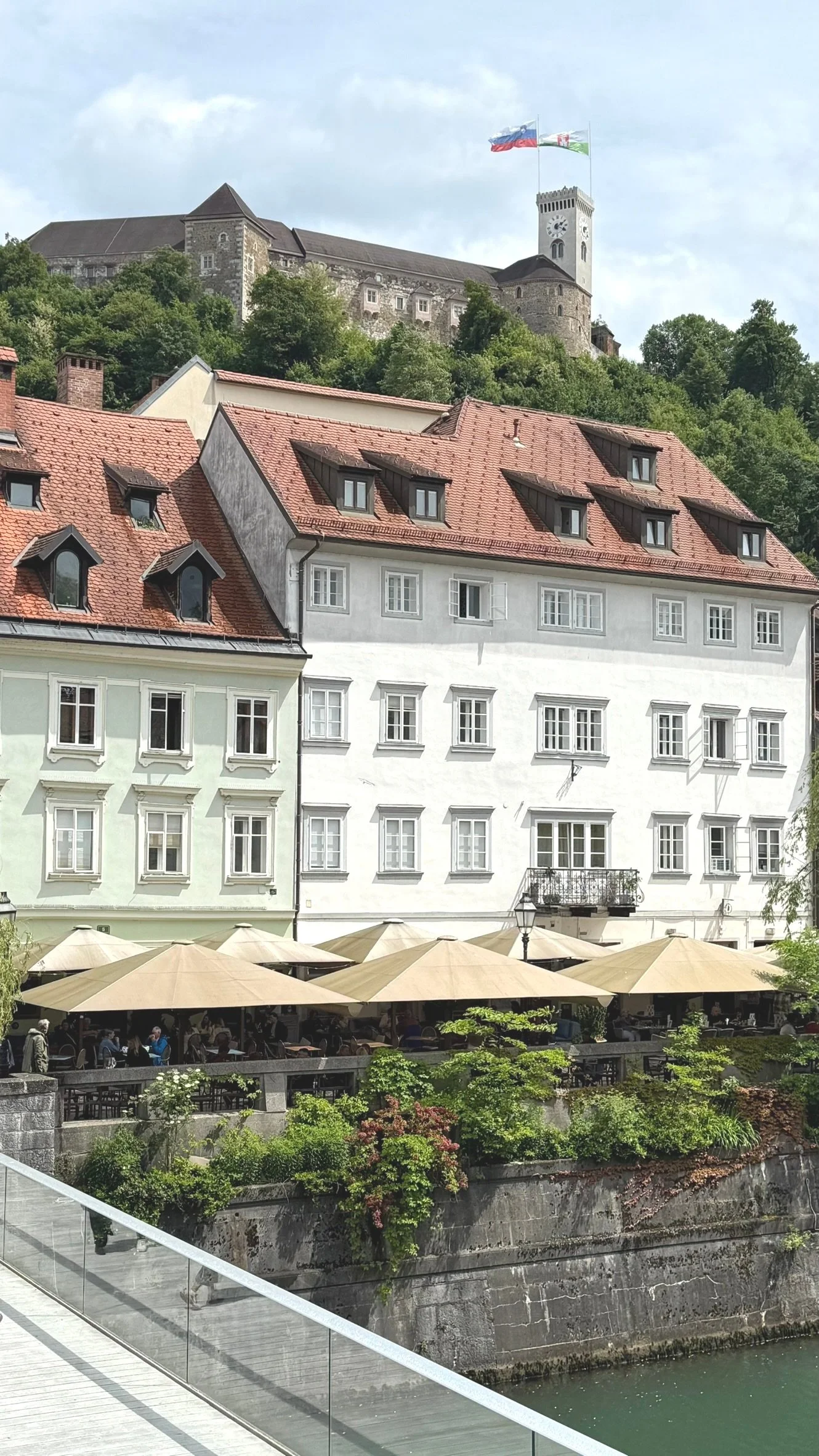
Ljubljana Castle Perched high on a hill, this medieval fortress offers panoramic views, a funicular ride, and an escape room-style tour for a fun twist on history. While you can ride the funicular up, walking the path is an easier climb than it looks. Best of all, the castle grounds are completely free. If you want to skip the paid museum interior, just walk up the path to wander the grounds and snap spectacular photos of the city below for free.
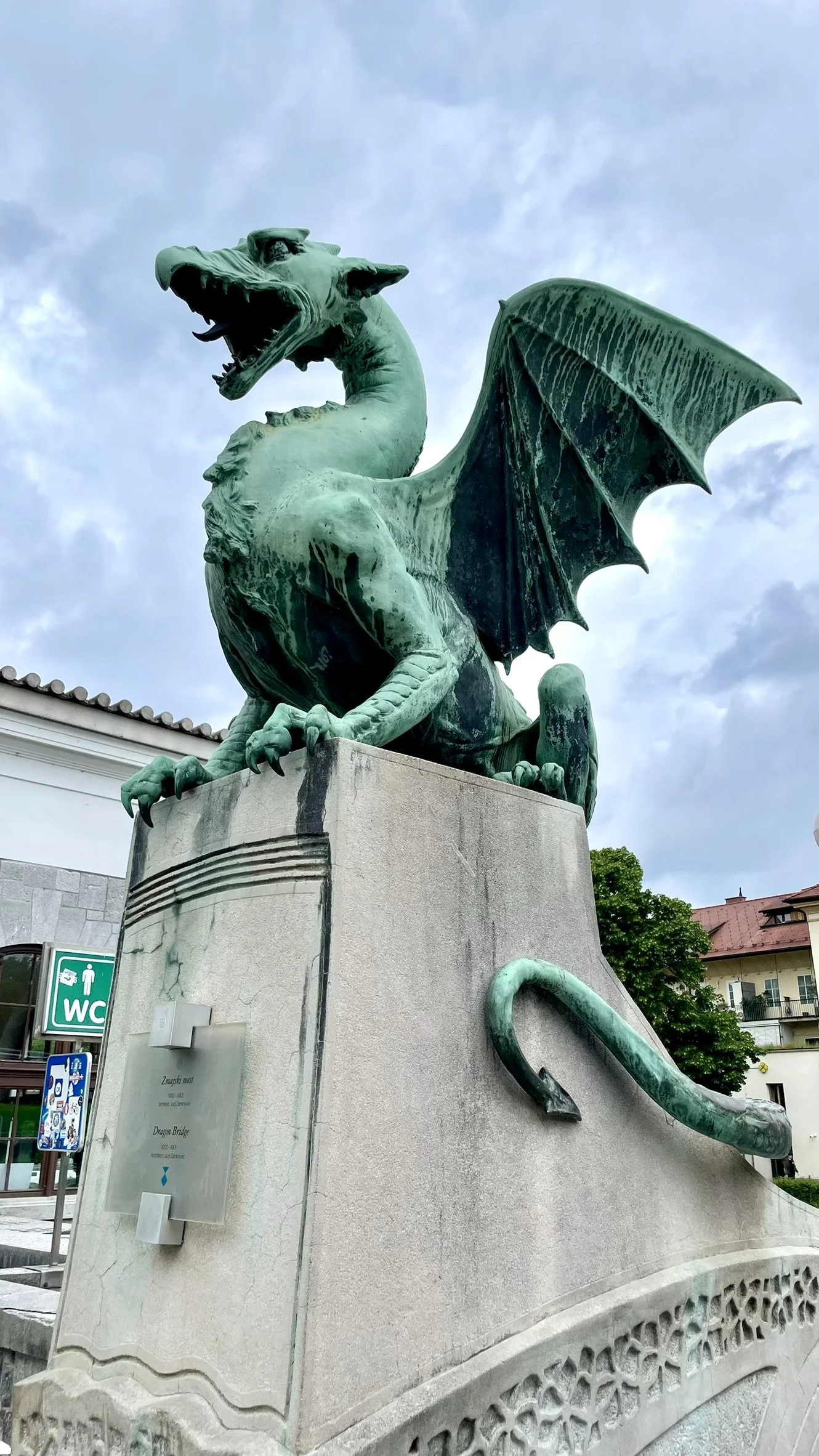
Dragon Bridge Guarded by fierce dragon statues, this Art Nouveau bridge is a symbol of the city and a favorite photo spot.
Ljubljana Cathedral (St. Nicholas) Step inside to admire the breathtaking Baroque frescoes and the famous, intricately sculpted bronze doors that bring Slovenia's history to life.

Day 4 - Slovenia and Rovinj, Croatia
Before leaving Slovenia, there are a couple of spectacular landmarks to see on the drive from Ljubljana to Rovinj.
Škocjan Caves: A breathtaking, UNESCO-listed underground canyon. You’ll walk across dramatic bridges suspended high above roaring, subterranean rivers. It feels like stepping straight into Middle-earth.
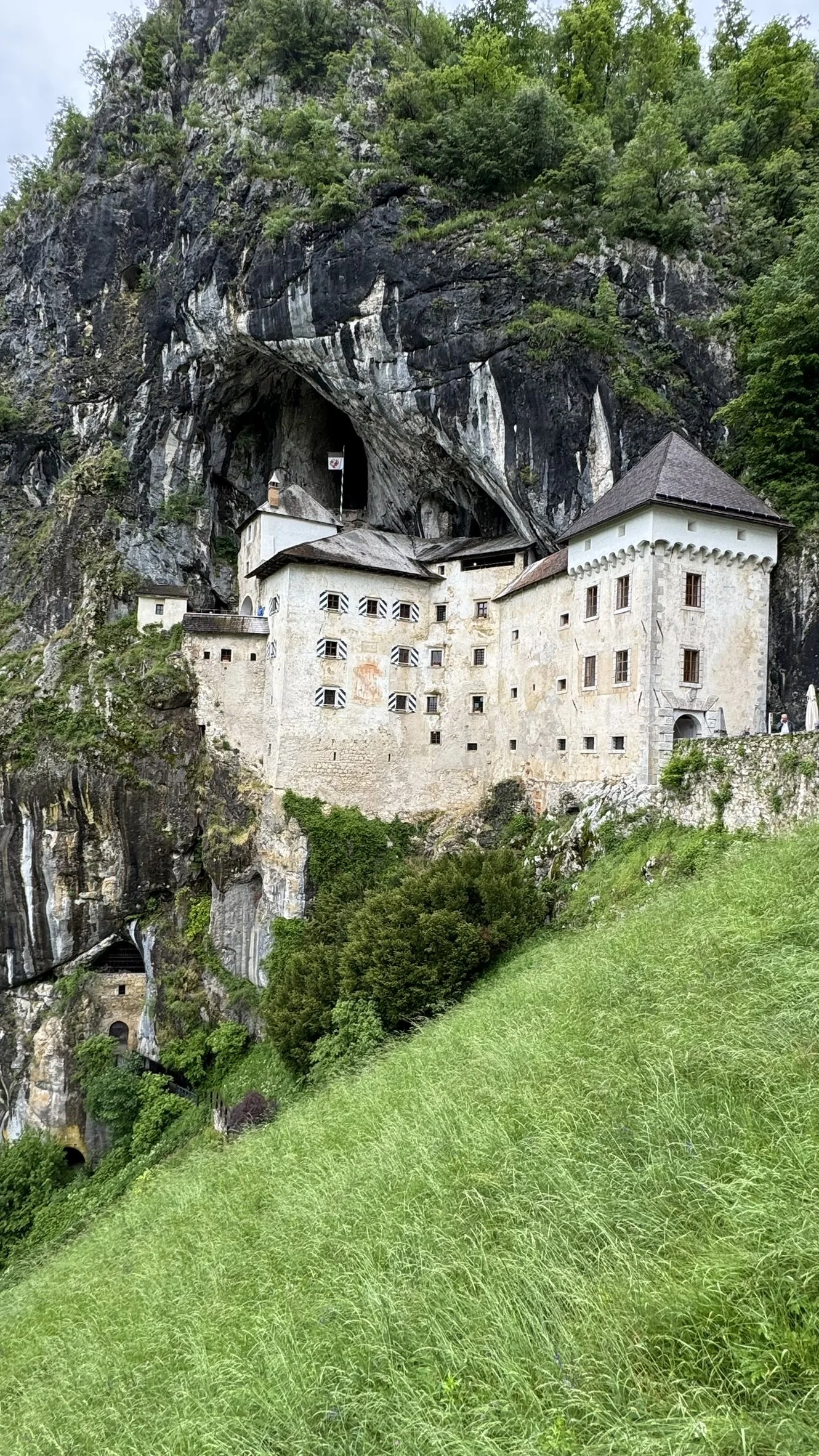
Predjama Castle: A fairytale Renaissance fortress built directly into the mouth of a towering, 123-meter cliff face. It is officially the largest cave castle in the world and is packed with legends of robber knights and secret tunnels.
If you want to spend a couple more days in Slovenia, take a drive north to Lake Bled. Click here for an extra itinerary.

Day 4 - Rovinj, Croatia
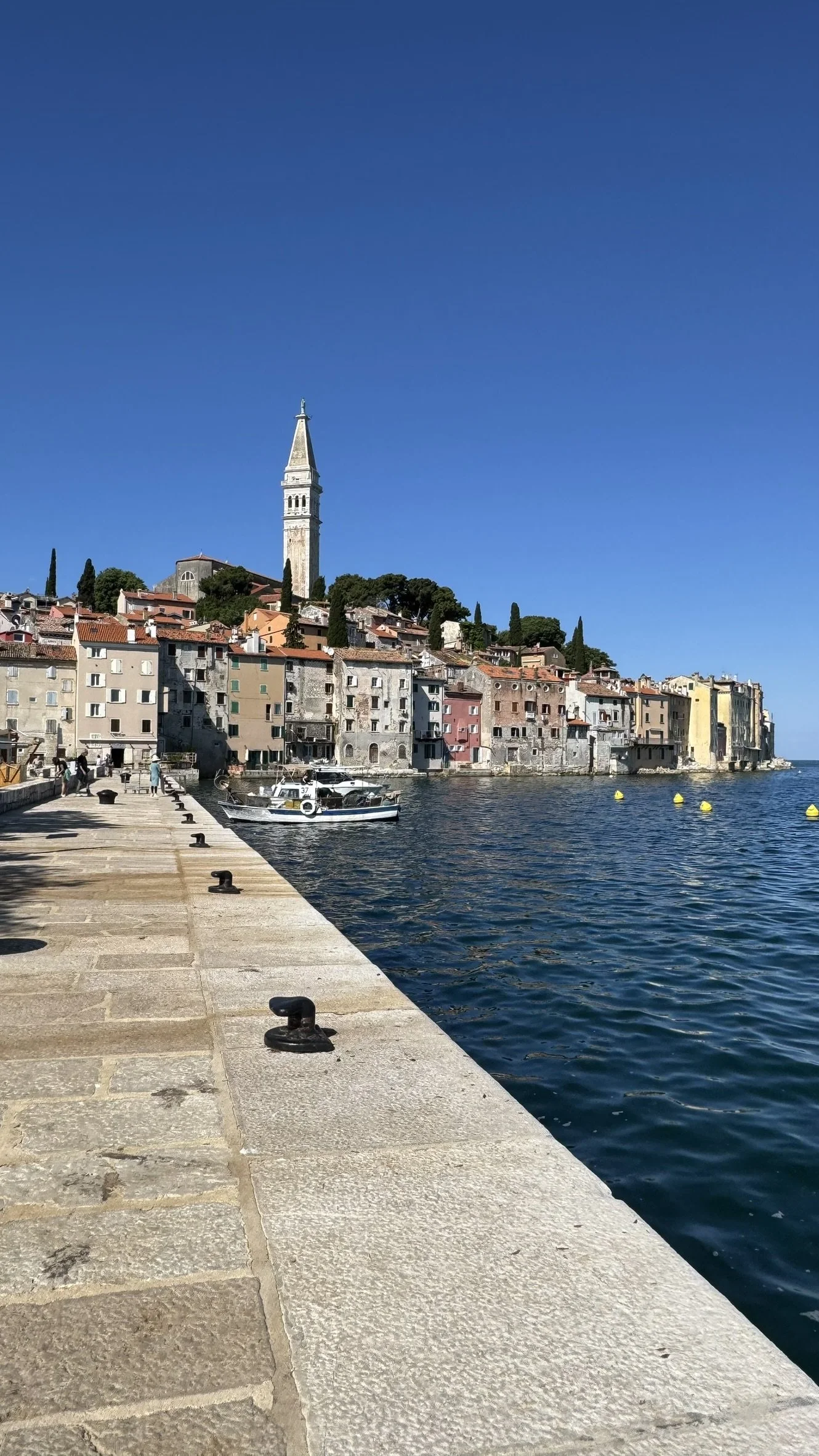
Rovinj is like a postcard come to life. Perched on the western coast of the Istrian Peninsula, it is easily one of Croatia’s most enchanting seaside towns.
Originally an island, Rovinj was connected to the mainland in 1763 when the channel was filled in. It was ruled by the Republic of Venice for over 500 years, and that deep history is still woven into everyday life. The town is officially bilingual, meaning you will see both Croatian and Italian on street signs, hear it spoken on the radio, and taste the Venetian influence across its incredible coastal cuisine.
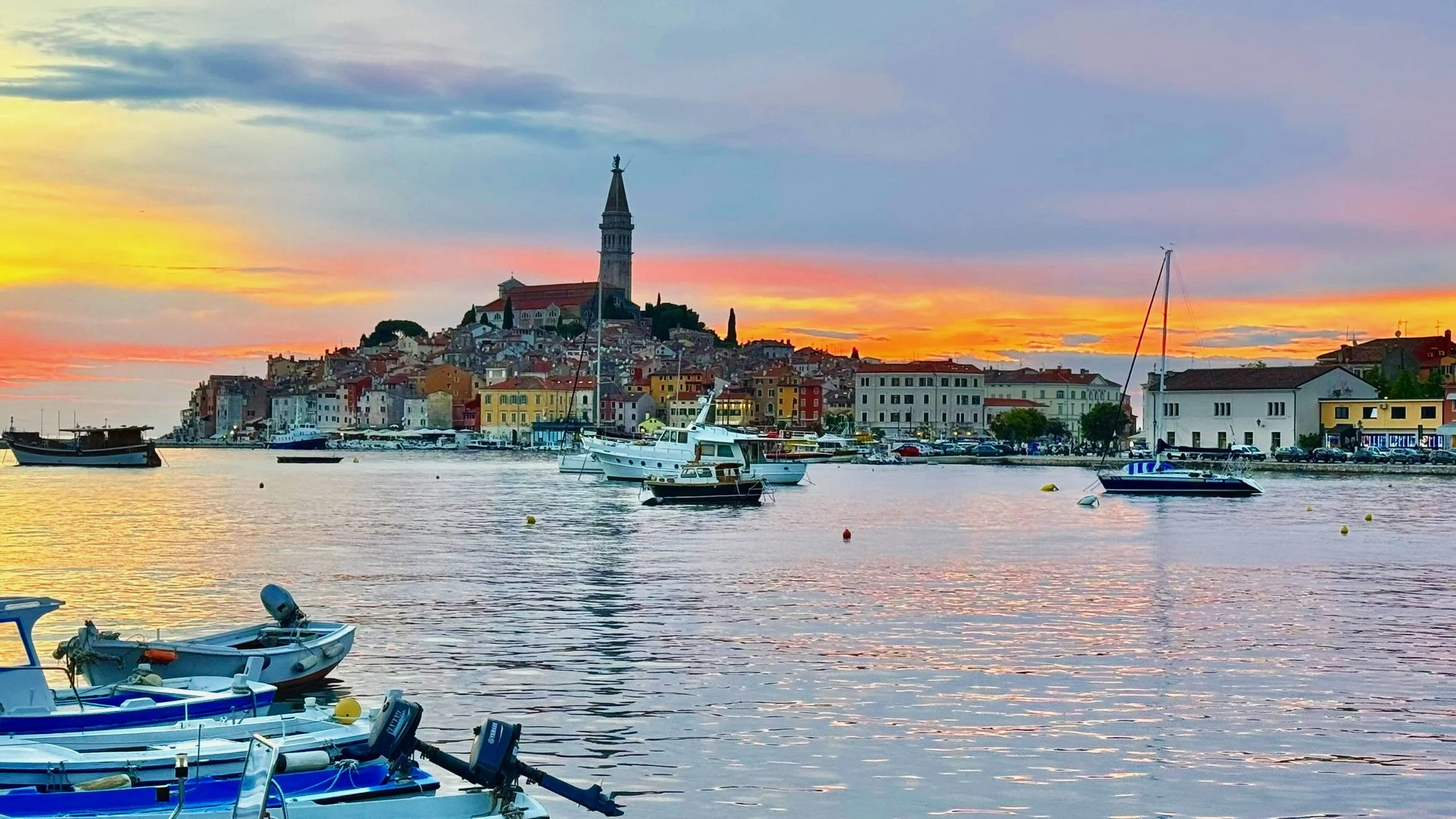
After settling into our Airbnb, we set off to explore Rovinj’s historic Old Town. We spent the afternoon winding through its charming island streets, snapping endless photos of colorful facades, hidden alleys, and sudden, beautiful glimpses of the sparkling Adriatic Sea. As the sun began to dip, we found our way down to the harbor’s edge, capping off the day with a seaside dinner while watching Rovinj glow across the water.
🚗 Travel Tip: Navigating Rovinj Parking
There is absolutely no vehicle traffic or parking allowed inside Rovinj's historic Old Town.
As you approach the historic center, you will encounter a large, convenient parking lot right outside the pedestrian zone. While this lot is perfect for a quick two-hour visit, overnight parking here will run you around €30 a day.
If you're staying overnight, use the main lot to drop off your luggage at your accommodations first. Afterward, hunt for free or cheaper residential street parking further out. We managed to find free parking just a lovely 15-minute walk away from the old town. A quick search on Google Maps for parking areas slightly outside the city center will show you the best current options!


Day 5 - Motovun and Grožnjan
After a relaxed breakfast of coffee and delicious, flaky croissants, we hit the road and headed inland toward the medieval hilltop town of Motovun—a scenic drive just about an hour away from Rovinj.
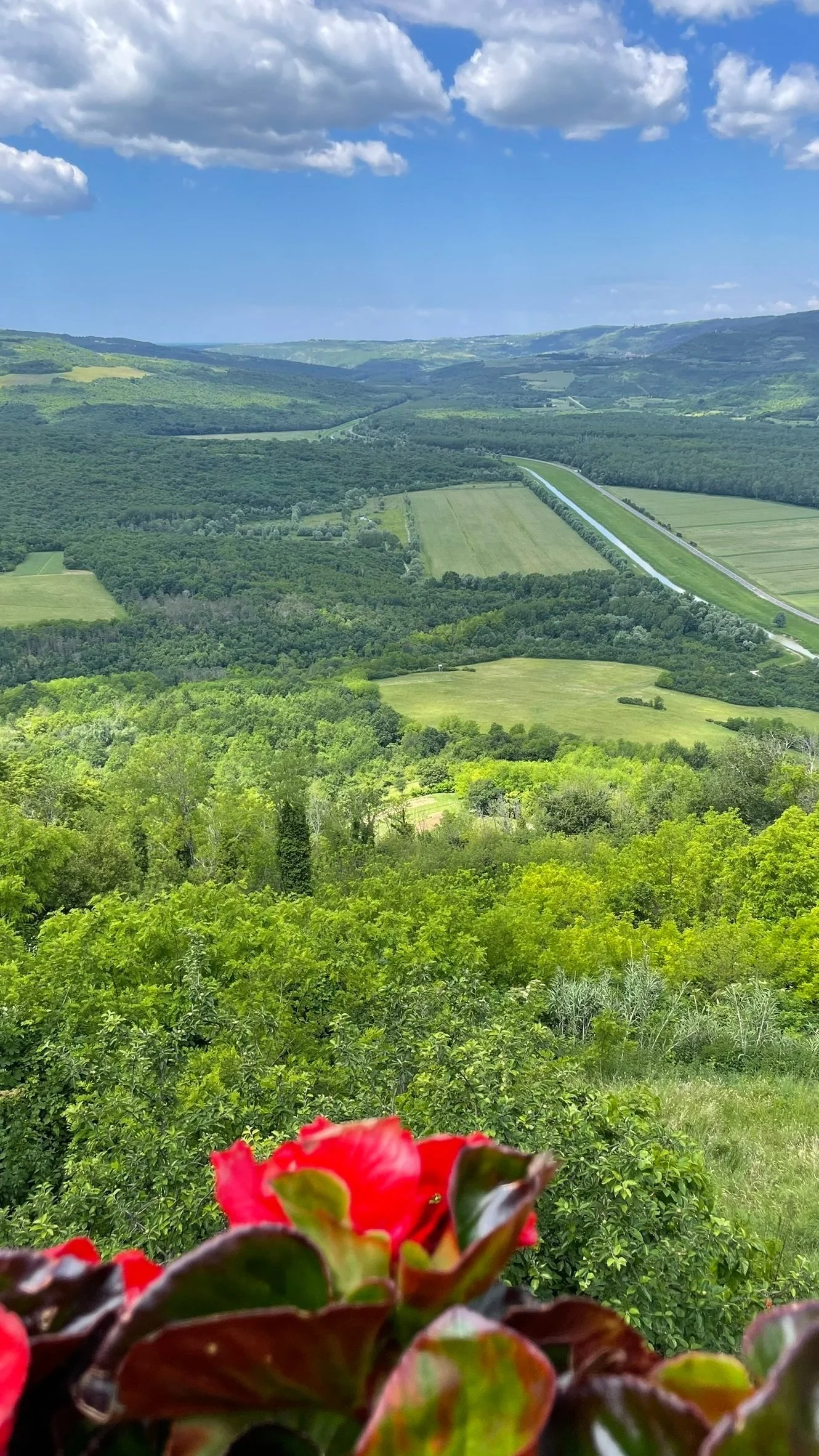
Motovun is a storybook hilltop town in the heart of Istria, where medieval charm meets truffle-scented breezes. Perched 277 meters above sea level, it overlooks the lush Mirna River valley and the famed Motovun Forest—a region renowned for producing prized black and white truffles. The town is entirely encircled by well-preserved medieval walls that now serve as a scenic walkway. We savored a lovely cliffside lunch here, surrounded by panoramic views of the valley below. The earthy aroma of truffles was undeniably the star of the menu; they are Croatia's truffle capital for a reason, putting them in everything from handmade pasta to ice cream! With our truffle cravings satisfied, we hopped back in the car and drove to our next nearby stop: the artist village of Grožnjan.
Grožnjan is a tiny hilltop town that feels as though it was handcrafted entirely for artists and dreamers. Perched 228 meters above sea level, it overlooks the rolling Mirna River valley and is surrounded by vineyards, olive groves, and striking white limestone hills. On clear days, the views stretch all the way to the blue Adriatic Sea—the perfect backdrop for sipping a glass of local Malvazija wine. We spent a quiet afternoon exploring its stone labyrinth, which is filled with vibrant art galleries, studios, and the faint sound of classical music drifting through the windows.
We made our way back to Rovinj, once again losing ourselves in the charm of its medieval streets—a winding maze of stone alleys and lantern-lit corners. The evening unfolded with another seaside feast, where fresh seafood and mussels completely stole the show. From the harbor, we watched Rovinj’s silhouette transform into a glowing mosaic, with fishing boats bobbing in the foreground and the old town rising like a crown above the water. Nearby, people gathered with wine glasses in hand, quietly watching the soft twilight fade into a spectacular sunset.



Day 6 - Pula
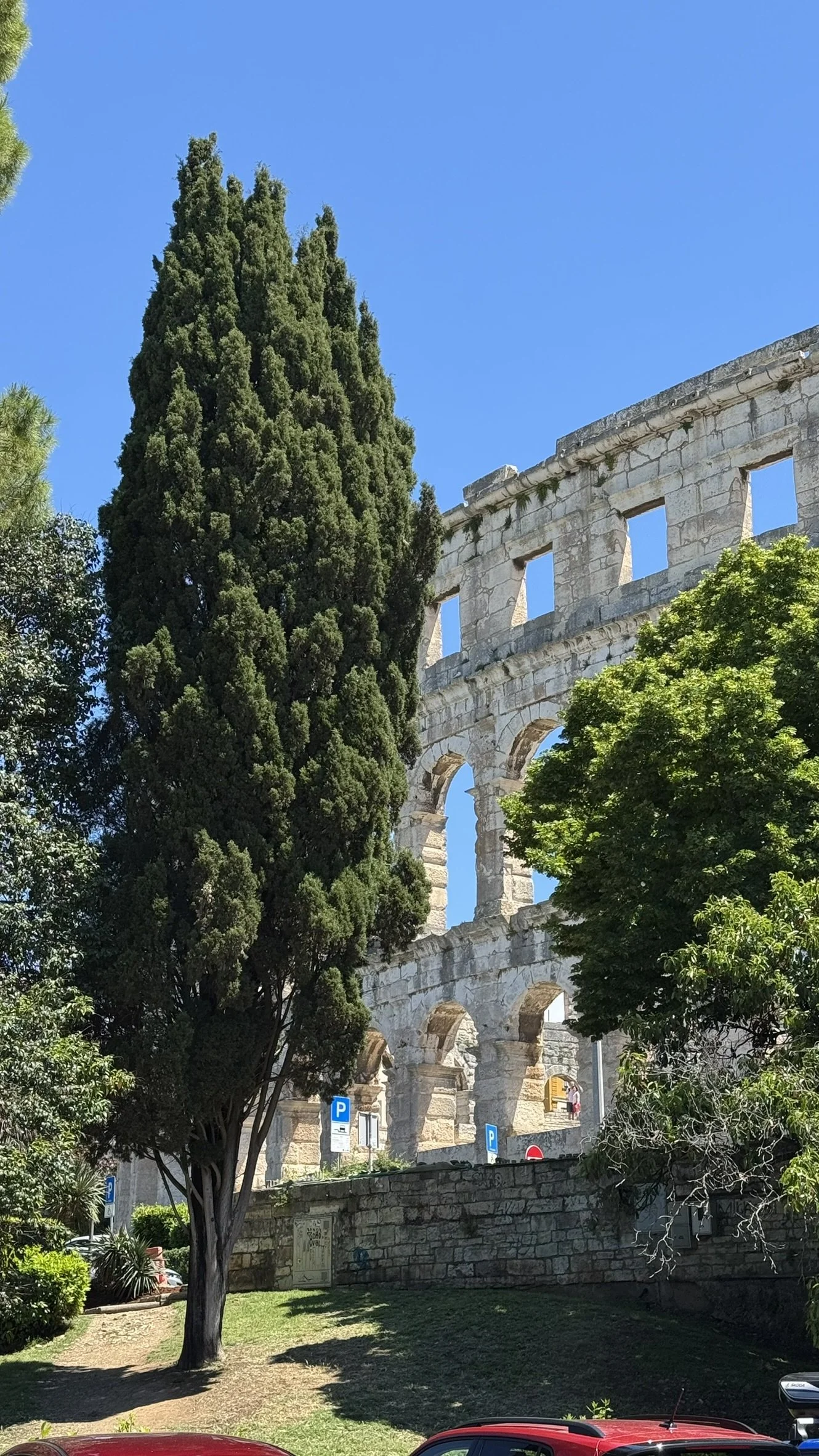
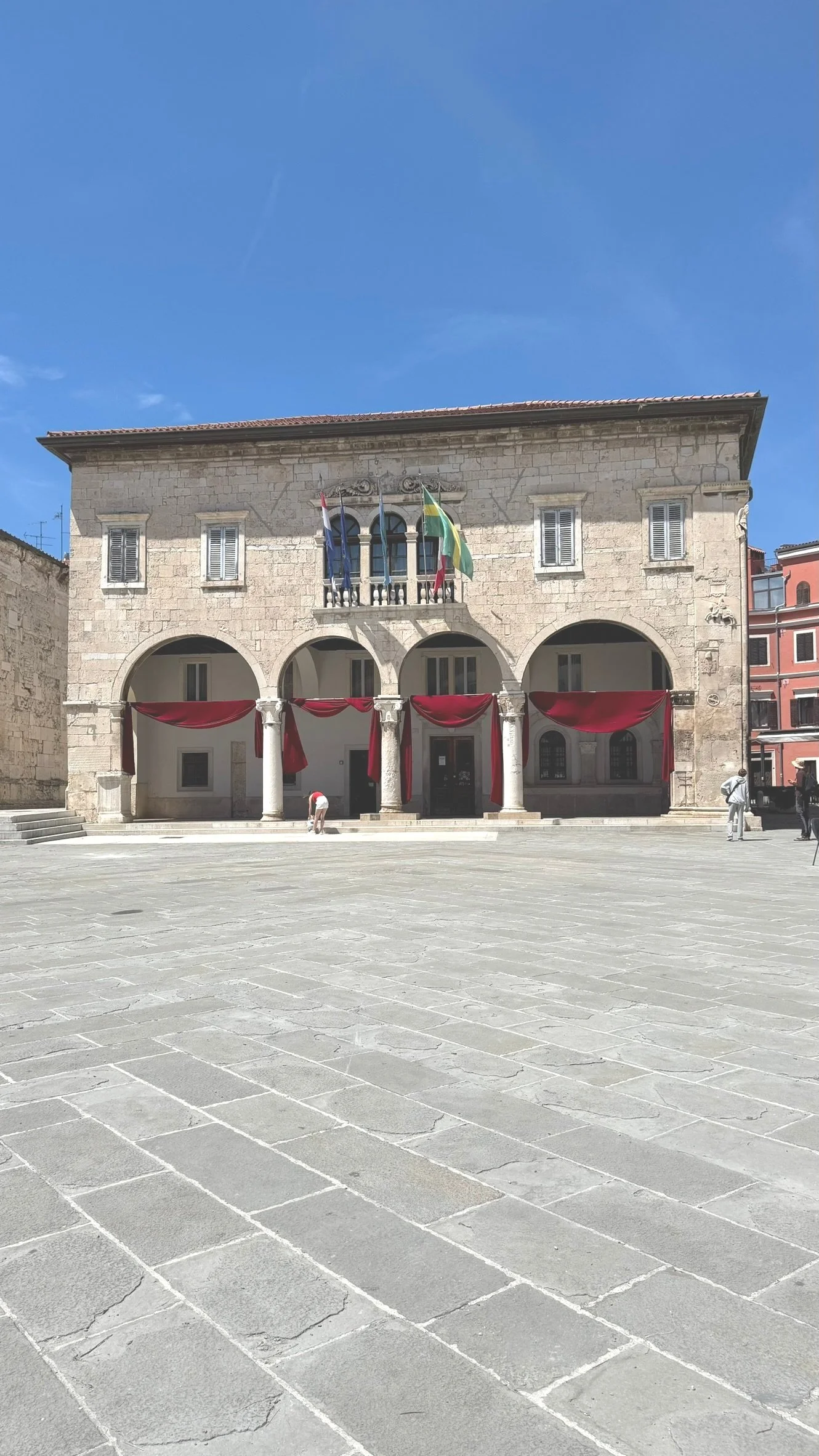
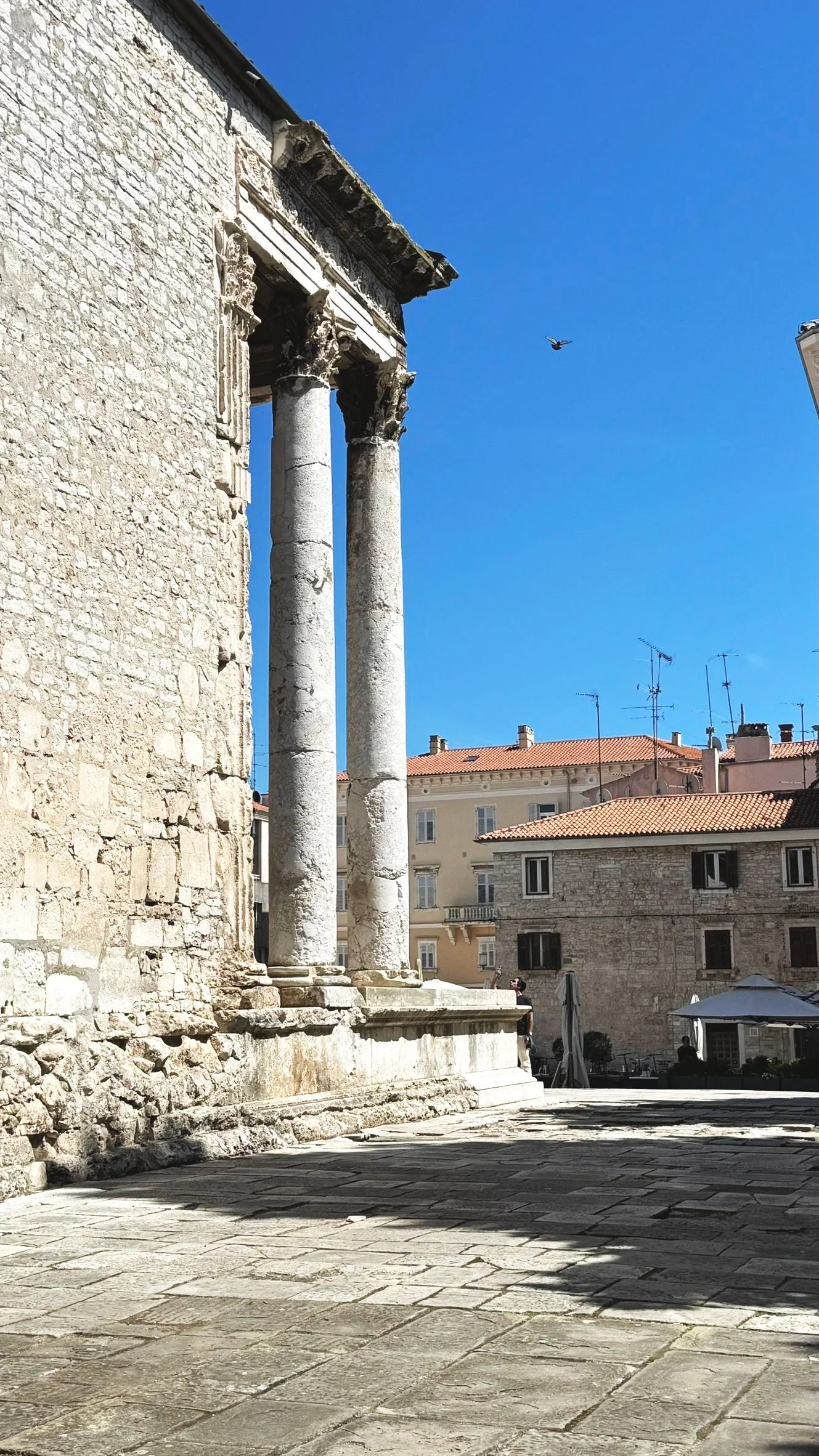
Today, we drove about an hour south to the Istrian capital of Pula. Situated at the southern tip of Croatia’s Istrian Peninsula, Pula is a fascinating coastal city where ancient Roman grandeur meets laid-back Adriatic charm. Pula is world-renowned for its remarkably preserved Roman legacy, featuring incredible historic sites such as:
Pula Arena: Built in the 1st century AD, this is one of the best-preserved Roman amphitheaters in the world. While it once hosted brutal gladiator fights, today it serves as a spectacular open-air venue for concerts and film festivals.
Temple of Augustus: A beautifully intact, 2,000-year-old Roman temple located on Pula’s main Forum square, showcasing classic ancient architecture right in the heart of the modern city.
Arch of the Sergii: A triumphal arch from the 1st century BC, commemorating a powerful Roman family
🚗 Travel Tip: Parking at Pula Arena There is a large, convenient public parking lot located directly in front of the Pula Arena. It is by far the easiest place to park your vehicle if you are visiting the ancient Roman amphitheater!
On our final evening in Rovinj, we strolled along the southern end of the promenade past the harbor, taking in more stunning views of the town.

Day 7 - En route to Plitvice National Park
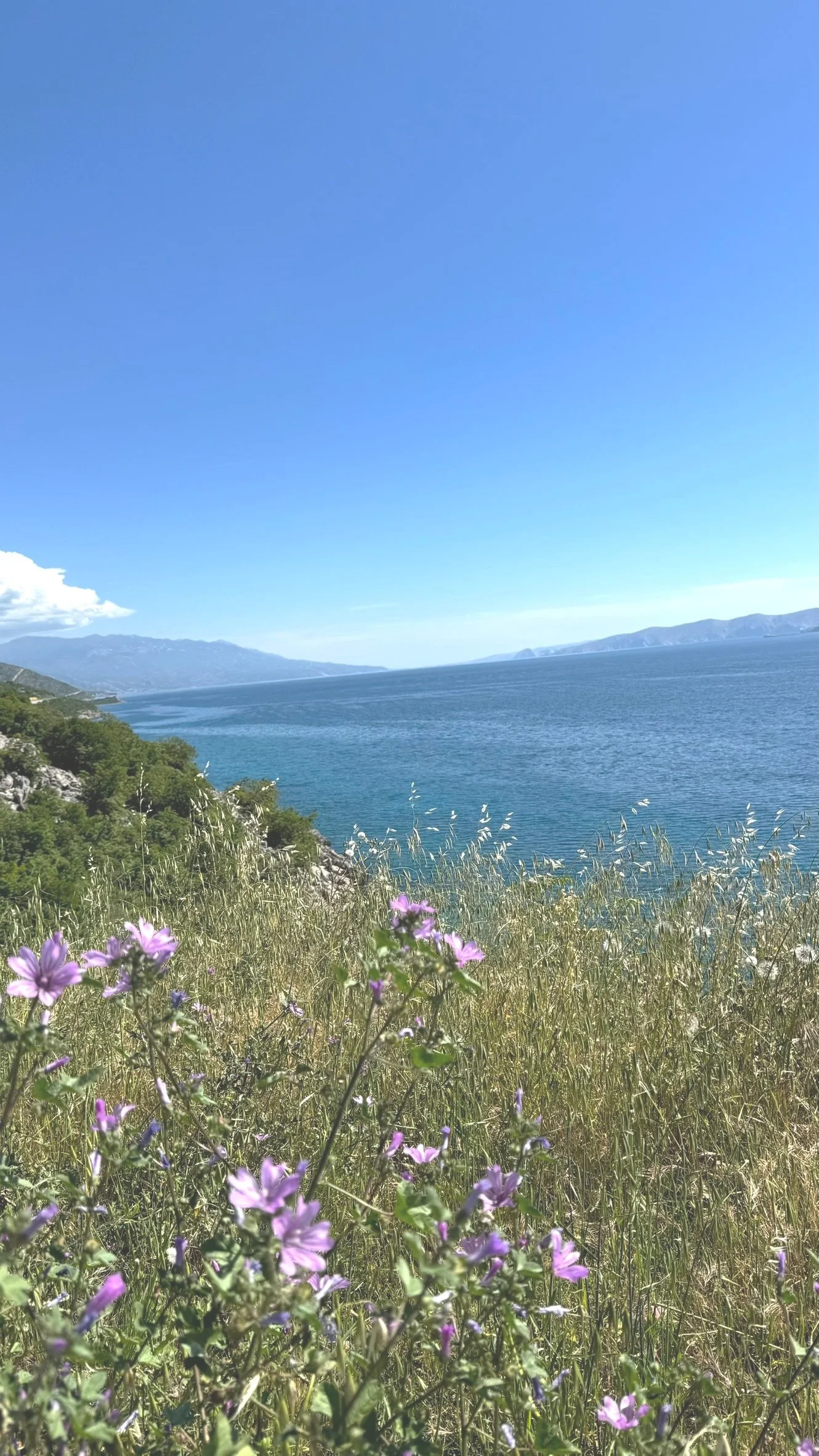
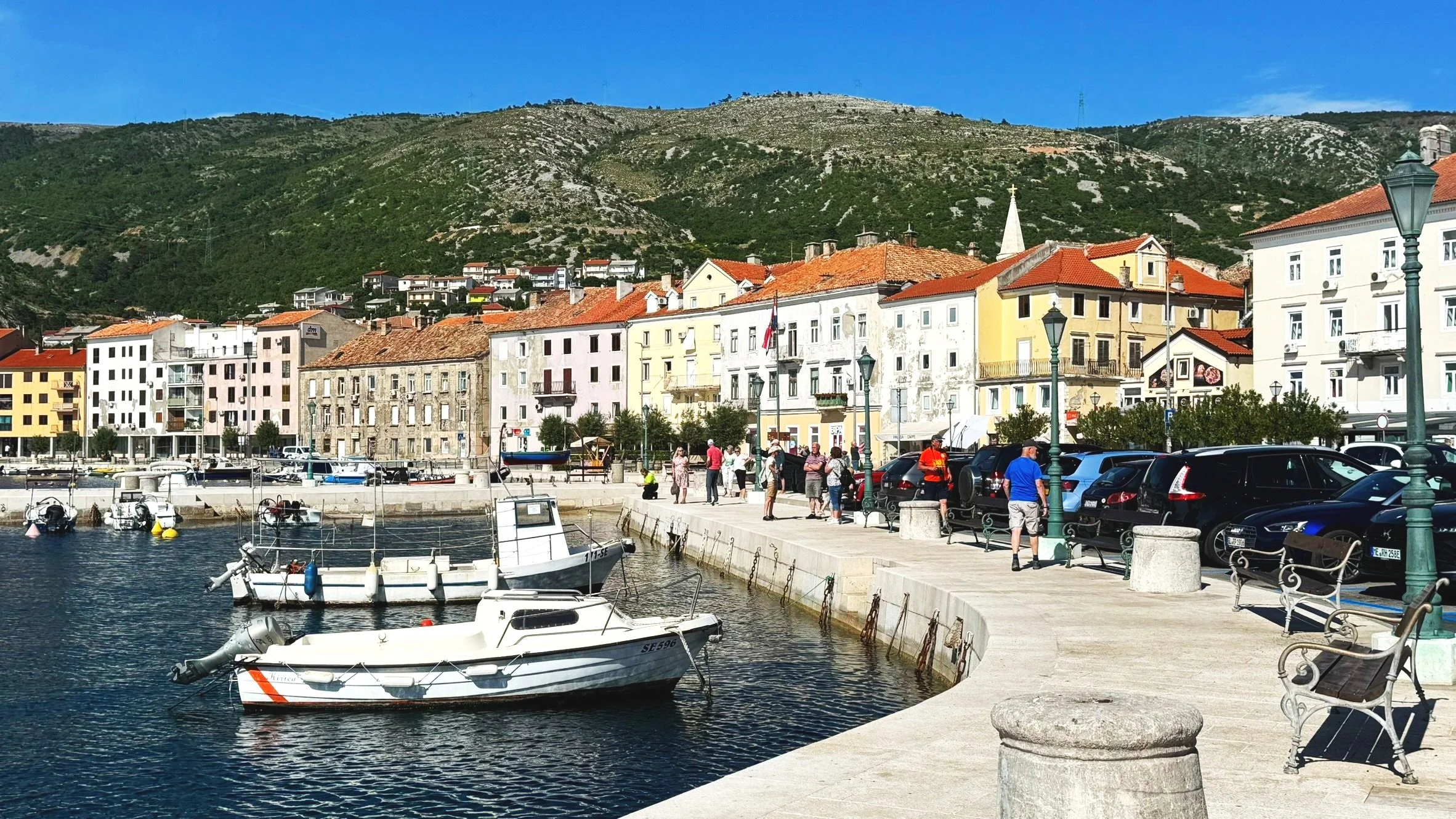
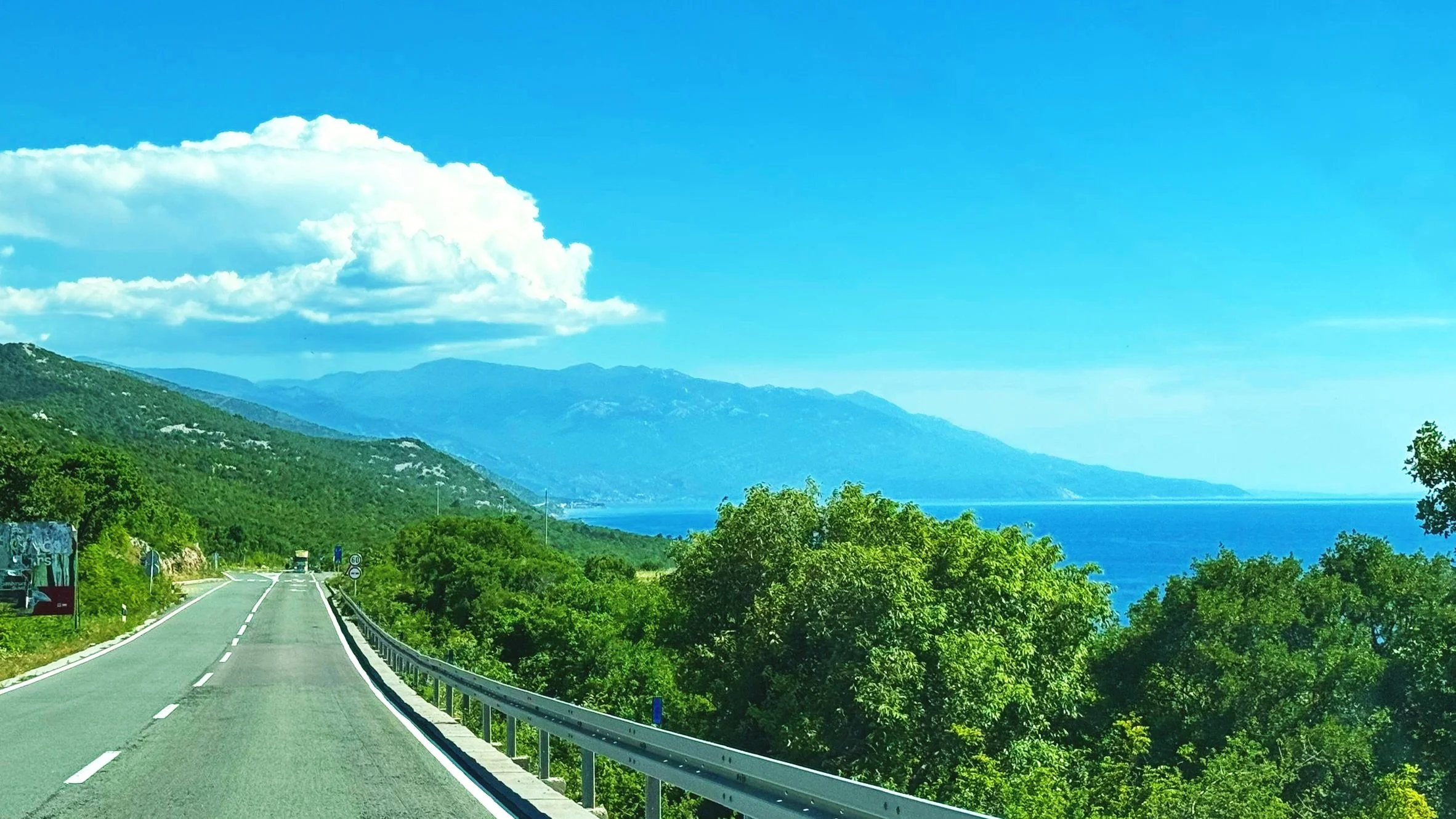
We said goodbye to Rovinj and drove down the coast toward the historic port town of Senj. The coastal route is incredibly scenic, carved directly between dramatic, sweeping mountains and the deep blue sea. We stopped in Senj for a short stroll through its quiet old town and a relaxing, late lunch. Afterward, we turned inland and set our course for the Plitvice Lakes area. The drive twisting upward from Senj is beautiful, but it gets very mountainous—here is exactly what to expect on this leg of the road trip:
Leaving the Coast (Senj)
You start right at sea level, watching Senj’s historic stone buildings and Nehaj Fortress fade in your rearview mirror. The road immediately begins its steep climb inland via sweeping, tight switchbacks. Be sure to check your mirrors—the panoramic views looking back at the Adriatic Sea, rugged cliffs, and scattered islands are absolutely spectacular.
Climbing Through Velebit Mountains
The route cuts directly through the striking Velebit mountain range. If you take the D23 route, it is the most direct path but incredibly twisty and serpentine. The landscape shifts dramatically into alpine territory—expect dense pine forests, rocky terrain, and rolling mountain meadows. Driver's note: Keep an eye out for mist or low-hanging clouds if you are driving during the morning or evening hours.
Entering the Lika Region
Once you cross over the mountain passes, you will descend onto the rugged Lika Plateau. The driving becomes much more relaxed here as the landscape turns pastoral. You’ll cruise past quiet farmlands, traditional stone houses, and small villages. Towns like Otočac or Korenica are your best and final options to pull over for fuel, a quick rest, or snacks before entering the park area.
Approaching Plitvice
As you near your destination, official signage for Plitvička Jezera will begin to appear frequently. The surrounding forest thickens up again, the roads smooth out, and tourist infrastructure like cozy guesthouses and rustic restaurants lines the route. Depending on your accommodation or hiking plan, you will arrive first at Entrance 1 (the northern entrance) or continue a few kilometers further south to Entrance 2.
We arrived at our wonderful hotel, B&B Plitvice Area Natura, located in the quiet surroundings of the Plitvice National Park area. It was a perfect launchpad—just an easy 8-minute drive from the park’s Entrance 1. The property itself was incredibly modern and spacious, sitting right next door to Degenija Restaurant—widely regarded as one of the best dining spots in the entire region. After a long day of scenic stops and mountain driving, being able to simply walk over and enjoy a phenomenal, relaxing dinner was the absolute perfect end to our day.
🍽️ Travel Tip: Get to Degenija Early! If you plan on dining at the popular Restaurant Degenija, it is highly recommended to arrive early. We rolled in right at 7:00 PM and were incredibly lucky to snag the very last available table!

Day 8 - Hike through Plitvice National Park
Starting early in the morning, we left the hotel around 8:30 a.m. and grabbed our typical vacation breakfast (coffee & croissants) at a local grocery store and coffee shop, along with some fruit and snacks for a day of walking through Plitvice National Park.
Purchasing tickets and parking: You can purchase tickets right at the gate when you arrive, or you can get them online from the official park site. Be mindful that you need to purchase tickets for the exact time and entrance you will arrive at. You will also need to pay for parking close to the park entrance. There is a huge parking lot for both Entrance 1 & 2. We arrived at Entrance 1.
A walk through Plitvice Lakes National Park is a breathtaking journey into one of Croatia’s most iconic natural wonders. Here is what to expect starting from Entrance 1 (Ulaz 1), the most popular starting point for visitors:
Scenic Descent into the Canyon:
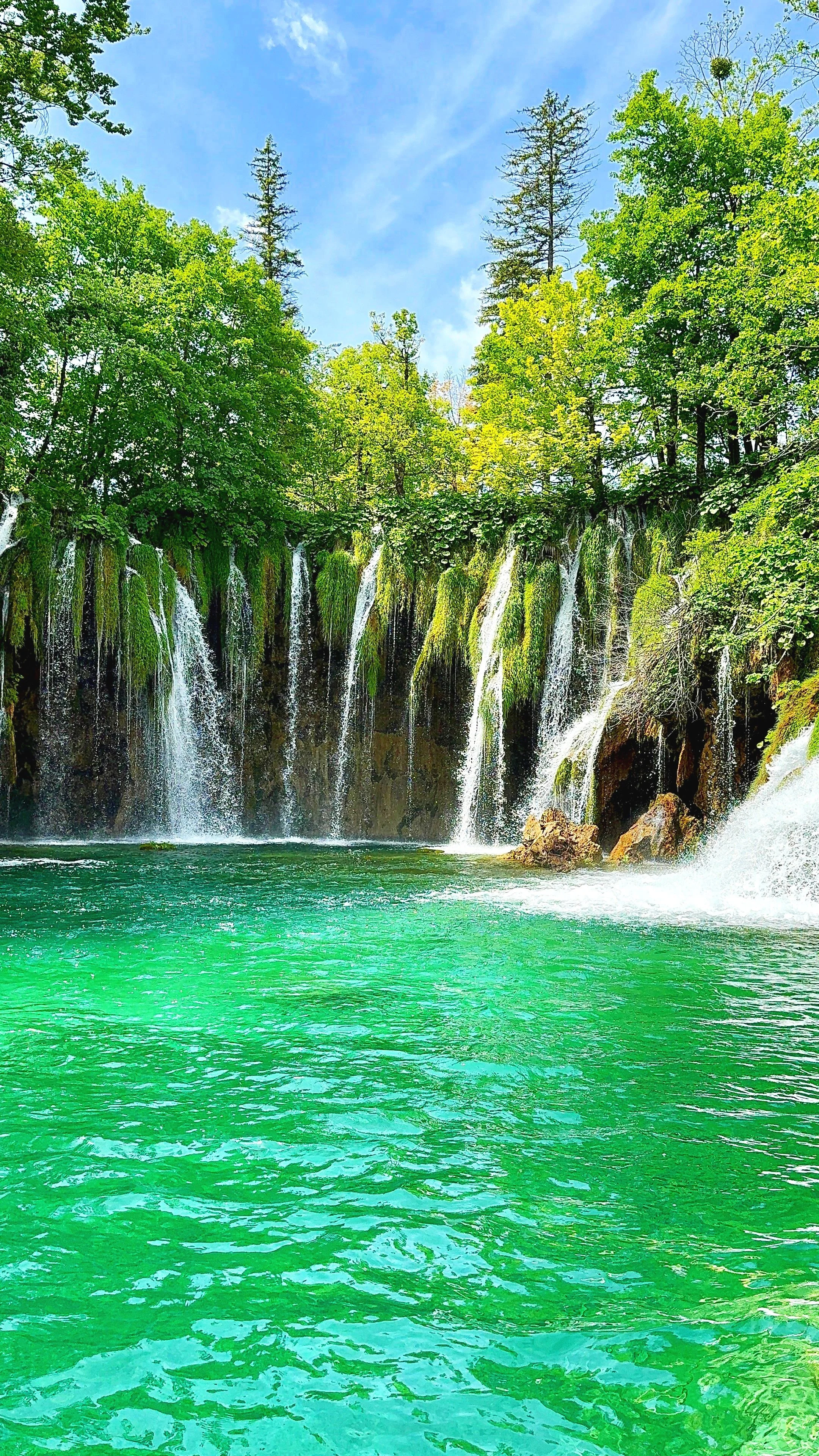
The walk begins with a descent down wooden steps and pathways into a steep limestone canyon. Almost immediately, you’ll hear the roar of Veliki Slap (The Great Waterfall), Croatia’s highest waterfall at 78 meters. The view from the first overlook is stunning, offering a bird's-eye view of turquoise lakes connected by a series of rushing cascades.
Wooden Pathways Over Lakes:
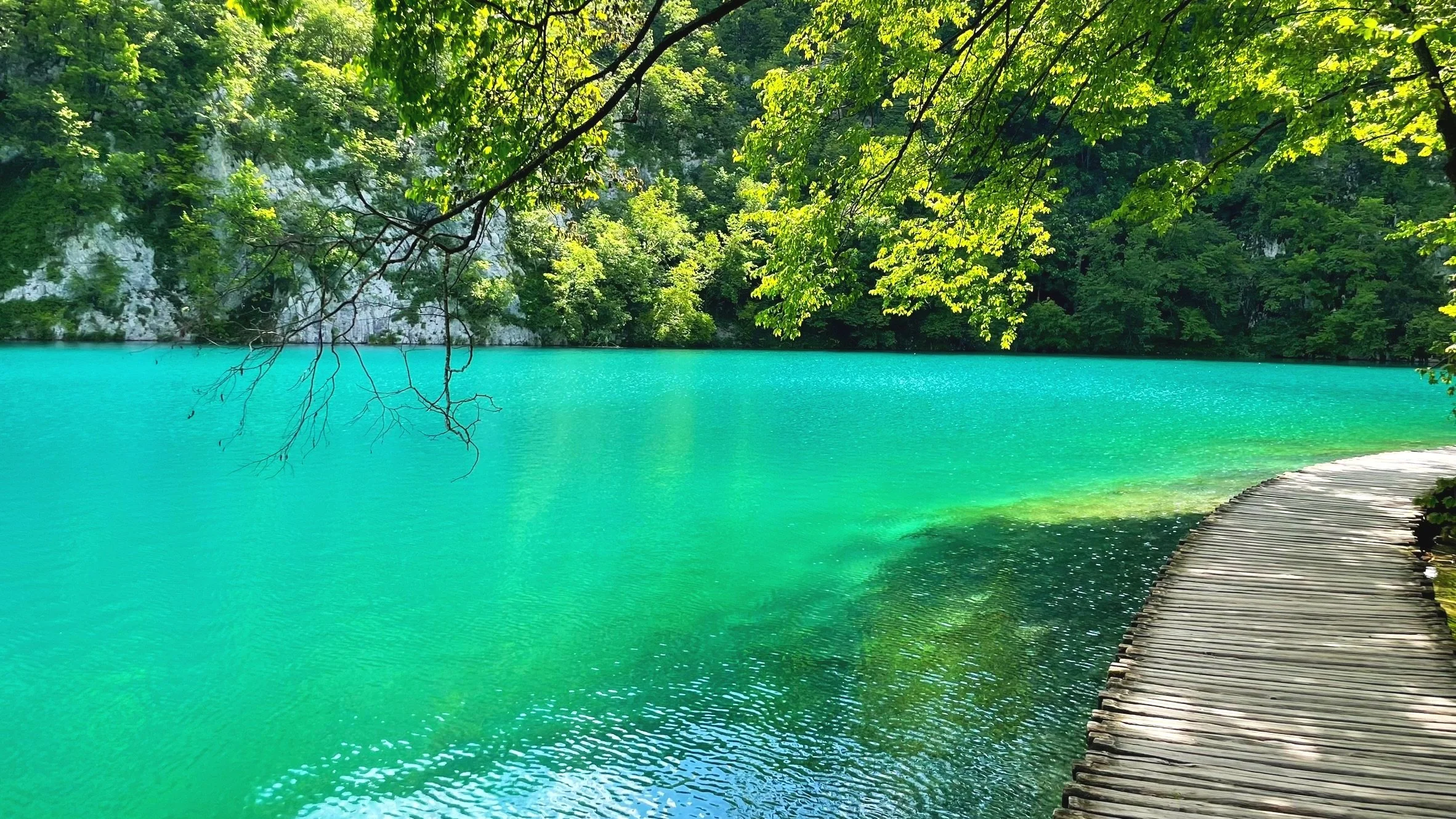
Wooden boardwalks float just above the crystal-clear water, weaving through lush vegetation and past countless waterfalls spilling from every angle. Fish are easily visible in the shallow waters, and birdsong fills the forest air.
Lower Lakes Exploration:
These lakes (including Novakovića Brod and Gavanovac) are tucked tightly between high cliffs. You’ll walk along moss-covered rocks and under dripping overhangs, often right beside—or even directly over—the waterfalls. Note that Lake Kozjak is actually the massive transition lake at the end of this section.
Boat Ride Across Lake Kozjak:
At the midpoint of the park, we took a peaceful electric boat ride across Lake Kozjak, which is included in the ticket price. It beautifully connects the Lower and Upper Lakes and offered us a much-needed break from walking.
Continue to Upper Lakes:
Because we followed one of the longer routes (Route C), we continued on to the Upper Lakes. This area features smaller, more numerous waterfalls woven into a dense forest—offering a much more serene, shaded, and less steep experience than the canyon down in the Lower Lakes.
The return back to Entrance 1:
At the end of the Upper Lakes trail, we caught the park's electric shuttle bus (panoramic train), which brought us right back to Entrance 1. You can also walk back if you want to make a longer day.
Walking Details and Tips:
Trail Options: The park is exceptionally well-marked, offering several designated routes (Programs A through K) that range from 2 to 8 hours. You can easily tailor your day depending on how much time you have.
Terrain & Surfaces: Expect a mix of terrain. You will spend a lot of time on the iconic wooden boardwalks, but the trails also include dirt paths, stone steps, and natural inclines.
Fitness Level: A moderate level of physical fitness is perfectly adequate for the main trails. However, be prepared for plenty of stairs and a few steep climbs if you decide to explore the longer routes.
Footwear: Proper footwear is a must. Bring sturdy walking shoes or sneakers with good grip—the mist from the waterfalls and wet moss can make the wooden planks surprisingly slippery.
Timing is Everything: Arriving early in the morning is the absolute best strategy. Not only will you beat the heavy tour-bus crowds, but you will also get the softest, most beautiful light for your photos.
Keep an Eye Out for Wildlife: If you stay relatively quiet along the forested paths, it is easy to spot local wildlife. Keep your eyes peeled for frogs along the water's edge, colorful forest birds, and occasionally even deer deeper in the woods.
Expect the hike to take about 5 to 6 hours, depending on how many stops you make for photos and snacks.
Arriving in Zadar:
We left the Plitvice Lakes parking lot and headed toward our next major stop: the coastal town of Zadar, which was a scenic 1.5-hour drive away. Once we arrived, we managed to find street parking very close to our hotel.
Before dinner, we enjoyed a relaxing drink by the waterfront, soaking in the views. Afterward, we wandered past the main cathedral and explored the many vibrant restaurants lining the main street and tucked into tiny, hidden alleyways. For dinner, we settled on Restaurant Tinel, a charming spot close to the center of town, where we had a delicious meal.


Day 9 - Zadar
Today was fully dedicated to exploring Zadar. Located on the Adriatic Sea in the region of northern Dalmatia, Zadar is a historic coastal city that beautifully blends Roman, Venetian, and modern influences into a compact, incredibly walkable Old Town.
We actually started our morning with a practical errand: finding a local laundromat. We found one conveniently located right in the centre of the historic peninsula. The owner was incredibly helpful with the coins and the machines, which gave us the peace of mind to leave our clothes washing while we set off to explore. Because the Old Town peninsula is only about 1 kilometer (0.6 miles) long and 500 meters (0.3 miles) wide, it was incredibly easy to walk to all the major historical sites.
Roman and Medieval Heritage:
Zadar’s old town is full of ancient ruins and medieval churches, such as:
Roman Forum – built in the 1st century BC
St. Donatus Church – a unique circular 9th-century church
City Walls and Gates: including the impressive Land Gate from the Venetian period.
Sea Organ (Morske orgulje):
The Sea Organ is one of Zadar’s most famous attractions. It is an incredible architectural sound art installation that plays music powered entirely by the sea waves pushing air through tubes located under a massive set of white marble steps. Sitting on the promenade and listening to the haunting, unpredictable chords is deeply calming and mesmerizing—especially as the sun begins to set.
Greeting to the Sun (Pozdrav Suncu):
The Greeting to the Sun is located just a few steps away from the Sea Organ, this striking solar-powered installation features a massive circle of multi-layered glass plates embedded in the stone waterfront. During the day, it absorbs sunlight, and as dusk falls, it begins to light up, creating a vibrant, animated light show that symbolizes communication with nature. It is best experienced right at twilight, just as the famous Zadar sunset fades.
Sunsets:
Alfred Hitchcock once said Zadar has the most beautiful sunset in the world.
💡Travel Tip: Stick to the Old Town in Zadar. If you are short on time, try to park directly on the Old Town peninsula. It drops you right into the historic center, saving you a long walk across the pedestrian bridge from the mainland!


Day 10 - Krka National Park & Split
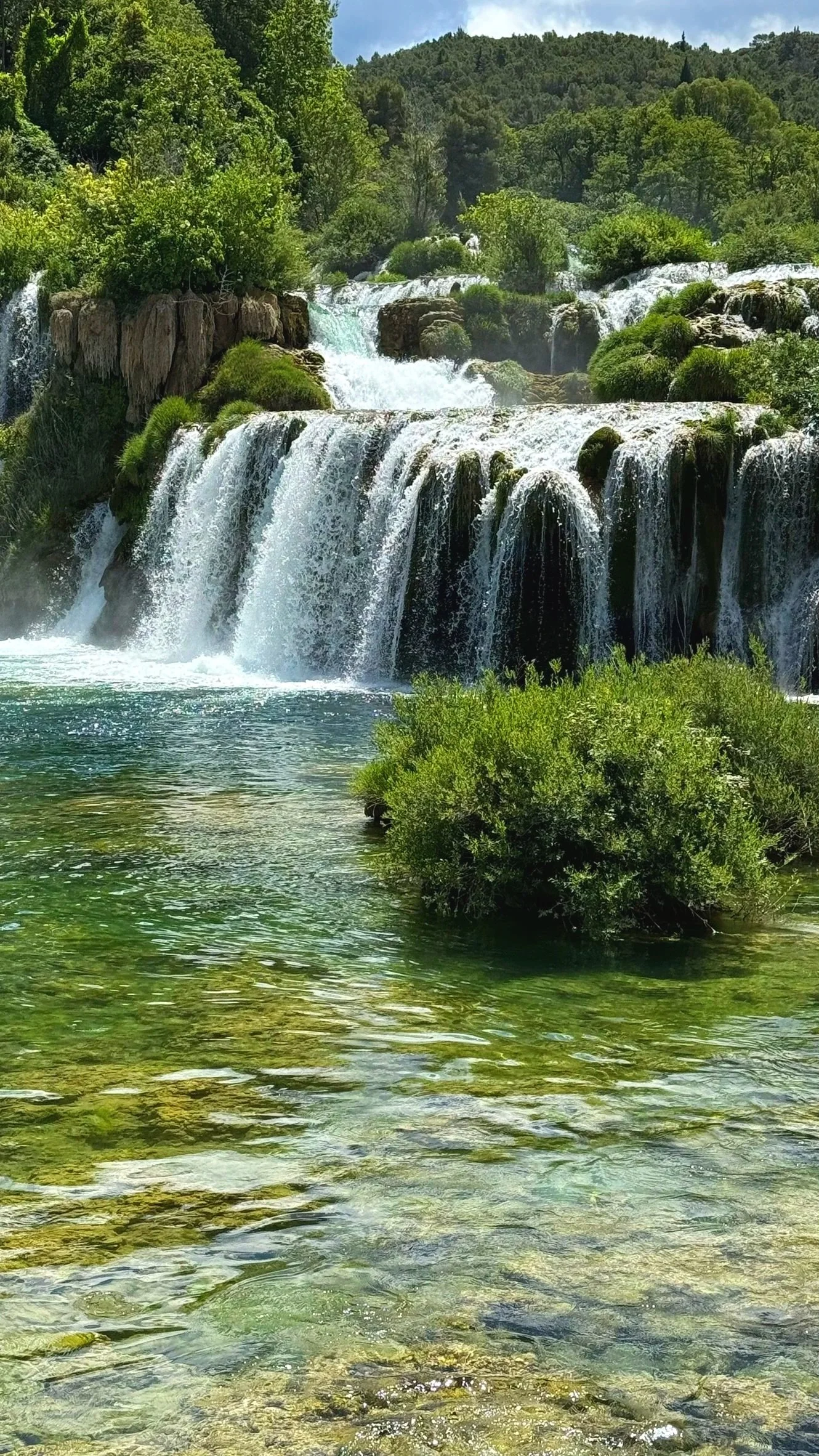
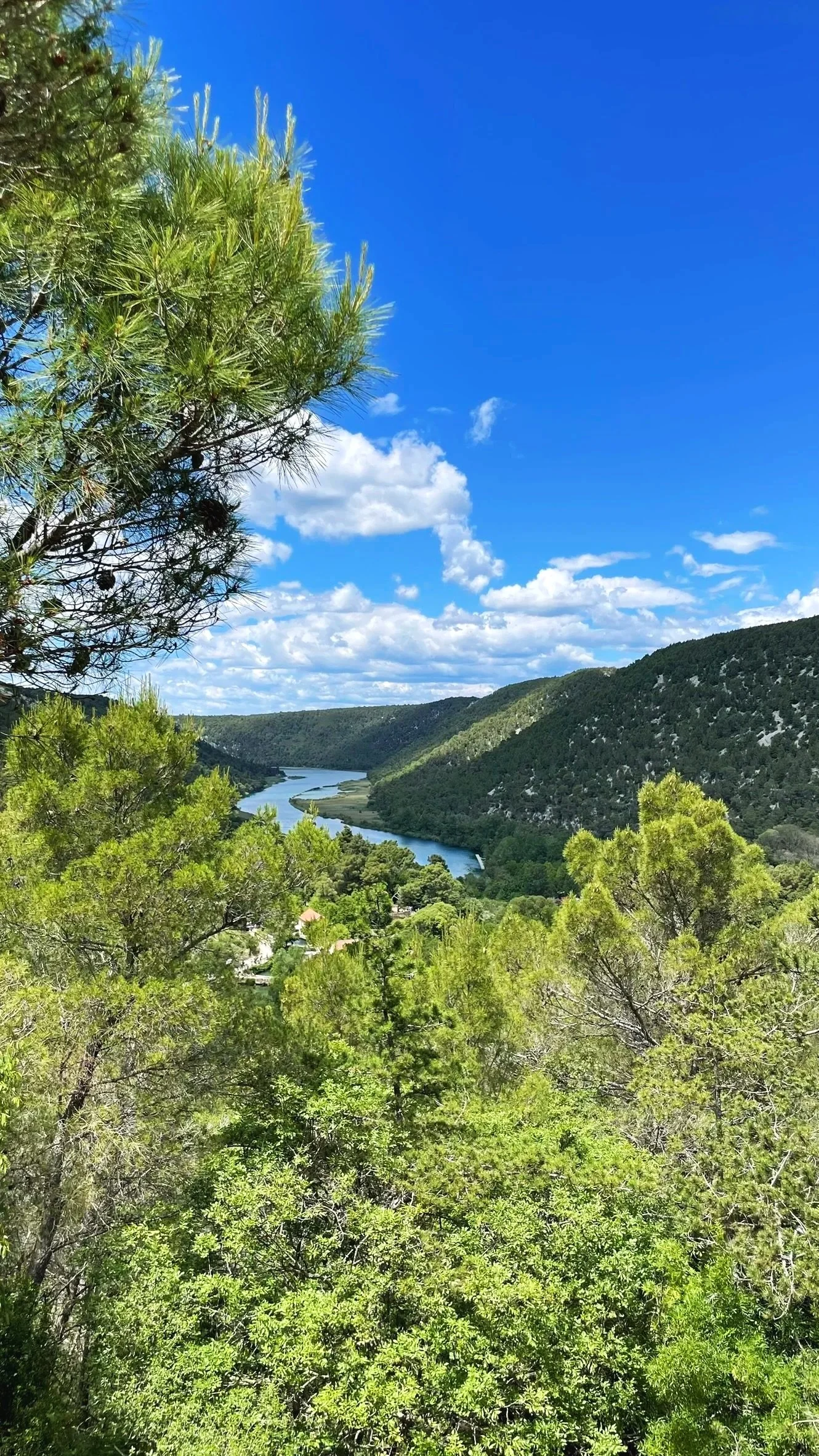
We left Zadar and headed to Krka National Park for a hike before making our way to Split for a three-day stay. Krka National Park is quite similar to the must-see Plitvice Lakes, but on a much smaller scale. If you only have time for one of these parks, I definitely recommend choosing Plitvice and skipping Krka. Still, Krka is highly impressive, known for its cascading waterfalls, emerald rivers, and lush Mediterranean vegetation. Located in southern Croatia near the historic city of Šibenik, it is easily accessible from both Split and Zadar.
Split is only about an hour to an hour and a half away from Krka. Upon arriving, we checked into our really nice Airbnb apartment. We absolutely loved the location, as well as everything about the place itself. It wasn't inside the palace walls—where it can get incredibly loud at night—but was only a brief three-minute walk from the palace gates.
We found parking on the street, but to buy a ticket, we had to go to a local vendor close to the entrance of Diocletian’s Palace. The kiosk attendant asked us which parking zone we were in, and since we had no idea, we had to walk all the way back to the street to figure it out! Knowing we were staying in Split for three days, we knew we needed to find a better parking solution, as buying a daily ticket from a physical vendor kiosk was going to be a hassle.
💡Travel Tip: We found this website, that had all the info we needed about parking in Split. The info in the website points to an app you can download to your phone and electronically pay for parking without the need for a ticket.
Once we were ready for the evening, we headed into Old Town Split, which is essentially the footprint of Diocletian's Palace. Built for the Roman Emperor Diocletian at the turn of the 4th century AD (around 305 AD), this massive ancient complex is one of the best-preserved monuments of Roman architecture in the world and is a designated UNESCO World Heritage Site.


Day 11 - Split
This morning we visited Klis Fortress, a dramatic medieval stronghold about 30 minutes outside of Old Town Split. The drive is easy, mostly on the highway, and gradually ascends as you approach the village of Klis.
With over 2,000 years of history, the fortress is an impressive symbol of strategic power, offering epic, panoramic views over Split and the Adriatic Sea. One of the best parts about Klis is the sheer freedom to explore—unlike most tightly regulated historic sites, you can roam freely along the ancient ramparts. Plus, as Game of Thrones fans, we instantly recognized it as the filming location for the city of Meereen.
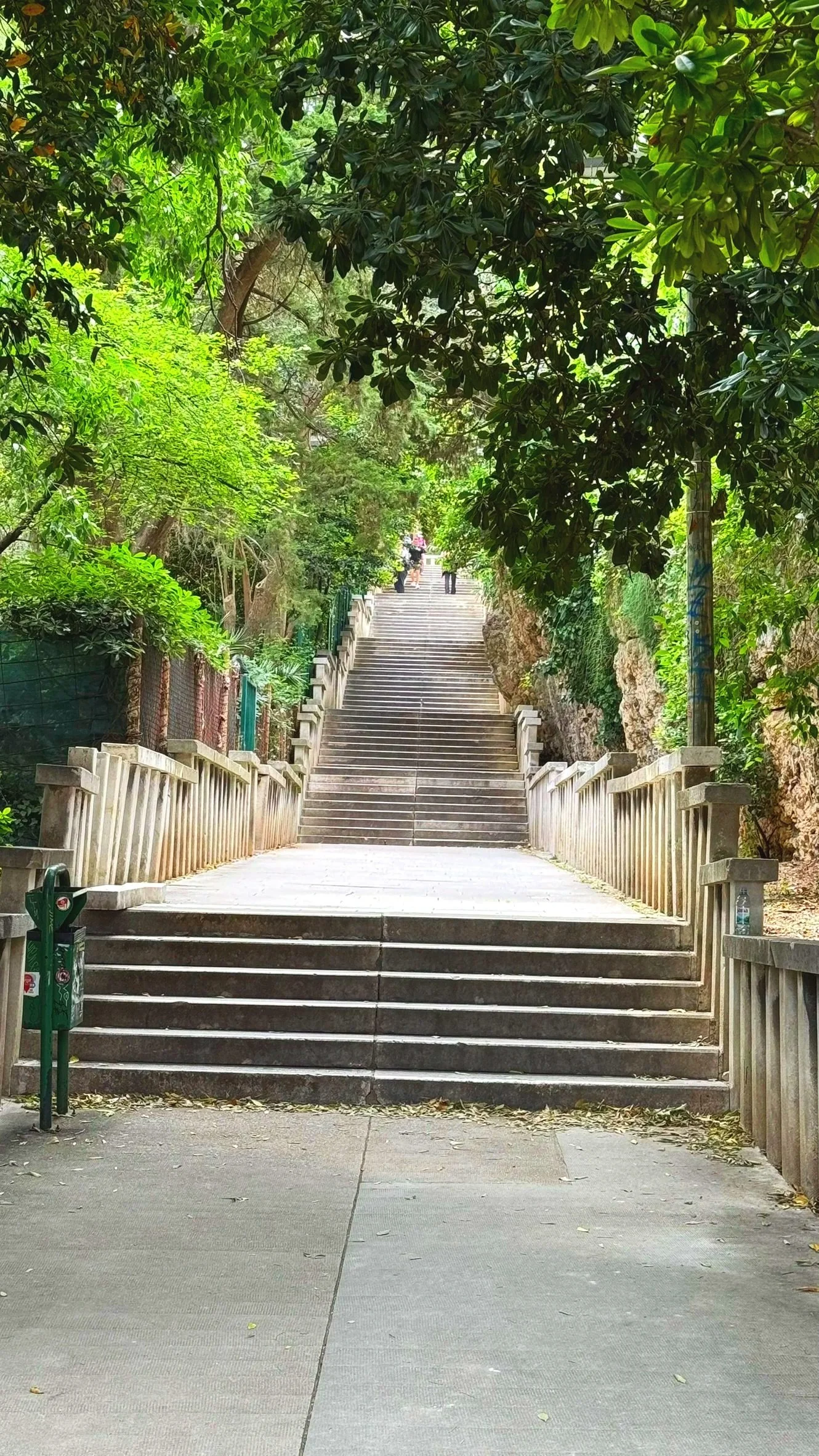
Upon returning to the Old Town and grabbing a quick lunch, we spent the afternoon hiking up Marjan Hill. Rising just west of the city, this forested peninsula is Split’s beloved green oasis. Locals call it the “lungs of the city,” and it’s a beautiful escape filled with pine trees, scenic trails, and sweeping views of the Adriatic. From the Riva Promenade, it’s a 15-minute walk to the base of the hill. The climb involves plenty of stairs and winding paths, but the views from the top are completely rewarding. Afterward, we headed back down to the Riva for some well-deserved cold beers, appetizers, and people-watching.
Later that evening, both before and after dinner, we dropped by the Peristyle. It’s a surreal setting and the beating heart of Diocletian’s Palace—a grand, open-air courtyard that once served as the ceremonial center for the emperor.
If you are looking for another great photo spot in the evening, the pier is the place to go. We happened to be walking out along the water when fireworks suddenly erupted right across the harbor. We were incredibly lucky to catch the display, which was in celebration of Croatia’s National Day!


Day 12 - Split
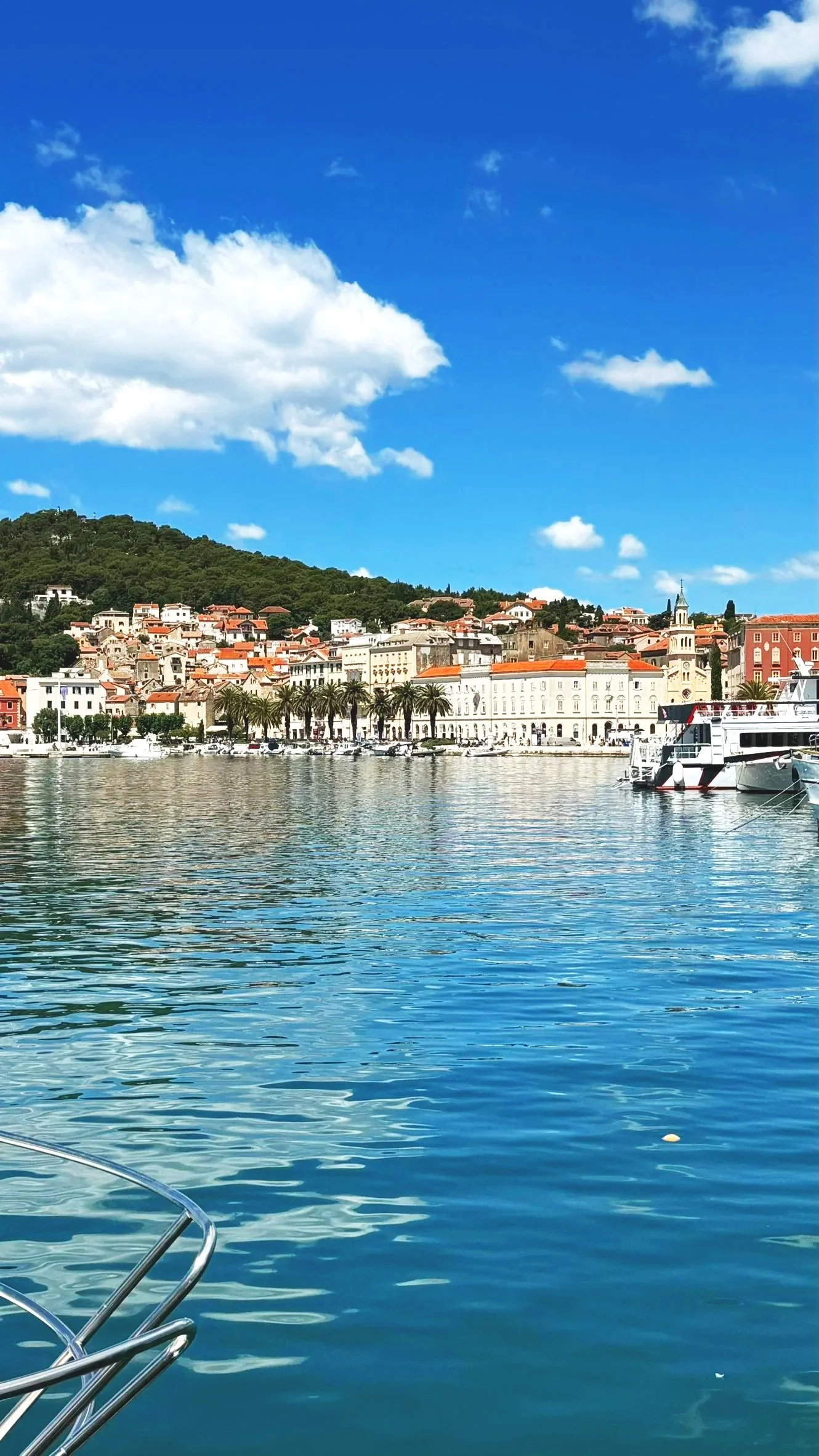
This is a day for beach and relaxation. If you ask the locals and seasoned travelers, Bačvice Beach often takes the crown as the best beach in Split. It’s a 10 minute stroll from Diocletian’s Palace and has a sandy shore. Another beautiful beach, with a more tranquil, scenic vibe, is Kasjuni Beach—tucked beneath Marjan Hill—is often called the most beautiful beach in Split. Think pebbles, crystal-clear water, and a laid-back beach club scene.
Today was all about slowing down and enjoying a dedicated day of relaxation. If you ask locals and seasoned travelers, Bačvice Beach often takes the crown as the ultimate city beach. It features a rare sandy shore and sits just a 10-minute stroll from Diocletian’s Palace. Another stunning option with a more tranquil, scenic vibe is Kasjuni Beach. Tucked neatly beneath Marjan Hill, it is often called the most beautiful beach in Split, offering fine pebbles, crystal-clear water, and a laid-back beach club scene.
For those looking to mix some sightseeing into a relaxed day, Split offers several fantastic, low-key alternatives:
Split City Museum: Housed inside a striking Gothic palace, it offers an incredible, deep dive into the city's layered history.
Meštrović Gallery: This museum is entirely dedicated to Croatia’s most famous modern sculptor, Ivan Meštrović. The monumentally designed building and its Mediterranean gardens are just as impressive as the artwork inside.
A Day Trip to Trogir: Located just 30 minutes away, this charming, UNESCO-listed island town is famous for its gorgeous Venetian architecture, historic cathedral, and vibrant seaside promenade.


Day 13 - Korcula
Croatia has so many beautiful towns, and before heading to the island of Korčula, we stopped in the rugged seaside town of Omiš. It is another stunning old town to wander through, complete with a historic fortress you can climb for impeccable views of the canyon, town, and sea.
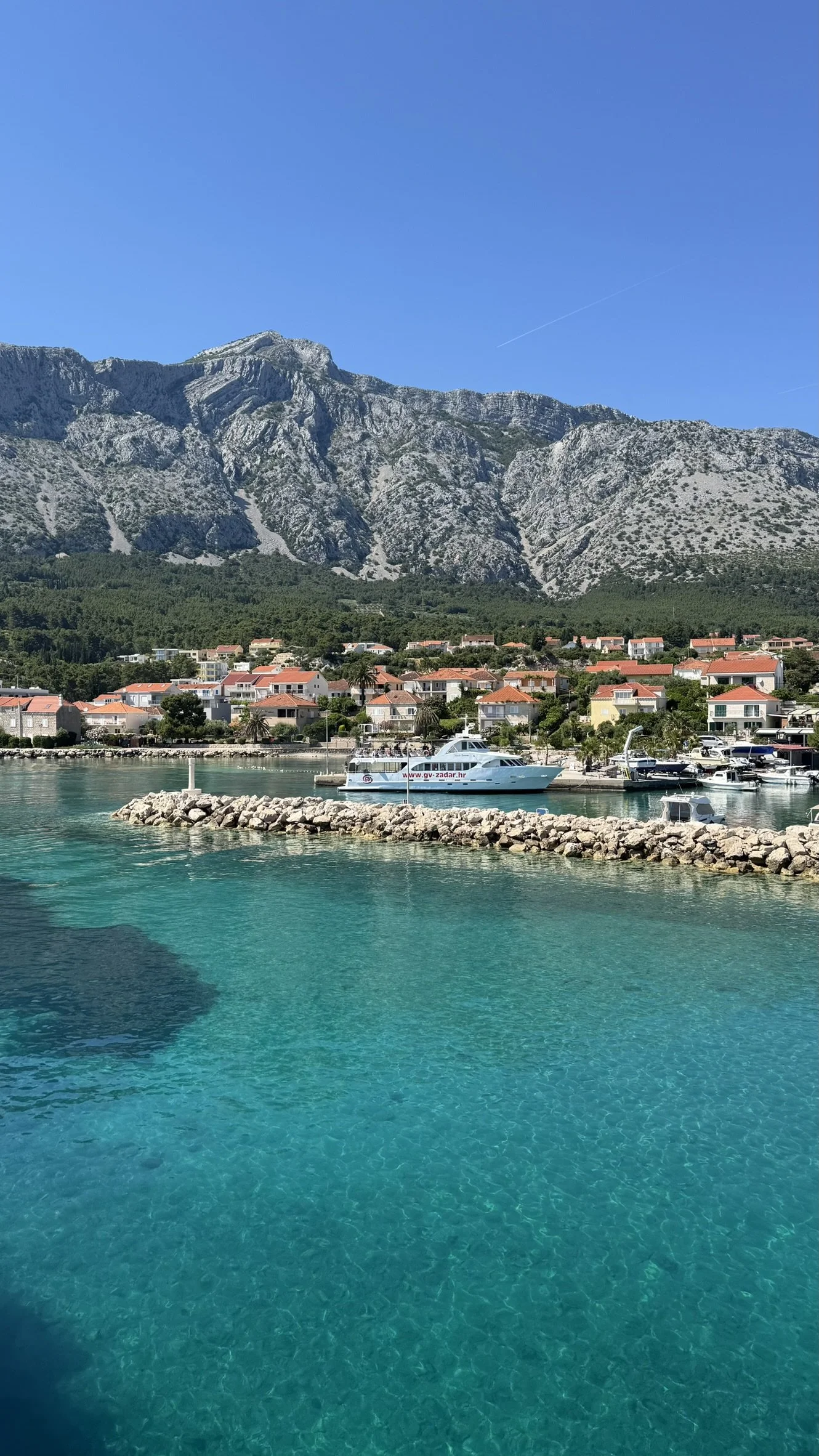
From Omiš, we drove down to Orebić on the mainland to catch the ferry. Orebić is the closest mainland point to Korčula, sitting just one mile across the water. From there, you take a quick, 15-minute car ferry to Dominče, just outside Korčula Town. The ferry is run by Jadrolinija and is highly frequent, running roughly every half hour.
⛴️ Ferry Tip: Tickets can be purchased right at the dock at the Jadrolinija office, and no advance reservations are required for passengers or cars. While there is a direct ferry from Split to Korčula that sounds convenient, it doesn't run very often and many departures are passenger-only catamarans. If you have a rental car, driving to Orebić is by far the most reliable option—just ensure the specific vessel you board accepts vehicles! Click here for the ferry schedule.
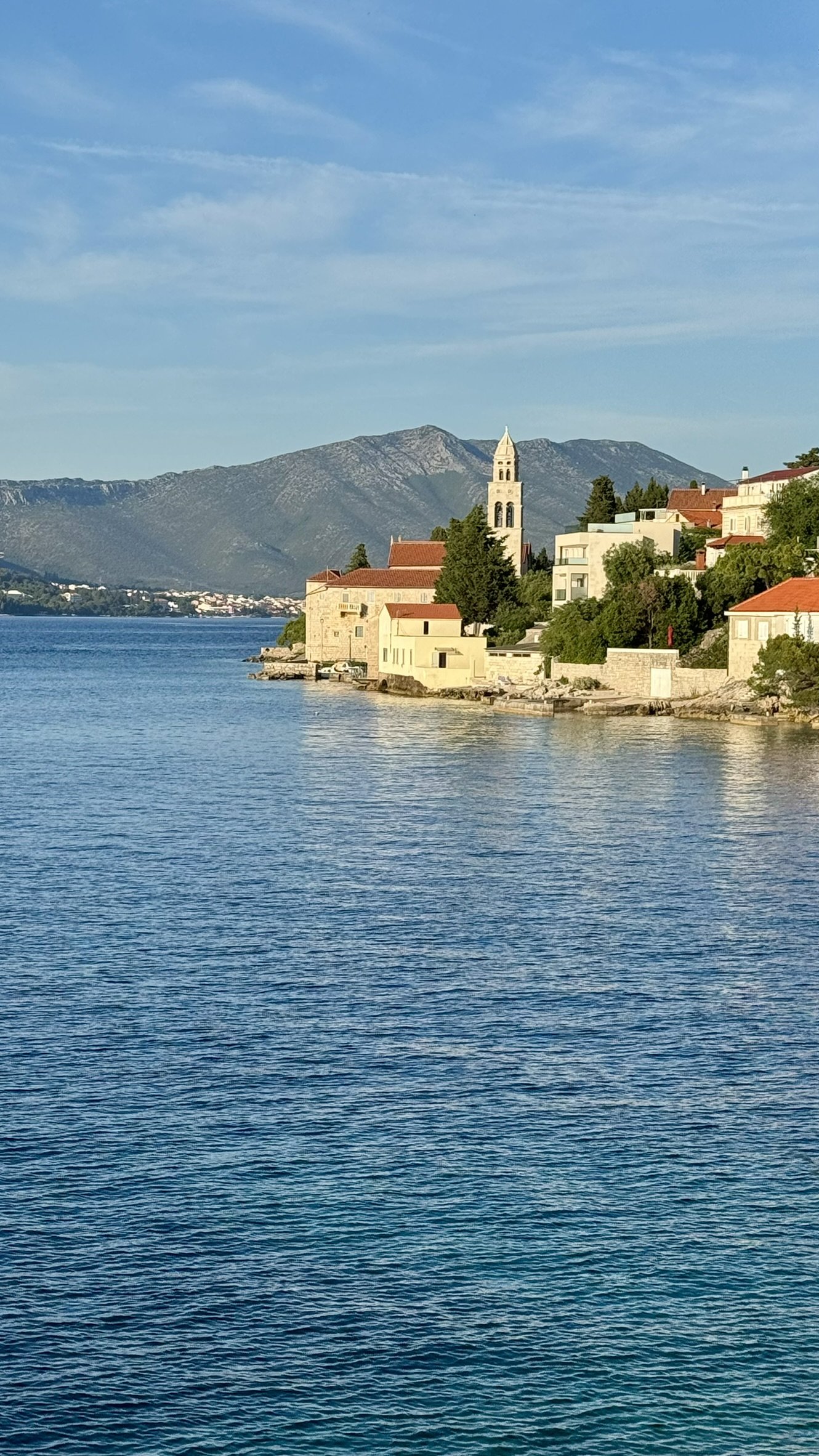
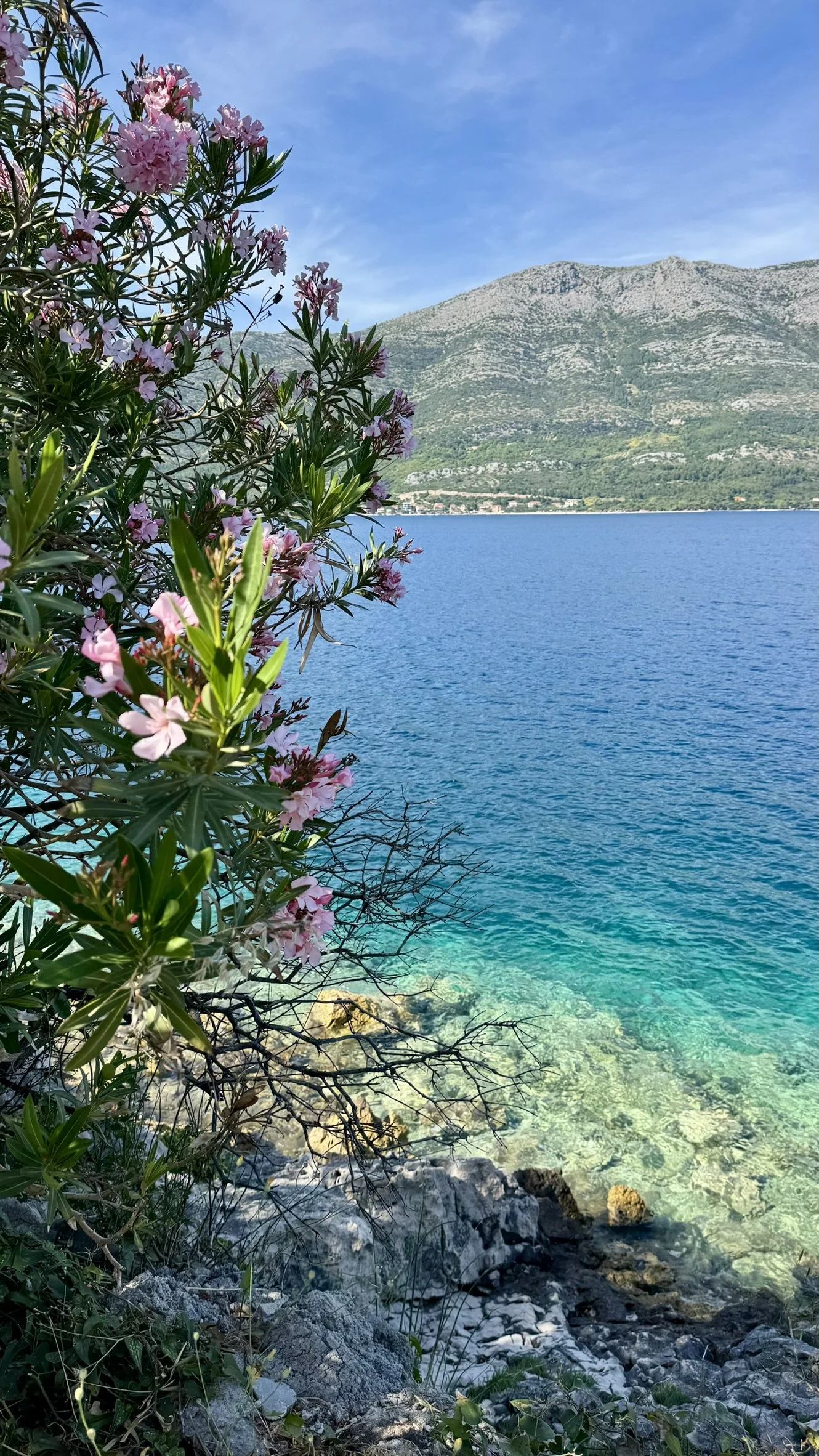
The moment you cross, the water around Korčula is absolutely stunning—completely turquoise and crystal clear.
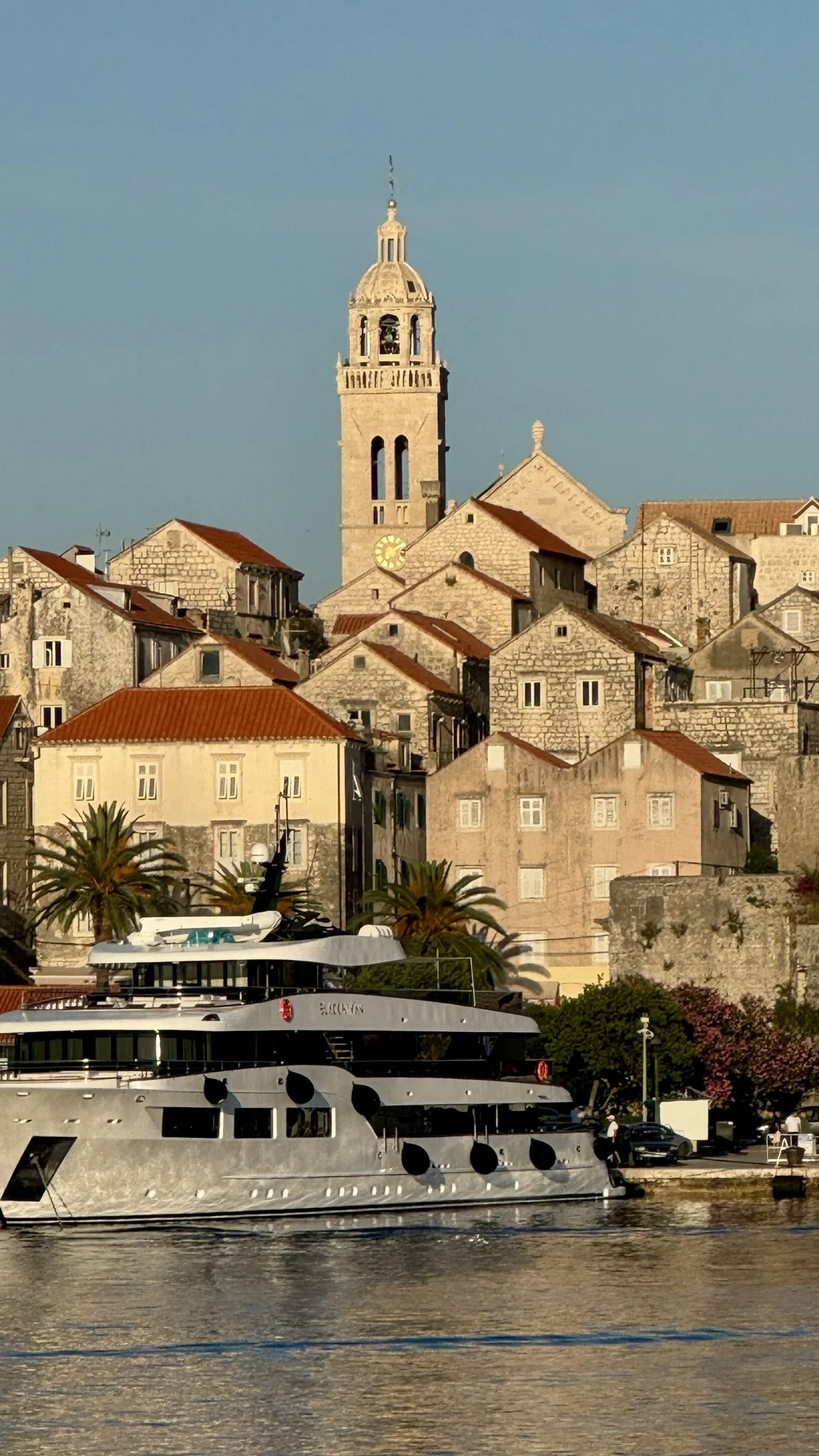
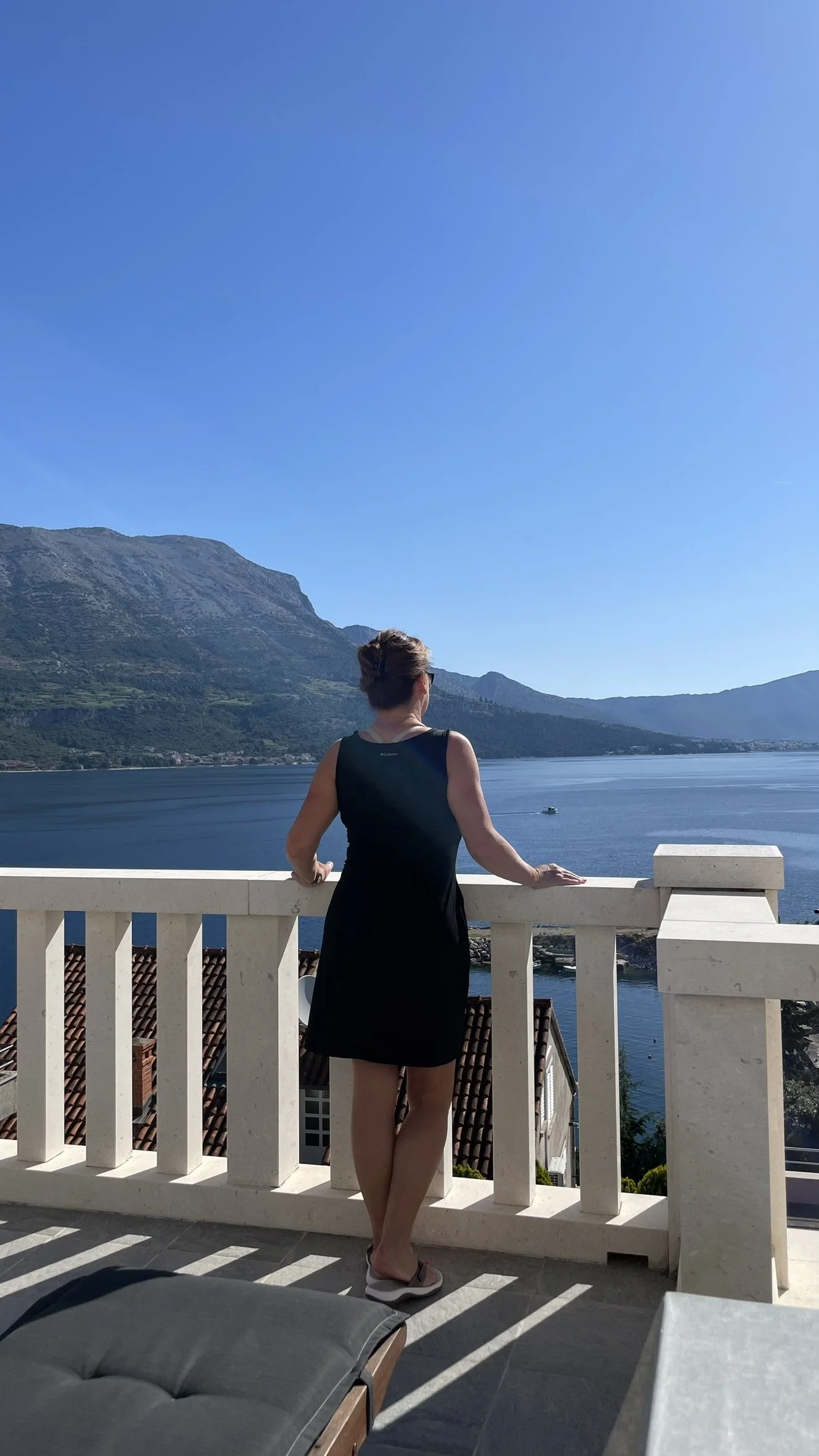
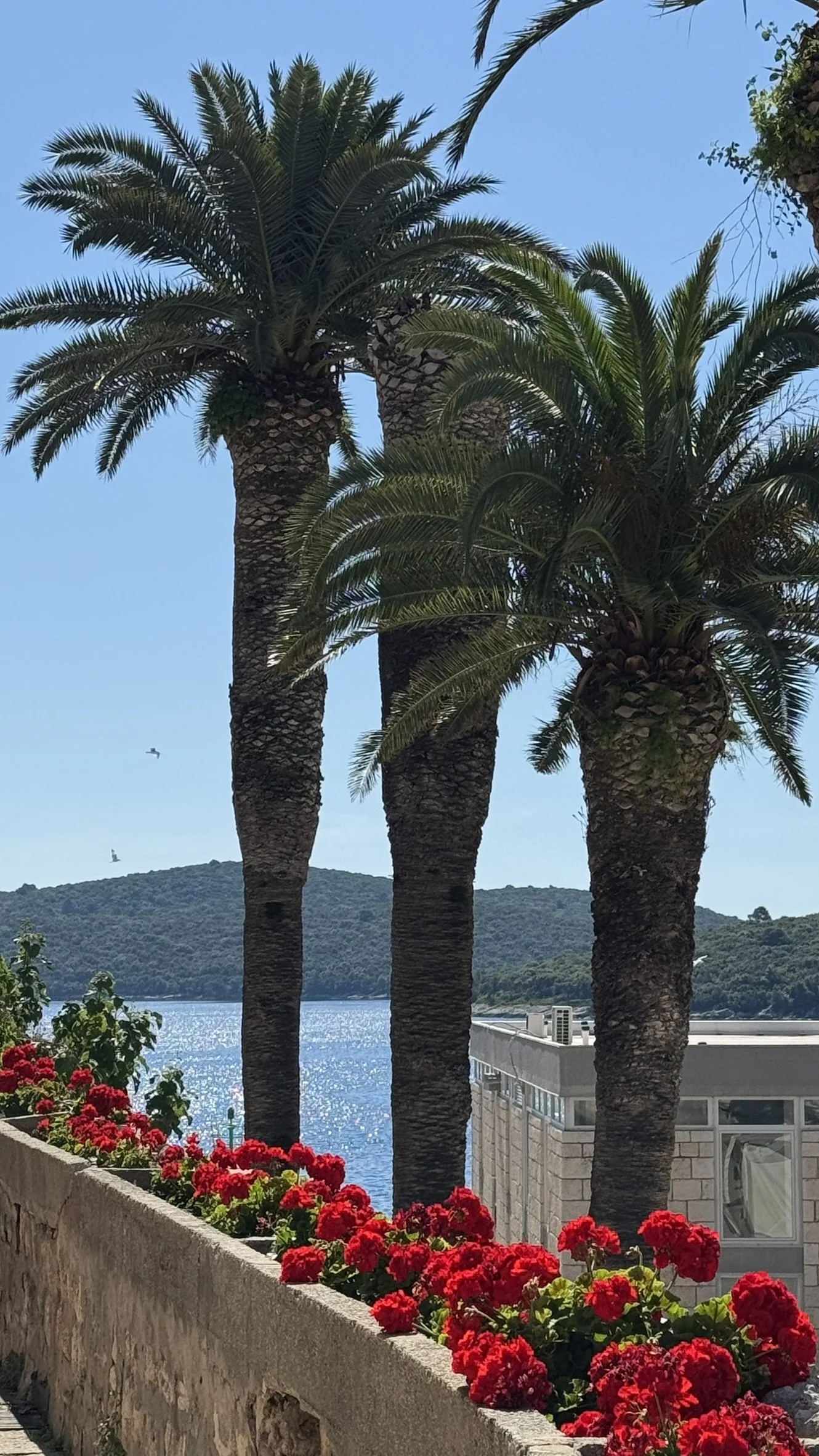
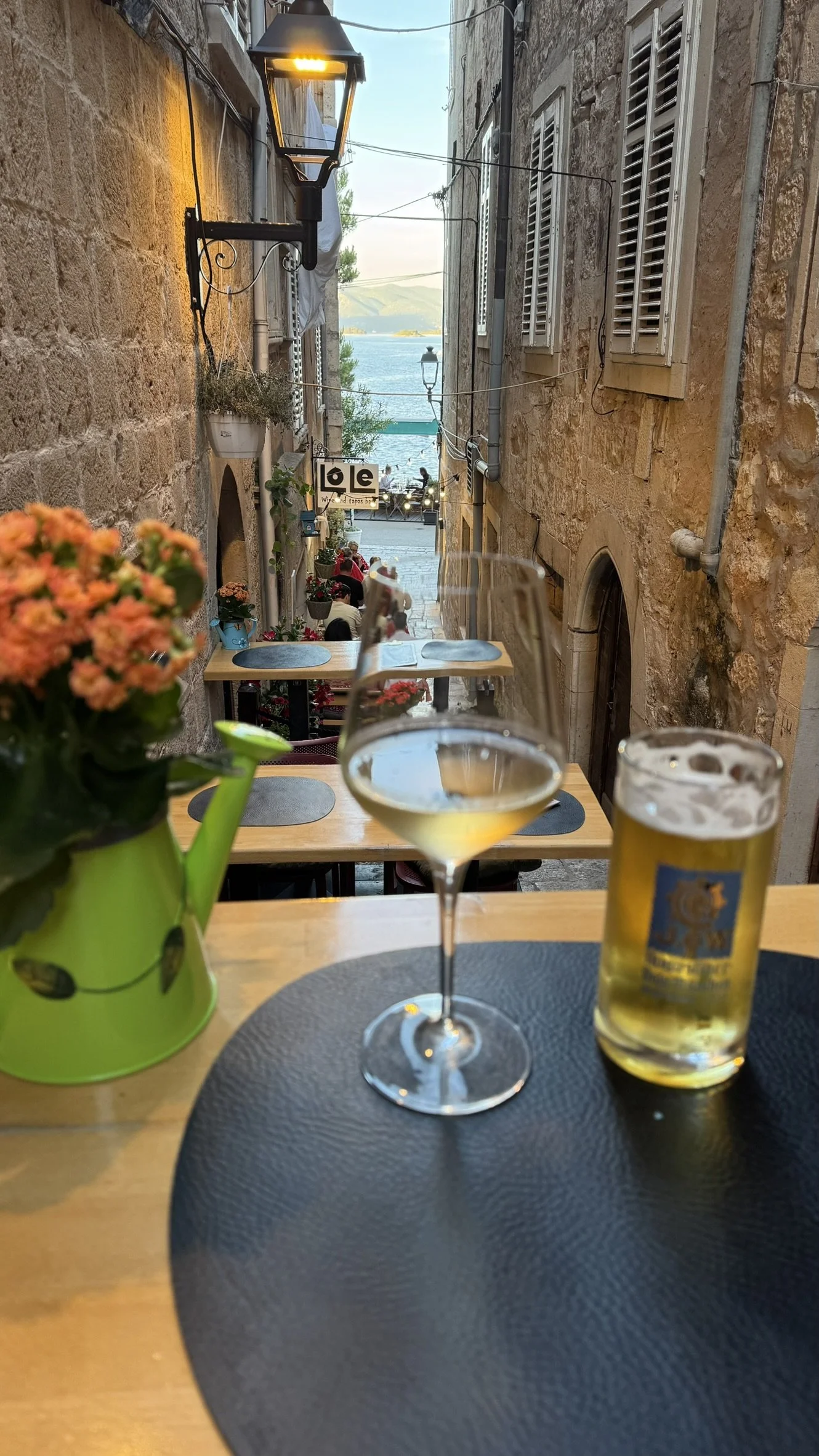
Korčula itself is a beautiful island known for its rich history, natural beauty, and incredible food and wine scene. After checking into our cute apartment and relaxing on our huge terrace, we walked into the main town for the evening. Korčula Town is compact but completely packed with amazing restaurants lining its medieval stone water's edge. To wrap up a perfect day, we made sure to sample the island's famous white wines, Grk and Pošip.
💰 Essential Travel Tip: As of our recent trip, cash (Euros) is still required at almost all restaurants and bars across Korčula. Plan ahead and have cash on hand before you sit down for dinner, or you'll find yourself making an emergency run to a local ATM with high foreign transaction fees!
Day 14 - Korcula
This day was dedicated to exploring more of the main town in the morning, followed by a relaxing beach afternoon.
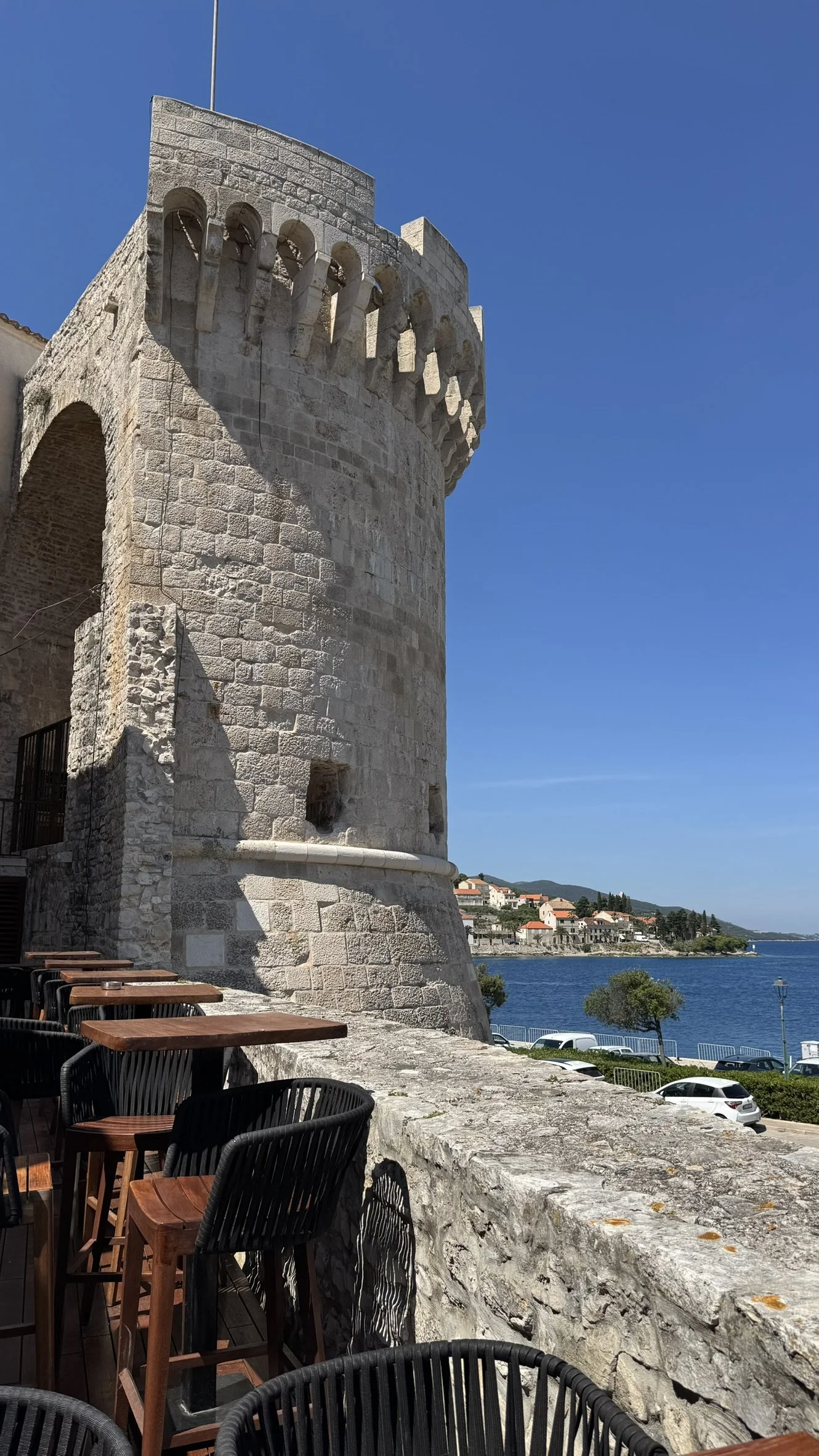
Korčula's Old Town is a magnificent example of a well-preserved, medieval walled city, often earning it the nickname "Mini-Dubrovnik." Built on a small oval peninsula, the very layout of the Old Town is an attraction in itself. Its narrow, winding streets are arranged in a clever "fishbone" pattern—a brilliant medieval urban planning technique designed to protect the town from harsh winter winds while allowing a refreshing sea breeze to flow through in the summer. Simply getting lost in these alleyways and discovering hidden corners was one of the best parts of our morning.
In the afternoon, we set out for the water. Banje Beach is just a short, easy walk east of the main harbor and is considered the town's central beach. While there are some truly stunning, secluded beaches located on the southeastern side of Korčula, be forewarned: the roads to get down to them are full of dramatic, cliffside hairpin turns!
💡 Travel Tip: If we could redo our itinerary, we wish we had spent an extra day in Korčula and just one day in Zadar. It takes some time and effort to get all the way out to Korčula, and a day and a half just didn’t feel like enough time to fully enjoy the island, the historic town, and our cute apartment’s massive sea-view terrace.
Day 15 - Cavtat & Dubrovnik
Leaving Korčula is very similar to arriving. You simply purchase your car ferry ticket at the Jadrolinija office right at the port. The driving scenery along the route back down the peninsula is absolutely stunning, though the traffic gets noticeably heavier the closer you get to Dubrovnik.
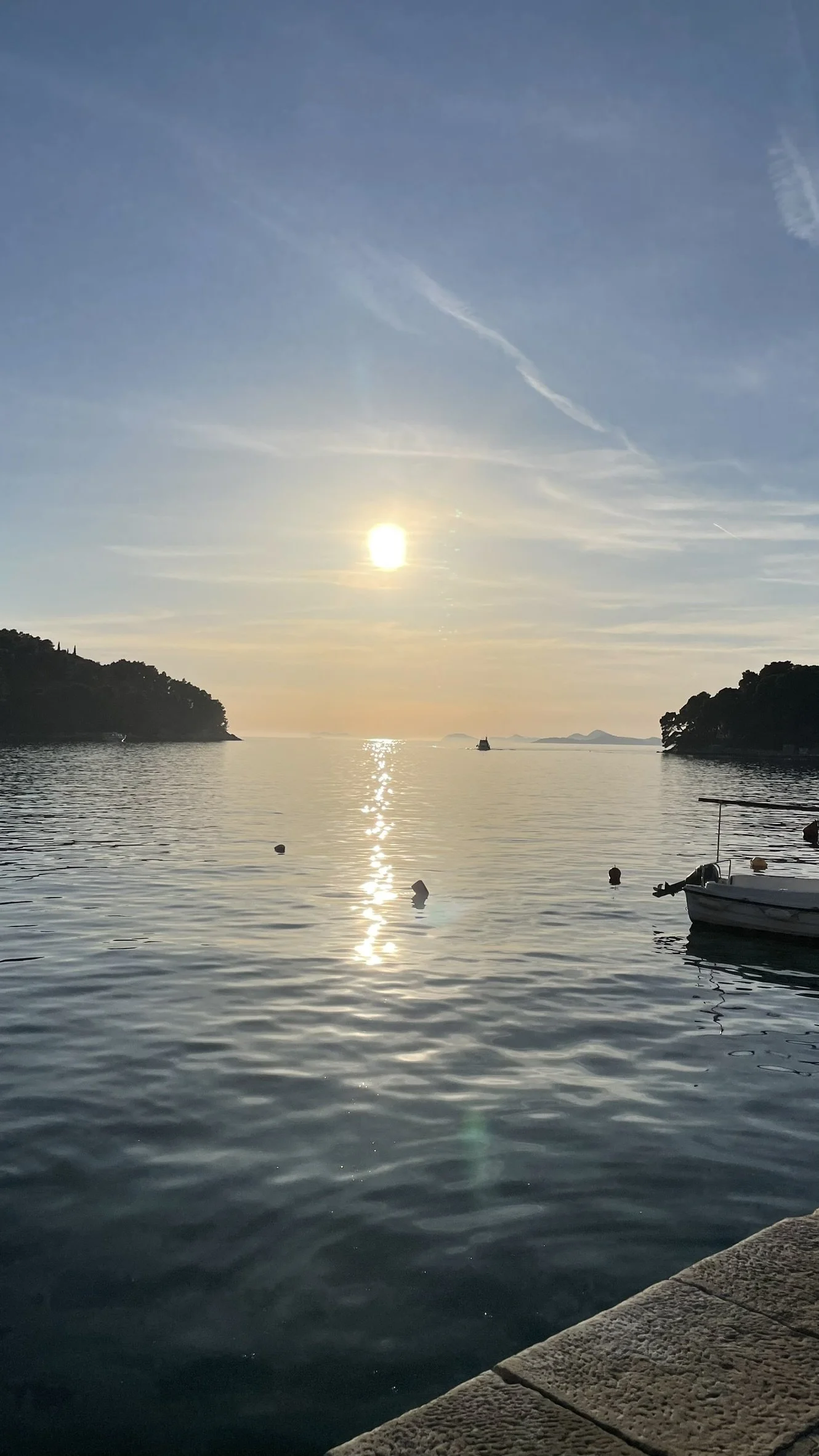
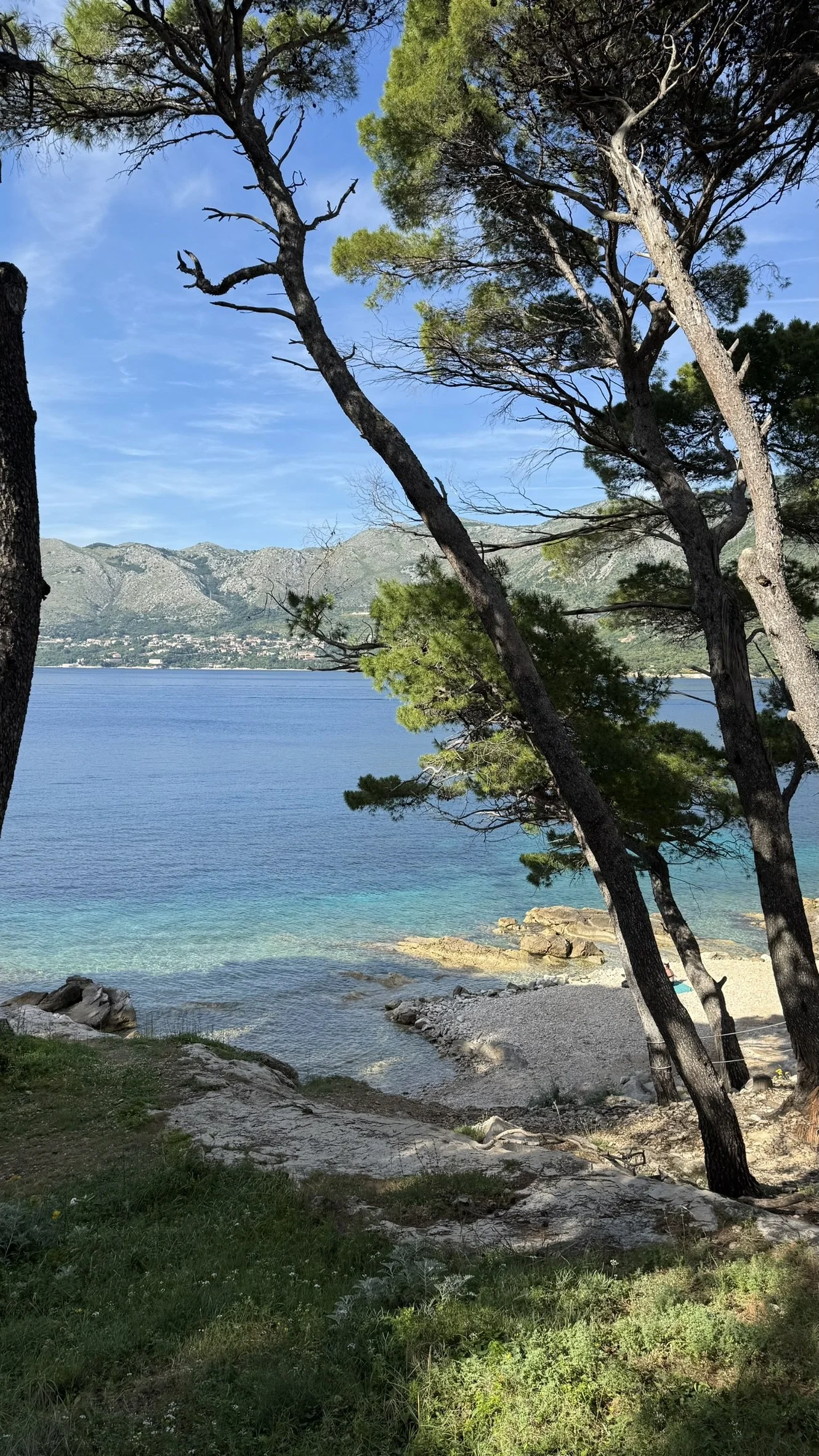
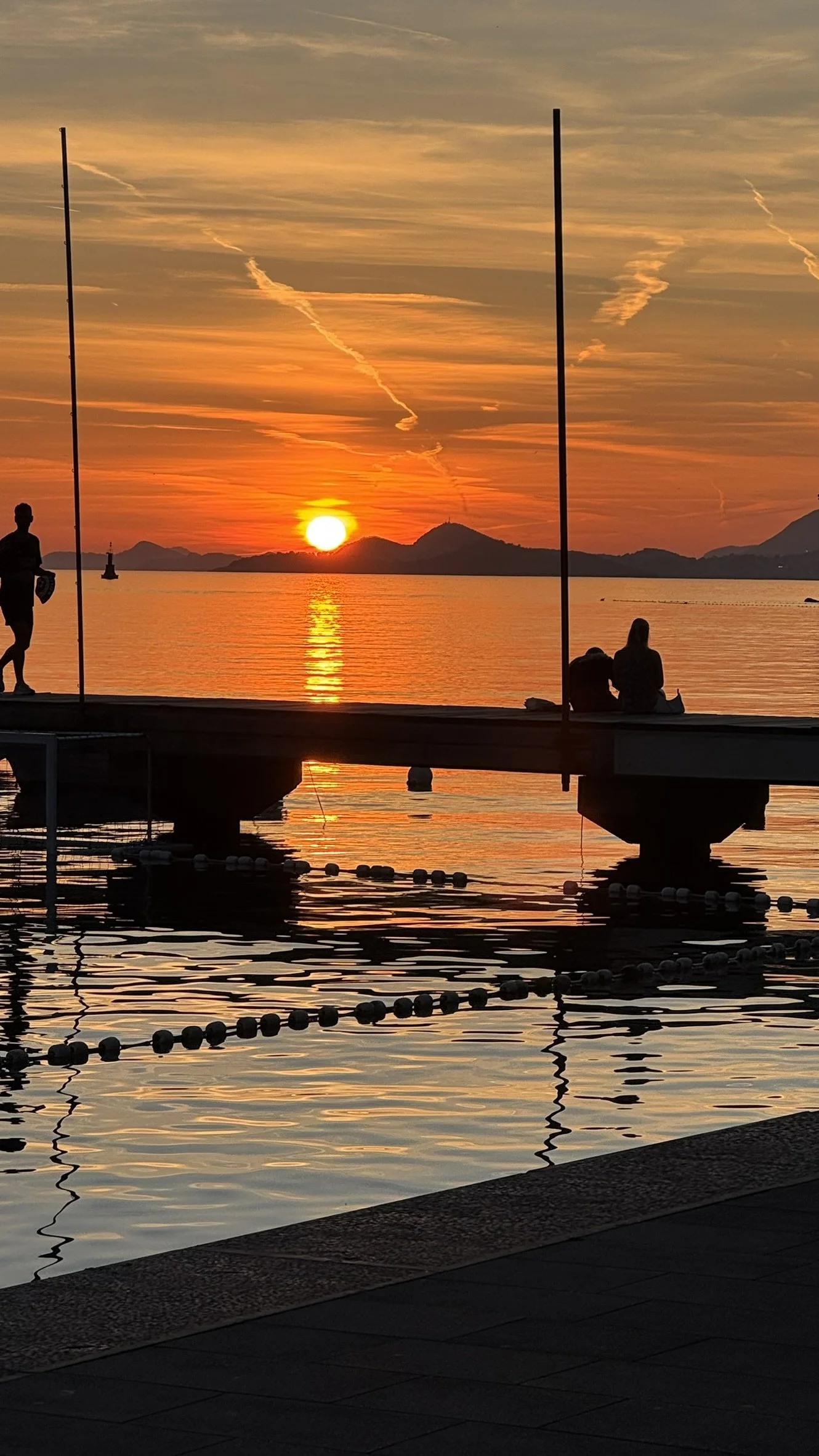
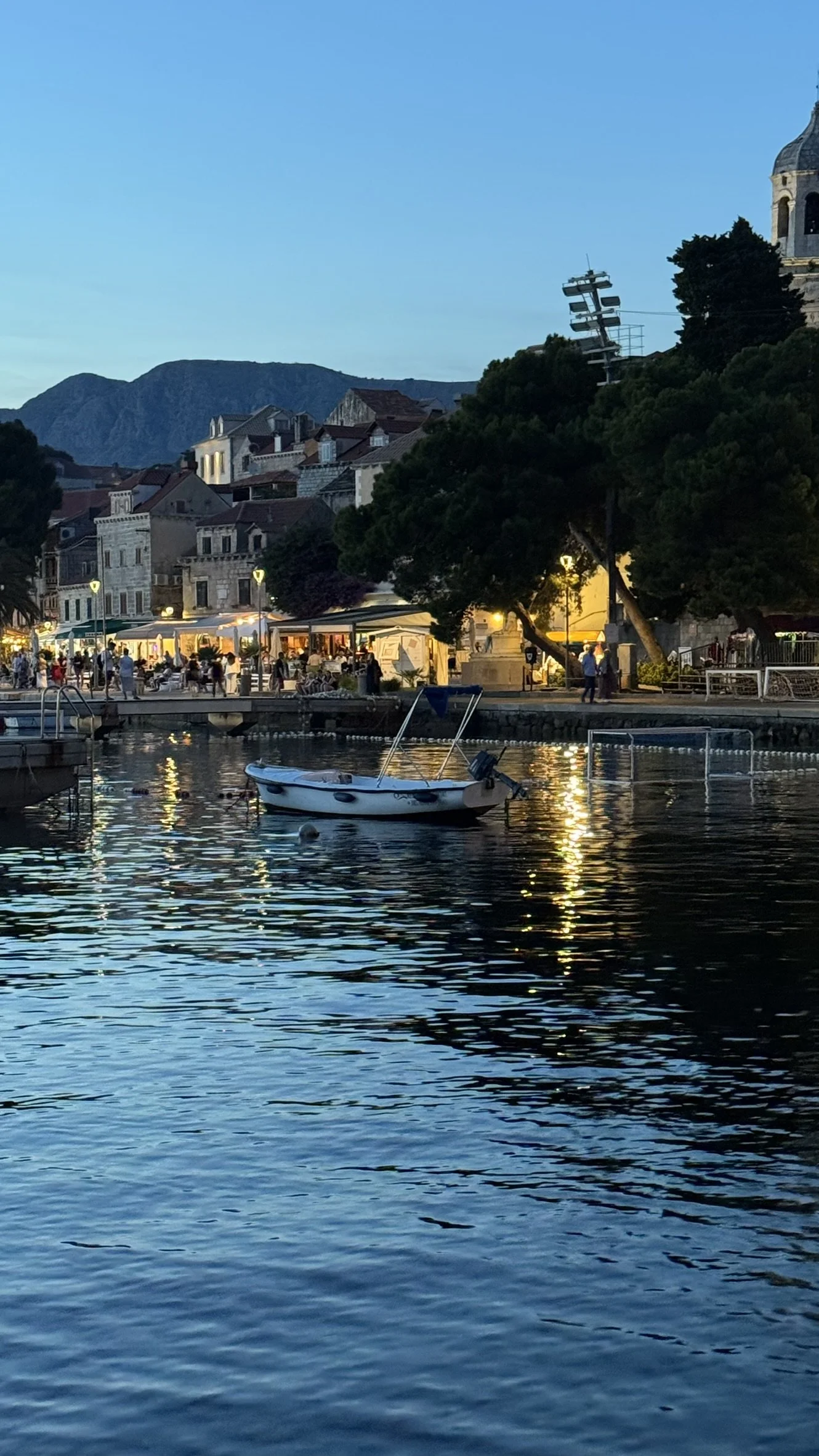
Instead of staying in the city center, we chose to make the charming seaside town of Cavtat our home base for the next three nights. It turned out to be the perfect choice for a few key reasons:
Less Crowded: Cavtat is much quieter and less congested than Dubrovnik, making hotels and Airbnbs far easier to find.
More Budget-Friendly: Accommodation and dining in Cavtat are significantly less expensive than inside Dubrovnik.
No Parking Headaches: Parking a vehicle in Dubrovnik is notoriously difficult. There are only a couple of large public lots, which fill up fast. Even if you manage to snag a spot, you usually still have to take a city bus just to reach the Old Town gates.
Relaxing Vibe: Cavtat is beautiful, peaceful, and offers a highly relaxing waterfront atmosphere to come home to.
If you choose to stay in Cavtat, there are several convenient ways to commute into Dubrovnik:
Drive your rental car and try to brave the parking lots.
Take the local public bus.
Catch a scenic ferry or water taxi across the bay.
Use a rideshare service like Uber or Bolt.
🚕 Our Transit Pick: We opted to take an Uber, which cost approximately 15 Euros each way. It was incredibly convenient because the driver dropped us off and picked us up right at the main entrance of Dubrovnik's Old Town—saving us all the stress of driving and parking!
Day 16 - Dubrovnik
Dubrovnik is one of the most stunning cities on the Adriatic coast. Known as the "Pearl of the Adriatic" and designated as a UNESCO World Heritage site, it is famous for its beautifully preserved medieval Old Town, which is entirely surrounded by massive stone walls. For Game of Thrones fans, this spectacular city famously served as the main filming location for King's Landing.
One of the minor trade-offs of staying out in Cavtat is the commute into the city. We opted for the sheer convenience of taking an Uber, which cost about 15 Euros each way. While the local bus is a cheaper option, Uber drops you off right at the gates.
⚠️ Driving Warning: If you are not comfortable driving on mountainous roads with steep drop-offs, it is highly recommended not to drive yourself. Think of the famous Amalfi Coast road—that is exactly what the drive from the south into Dubrovnik feels like!
Is the Dubrovnik Pass worth it? Absolutely. The pass pretty much pays for itself with the cost of the City Walls walk alone, and you get access to several other museums and public transit perks on top of it. You can buy it in advance or right on your phone right before entering your first attraction, which is exactly what we did just after passing through the Old Town gates.
Must-Do Experiences Within the Old Town:
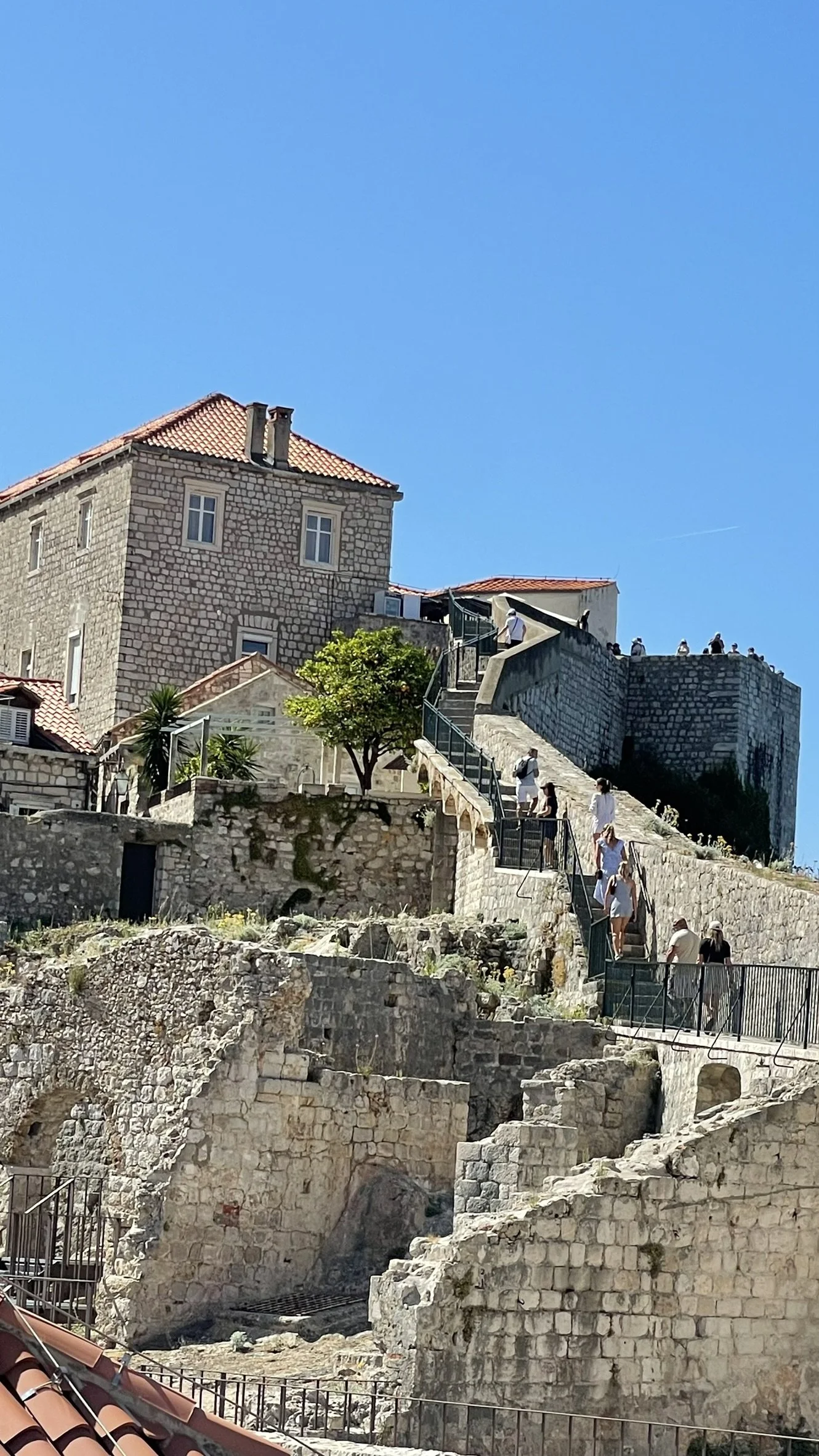
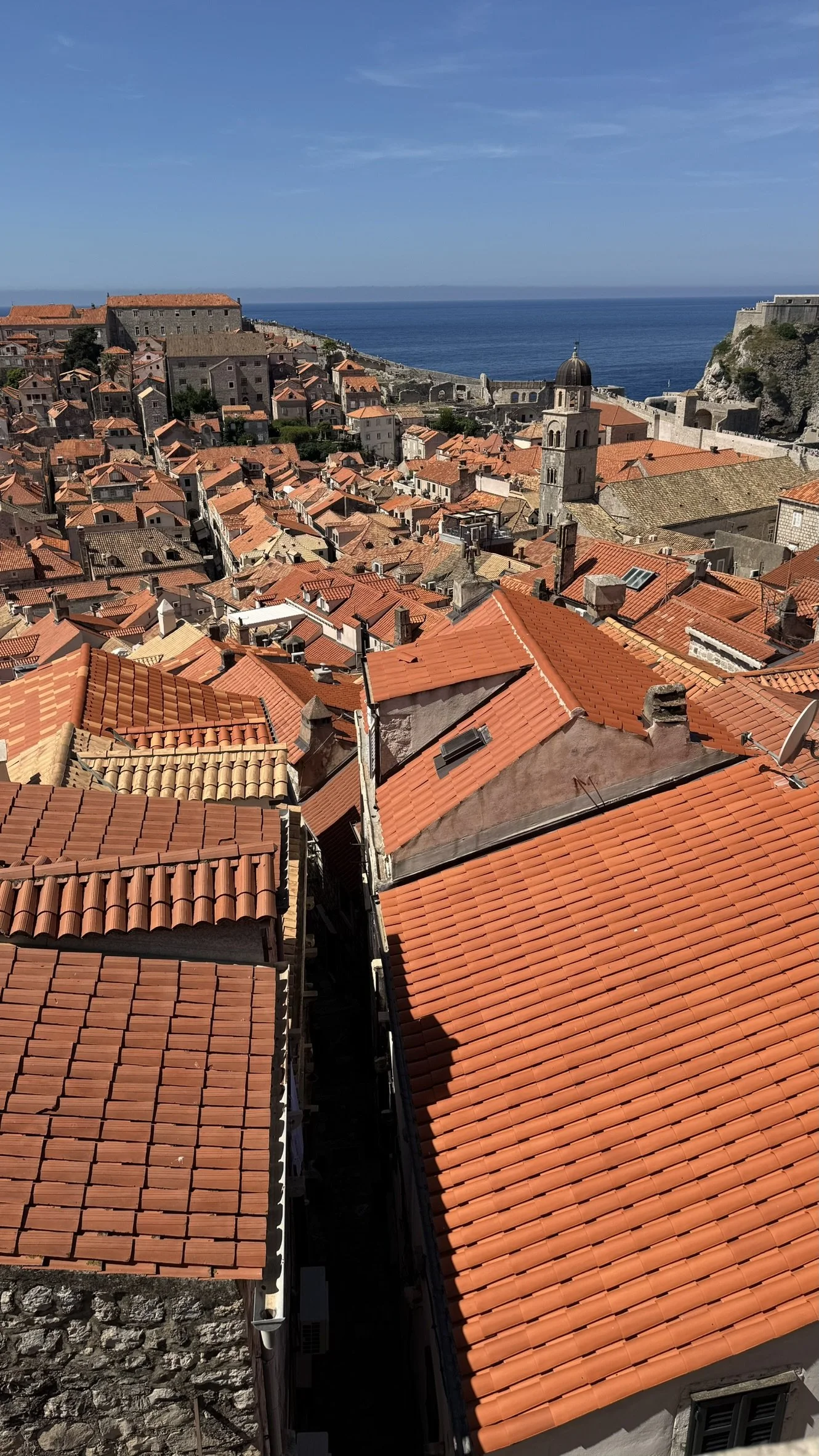
Walk the City Walls: This is the ultimate Dubrovnik activity. The 1,940-meter circuit takes you completely around the Old Town, offering breathtaking views of the iconic red rooftops, the sea, and the fortresses. Tip: Go early in the morning or late afternoon to avoid the intense midday heat, and don't miss Lovrjenac Fortress for the absolute best scenic views of the city layout!
Wander the Stradun: The Stradun (or Placa) is the main limestone-paved street running through the heart of the Old Town. Polished smooth by centuries of footsteps, it’s the perfect place to stroll, grab a coffee, and people-watch.
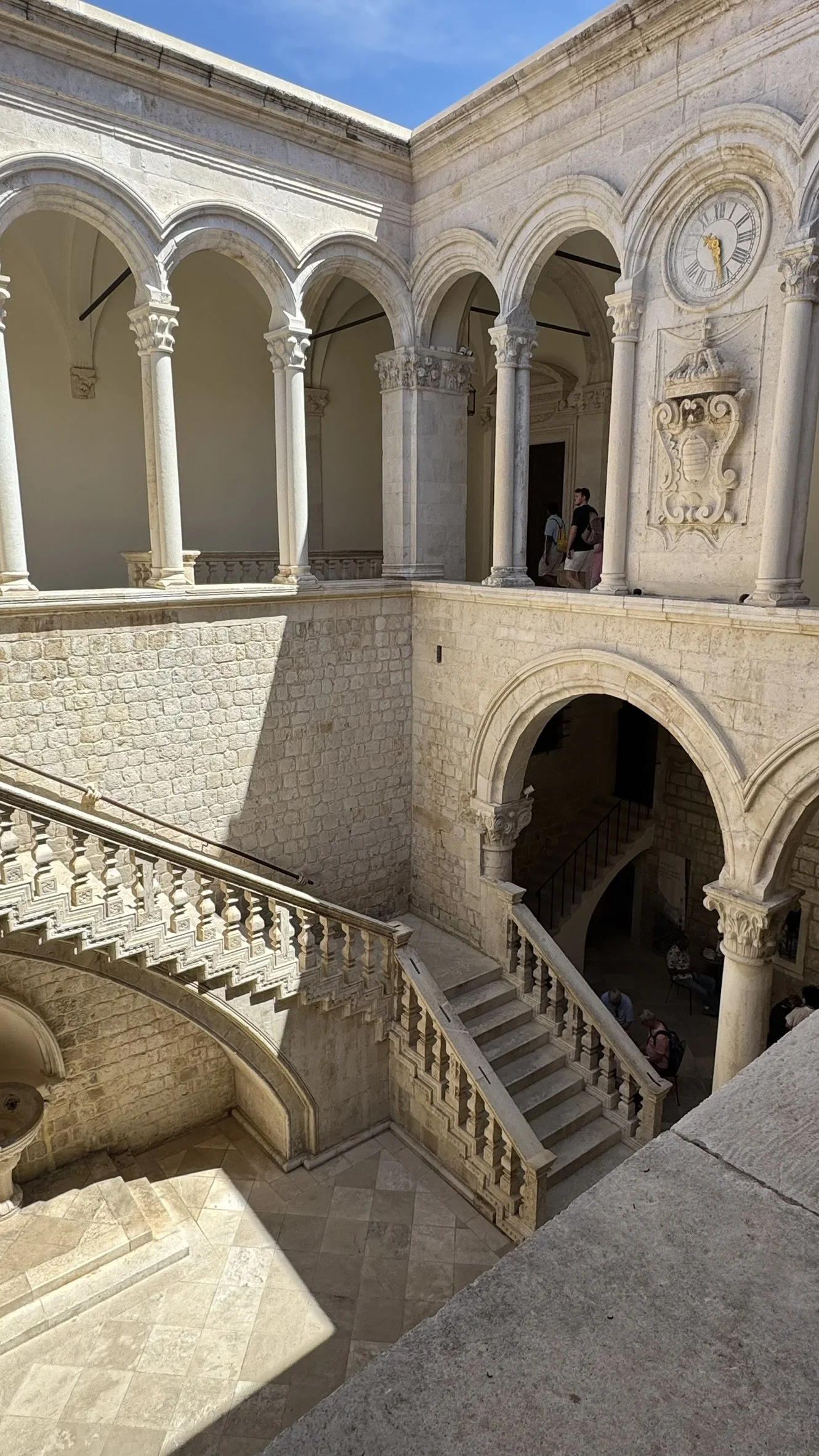
Visit Key Landmarks: Don't miss the Rector's Palace, the stunning Sponza Palace, and Onofrio's Fountain. These architectural gems tell the story of Dubrovnik's rich history as the independent Republic of Ragusa.
For Game of Thrones Fans:
Go on a Themed Tour: A guided walking tour is highly recommended if you love the show. You’ll visit iconic spots like the Jesuit Staircase (the site of Cersei's "Walk of Shame") and Lovrijenac Fortress (The Red Keep) while hearing great behind-the-scenes production stories.
Find the Iron Throne on Lokrum Island: Take a short ferry ride to Lokrum Island, which served as the city of Qarth. Inside the island's old monastery, you can sit on an official replica of the Iron Throne for a photo.
Nature & Relaxation:
Take the Cable Car up Mount Srđ: For the most iconic panoramic view of the Old Town and the Elaphiti Islands, take the cable car to the summit. There is a great restaurant at the top, along with a deeply moving museum dedicated to the Croatian War of Independence.
Escape to Lokrum Island: This small, forested island is a protected nature reserve and the perfect getaway from the city crowds. You can relax in the botanical gardens, swim in the "Dead Sea" (a warm, hyper-saline saltwater lake), and watch peacocks roam completely freely.
Swim at a Local Beach: While the Old Town itself doesn't have a traditional beach, you can dive into the clear water just outside the walls at Banje Beach, or head a short bus ride away to Lapad Bay for a wider stretch of shore with more amenities.

Day 17 - Montenegro and Kotor
A short drive south from our home base in Cavtat brought us to the border of Montenegro. Meaning "Black Mountain," Montenegro's name perfectly reflects its rugged, towering terrain. Though small, the country delivers massive dramatic landscapes, a stunning Adriatic coastline, and an incredibly rich history.
🛂 Passport Control Tip: Don't forget your physical documents! You must clear passport control twice each way: once to officially leave Croatia, and again right before you enter Montenegro. The same process applies on the return trip, so factor border wait times into your schedule. Go early in the morning to avoid delays.
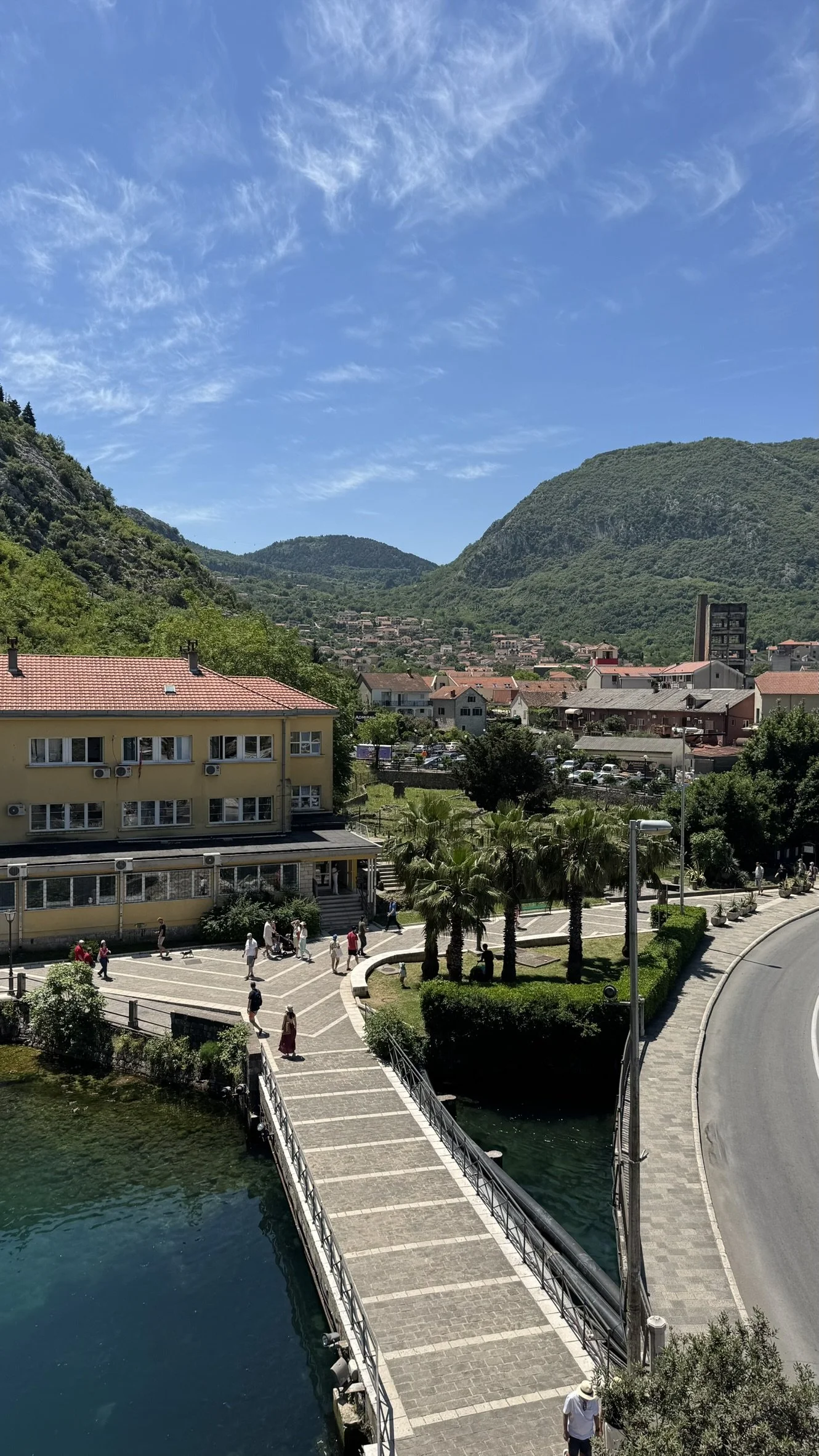
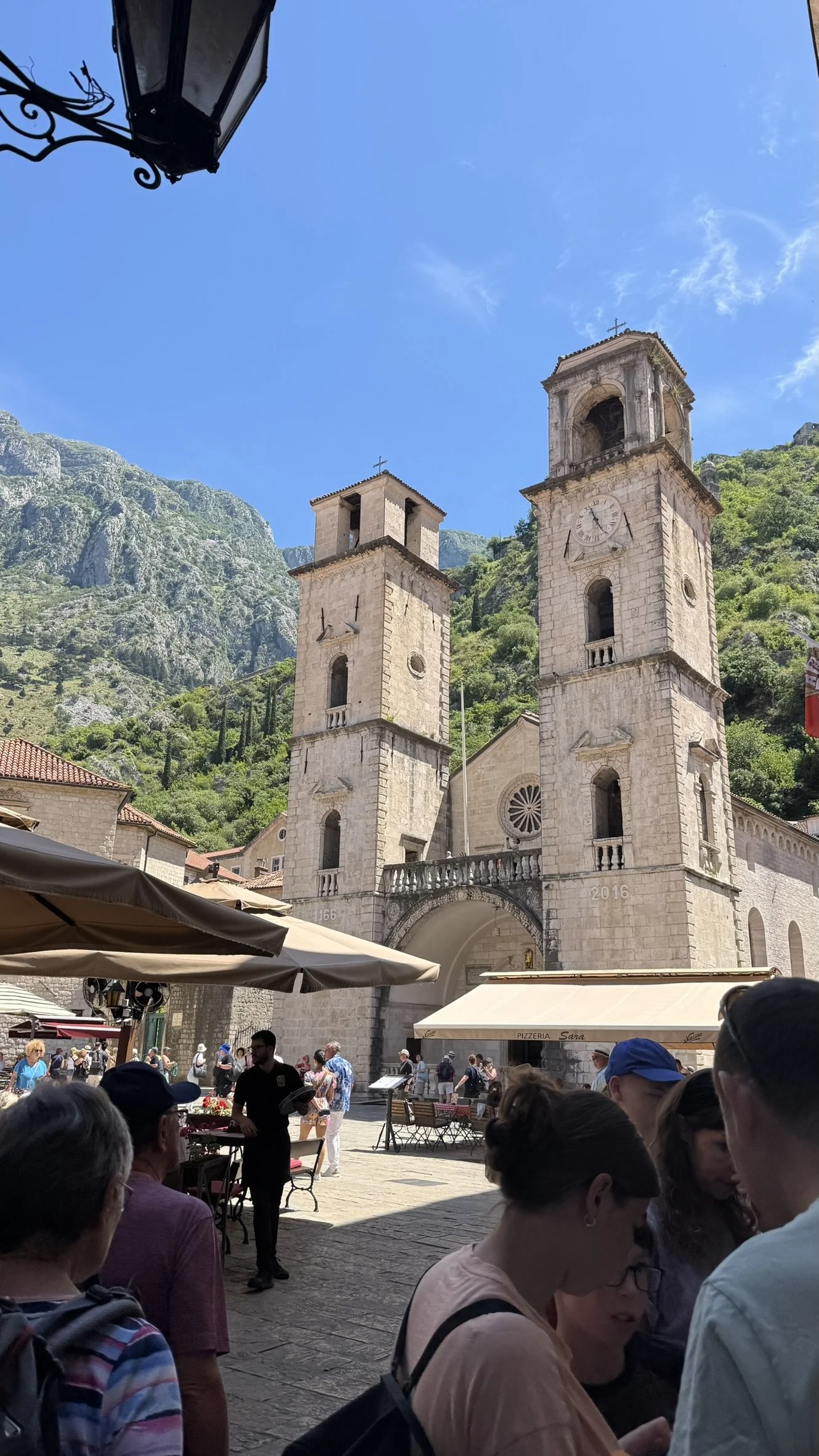
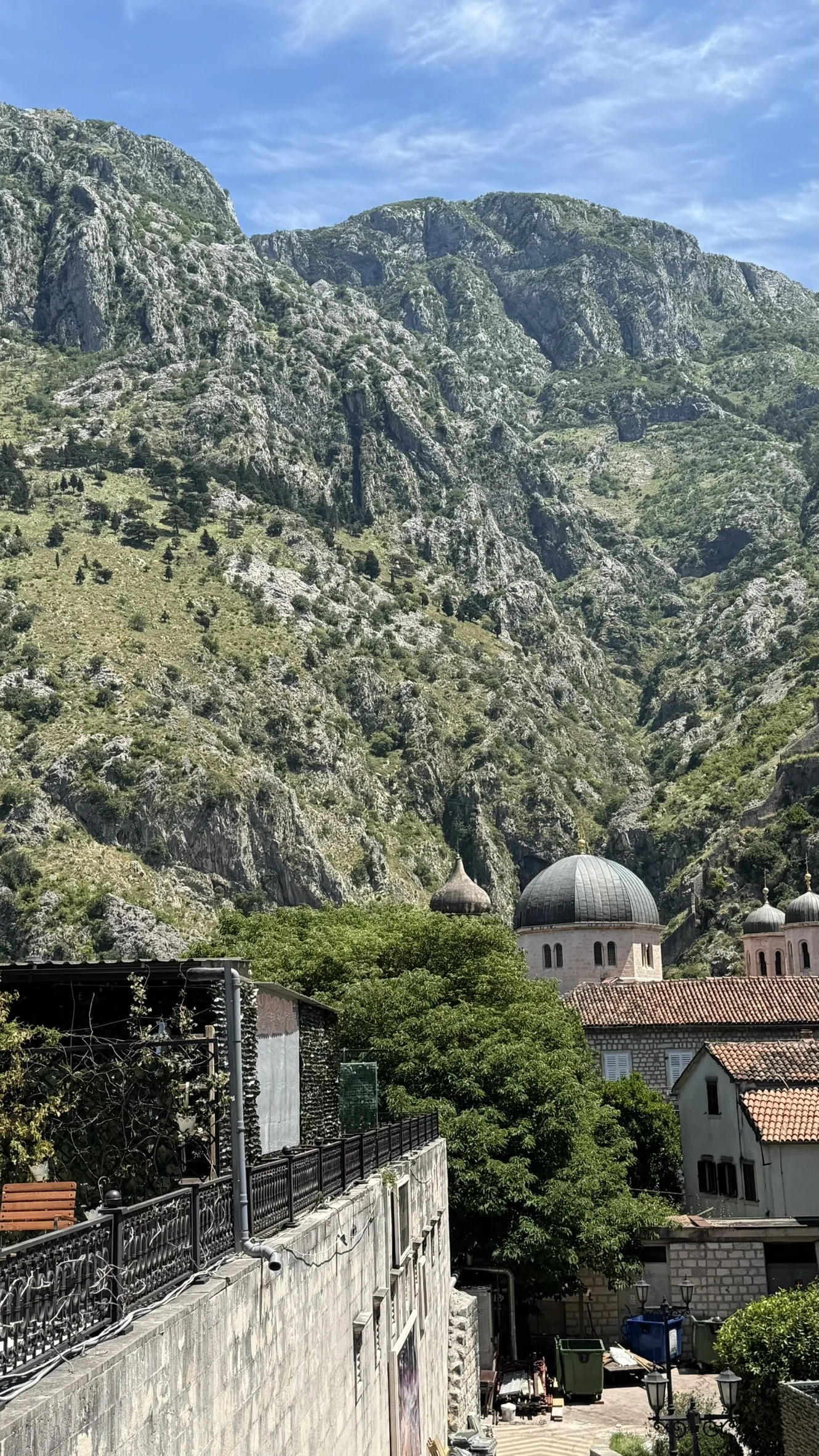
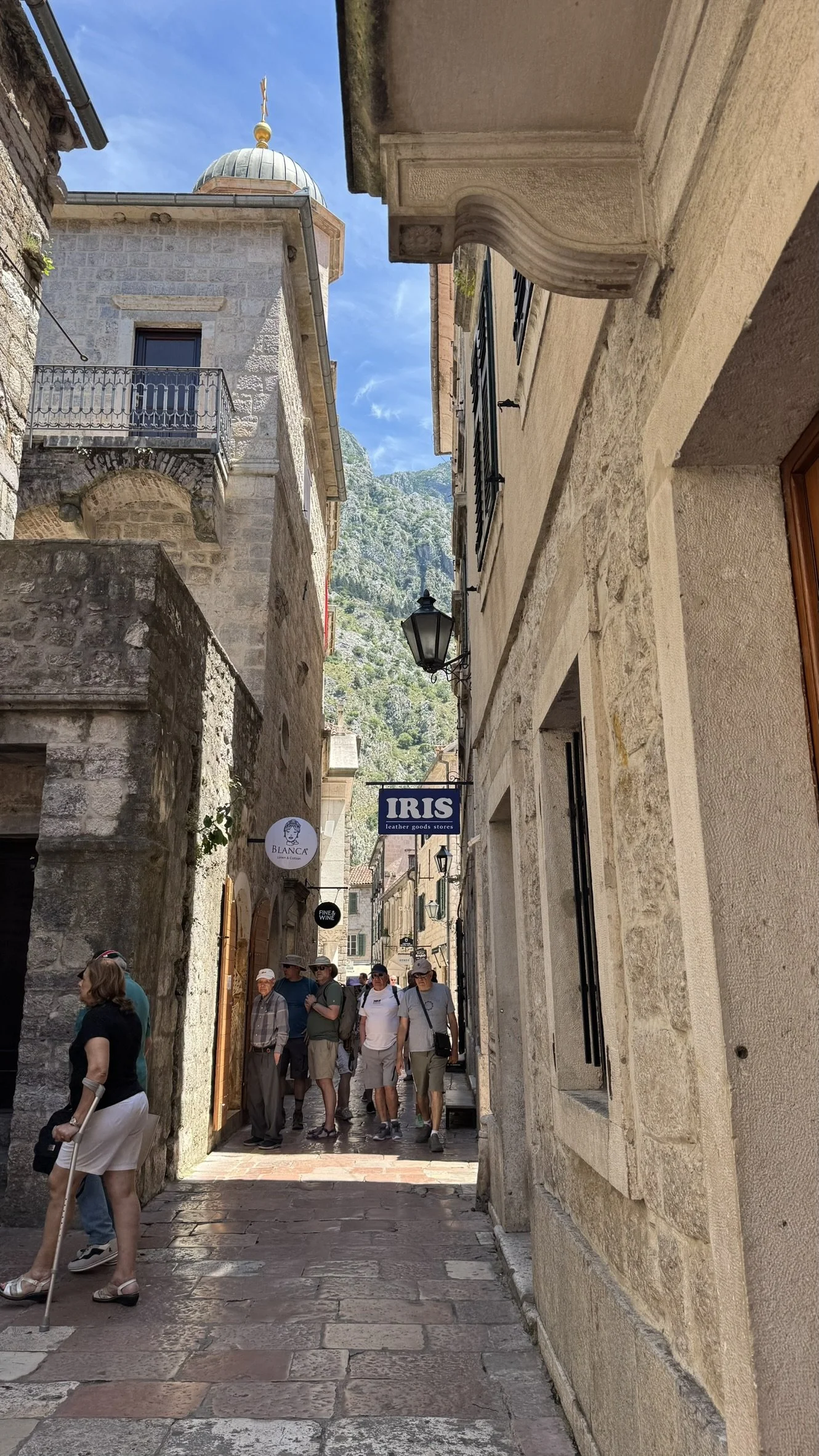
The drive into the country was lovely, and you can instantly tell you’ve crossed into a different nation. We made our way down to Kotor, spending a wonderful afternoon exploring before heading back to Croatia.
Kotor is a stunning fortified town located at the southeastern end of the spectacular Bay of Kotor. Often referred to as Europe's southernmost "ria" (a submerged river canyon) rather than a true fjord, the bay's dramatic sheer limestone cliffs plunge straight into the sea, providing a breathtaking backdrop.
Day 18 - Heading Home
After dropping off our rental car at the Dubrovnik airport, we took a short flight back to Rome to catch our connecting flight home to Canada. While we thought we had given ourselves plenty of time between flights, we didn't account for a sudden breakdown of the airport's luggage system! After waiting anxiously for more than an hour at the baggage carousel, we finally grabbed our bags and literally sprinted across the terminal to catch our flight just in time.
✈️ Final Travel Tip: The Connection Cushion Always give yourself extra buffer time between connecting flights to account for unexpected operational delays. This is especially critical if your two flights are booked on separate tickets or with different airlines, as they won't automatically rebook you if you miss the window.